Relocation Crisis and Redevelopment Delays... Endless Cycle of Housing Shortages Returns
Jeonse Prices See Largest Surge in 11 Years
Sharp Drop in Rental Supply
Amid Heavier Capital Gains Taxes for Multi-Homeowners
Full-Scale Redevelopment Begins This Year
in Gangdong-gu, Apgujeong, Mok-dong, and More
Wave of Relocations Expected to Further Tighten
Rental Market Supply
Due to a severe shortage of jeonse apartment listings, the weekly rise in Seoul apartment jeonse prices has reached the largest increase in 11 years (0.32%), with the impact now spreading to redevelopment and reconstruction complexes. If residents are unable to find a place to move, relocation becomes impossible, causing delays in redevelopment projects. This, in turn, leads to a serious vicious cycle by further obstructing the supply of new housing in Seoul.

Experts note that the relocation issues faced by reconstruction complexes have only emerged in the past few months. An official from the Seoul Metropolitan Government stated, "Even earlier this year, when 7,000 to 8,000 households relocated from areas like Hannam District 2, there was no major crisis."
This phenomenon is closely related to the sharp increase in Seoul apartment jeonse prices since the beginning of this year. According to the Korea Real Estate Board, the cumulative increase so far this year is 4.11%. When compared to 0.73% during the same period last year, the rate of increase has grown by nearly sixfold. The biggest factor was the depletion of listings last month ahead of the implementation of heavier capital gains taxes on owners of multiple homes. While many multi-homeowners rushed to sell their properties in the first half of the year, which briefly dampened sale prices, the supply of properties for jeonse and monthly rent shrank. At the same time, existing tenants have begun exercising their lease renewal rights, resulting in fewer available listings. This is making it even harder for people to find properties.
As a result, critics argue that the government’s stance on the jeonse market is further shrinking the market. Previously, President Lee Jaemyung expressed a negative view, saying, "Jeonse is a form of private lending unique to Korea. Excessive jeonse loans have been a main driver of rising home prices."
Experts predict that, as redevelopment projects in Seoul accelerate this year, the sharp rise in jeonse prices is only beginning. With construction companies being selected sequentially in districts like Apgujeong, Seongsu-dong, and Mok-dong, a large-scale wave of relocations is expected. Ham Youngjin, head of the Real Estate Research Lab at Woori Bank, stated, "Not only in Gangdong-gu but also in areas like Apgujeong, Mok-dong, and Yongsan, many places have received approval for union establishment or project implementation, so the shortage of properties in the rental market is just starting. If projects are delayed, this could lead to increased financial costs, project expenses, and member contributions, so discussions are needed on how to resolve these issues."
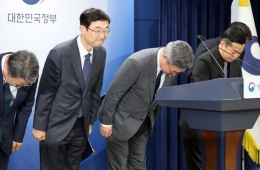
As the situation worsens, the Seoul Metropolitan Government has also begun seeking countermeasures. An official explained, "The problem is that listings for jeonse and monthly rent are disappearing. To mitigate the shock to the rental market, we plan to closely manage the relocation schedule for redevelopment projects throughout Seoul." The official added, "We will push to amend the ordinance to temporarily expand the timing adjustment system, which previously applied only to complexes with more than 2,000 households, to those with more than 1,000 households."
Yoon Sumin, Senior Real Estate Specialist at NH Nonghyup Bank, analyzed, "Problems keep arising because projects proceed without short-term relocation measures. In this situation, policies emphasizing actual residence and rising jeonse and monthly rent prices are overlapping, causing even fewer available properties and creating a vicious cycle of delays in redevelopment projects."
Ham Youngjin advised, "The government could partially address relocation demand by purchasing public rental units, or by adjusting relocation schedules or implementing phased redevelopment projects. However, even these solutions could face strong opposition, so careful consideration is needed on how to coordinate these efforts."
Hot Picks Today
 "Even New York Taxi Drivers Are Talking About the KOSPI; South Korean Market to Top 9,000 Again Within a Year"... 'Wall Street's Stock-Picking Ace' Names His Picks
- “Made 2 Billion Won in One Year in Prison,” PPP Lawmaker Retorts: “If You’re Jealous, Go There Yourself”
- “Washing Dishes and Folding Clothes 200 Times a Day”... China’s “Robot Trainers” Earn Up to 1.2 Million Won a Month
- One Night Out Costs 30,000 Won... People in Their 20s and 30s: "I Can't Even Grab a Casual Drink Out Anymore"
- Idol Member Posts Letter Saying "Suspending Activities Due to Pregnancy"... Turns Out She's AI?
Kim Inman, Director of the Real Estate Economics Research Institute, said, "The Seoul Metropolitan Government has continuously requested the central government for support, noting that even if permits for redevelopment projects are expedited, the lack of relocation loans or the shortage of jeonse and monthly rent properties prevents progress and supply. The government should apply realistic loan regulations, but make exceptions for first-time homebuyers or cases related to redevelopment projects."
© The Asia Business Daily. All rights reserved. Unauthorized AI training and use prohibited.