Seoul Metro "Running with Debt"... Fare Must Rise from 1,550 Won to 2,591 Won for Normalization (Comprehensive)
Seoul Metro: "A Loss of 781 Won Per Passenger"
Company Calls for Government Support or a Fare Increase of 1,041 Won
Free Ridership Losses Expected to Grow Due to Population Aging
Due to the impact of an aging population and free rides, the Seoul subway system posted a deficit of over 800 billion won last year. Seoul Metro stated that it incurs a loss of 781 won for every passenger and emphasized the need for government support. Without such support, the current base fare of 1,550 won would need to be raised by 1,041 won to eliminate the deficit.

According to Seoul Metro on June 12, the cost of transporting a single passenger on subway lines 1 through 8 last year was 1,817 won, but the actual average fare received was just 1,036 won.
The cost of transportation includes labor costs, depreciation, and electricity charges. The cost recovery rate, which indicates the percentage of the average fare against the transportation cost, stands at 57%. Over the past five years, the company’s cost recovery rate was 50.2% in 2021, 53.3% in 2022, 54.7% in 2023, and 53.9% in 2024, never exceeding the 50% range.
The company explained that, despite self-help efforts and fare hikes, it is suffering from severe management difficulties due to a fare structure that falls far short of covering actual transportation costs.

The main reason for the deficit lies in the provision of public services such as free rides and bus transfers. Last year, the company reported total revenue of 2.3728 trillion won and total expenses of 3.1996 trillion won, resulting in a net loss of 826.8 billion won. Losses from public service obligations amounted to 816.7 billion won, almost equal to the net loss. These losses have increased annually, from 484.8 billion won in 2021, to 529.6 billion won in 2022, 603.5 billion won in 2023, and 738.1 billion won in 2024.
Among public service losses, free rides accounted for the largest share at 448.8 billion won, followed by bus transfers at 290.7 billion won and commuter passes and others at 77.2 billion won. The loss from free rides rose by about 70% over five years, from 264.3 billion won in 2020. With rapid population aging, losses from providing free rides to passengers aged 65 and older are expected to continue growing.
It was analyzed that the appropriate base fare needed to fully recover costs is 2,591 won (based on transportation revenue). This means the current base fare of 1,550 won would need to be raised by 1,041 won to eliminate the deficit.
The scale of Seoul Metro’s losses from free rides is the largest among the six major urban rail operators in South Korea. Last year, the total free ride deficit among all six operators was 775.4 billion won, with Seoul Metro accounting for more than half. The company currently bears the entire cost of free ride losses without any support from the central or local governments. A company official explained, “Despite multifaceted efforts to diversify revenue, including real estate sales, new business development, labor cost reductions, and fare evasion crackdowns, structural deficits have led us to a financial limit.”

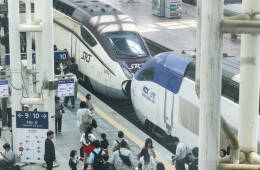
Subway Line 3 train running on Dongho Bridge in Seoul. 2026.1.2 Photo by Kang Jinhyung
View original imageWith major safety facilities requiring reinvestment after more than 50 years of operation, the burden of operating costs such as electricity charges is also increasing. Due to seven increases in electricity rates since April 2022, the company’s electricity costs last year surged by 60% (100.5 billion won) compared to 2021.
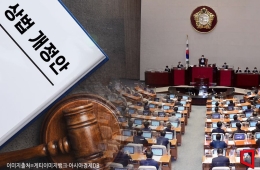
Earlier, in April, the company sent official letters to the Ministry of Economy and Finance, Ministry of Land, Infrastructure and Transport, Ministry of Health and Welfare, and Ministry of Patriots and Veterans Affairs, appealing for legal grounds and financial support for government funding to offset losses from free rides. Seoul Metro stated, “Due to structural demographic changes brought by a super-aged society, it is no longer possible to provide stable and sustainable public transportation services,” and requested that, if the revision to the Urban Railway Act pending in the National Assembly is delayed, the government compensate 576.1 billion won. This amount corresponds to 74.3% of last year’s total free ride losses among the country’s six urban rail operators. This is the first time the company has specified the requested amount in an official letter to the government.
Hot Picks Today
 "I Only Meant to Try It Once"... 30 Million Won Taken from Father's Account: Youth Caught in Gambling
- Woman Wins $8.5 Million Lottery After Divorce... Court Rules Ex-Husband Has No Rights
- [New York Stock Market] Falls on Middle East Tensions...Semiconductor Stocks Attract Bargain Buying
- “They Used to Just Incinerate Unsold Goods”: Will Luxury Prices Finally Drop as Disposal Is Restricted?
- Chinese Group Tourists Abandoned from Noon to Evening After Refusing Shopping... Korea Embarrassed by ‘Low-Quality Tours Focused Only on Headcount’
Jung Jongyeop, Head of Management Support at Seoul Metro, emphasized, “Given the economic burden on citizens, it is realistically impossible to resolve the funding shortfall through fare increases alone,” adding, “To break the vicious cycle of running the system with debt, it is urgent to institutionalize regular government support for legally mandated free ride losses and implement structural financial compensation.”
© The Asia Business Daily. All rights reserved. Unauthorized AI training and use prohibited.