What Is the 'Bus Duct' Powering AI Data Centers? Gaon Cable Wins Successive Contracts from US Big Tech
Emerging as Essential Power Infrastructure in the AI Era
The "Power Highway" Inside Data Centers
Gaon Cable Maintains Top Position in Korea
US Subsidiary Secures Long-Term Contracts Worth 5 Trillion Won
Gaon Cable's US subsidiary, LSCUS, has recently secured a series of global AI data center projects for its 'bus duct' business, winning contracts from major big tech firms such as Google, Meta, and Amazon. The surge in demand for bus ducts, a key power facility, comes as the competitiveness of the AI industry expands from semiconductors to electricity.
On June 12, Gaon Cable announced that LSCUS, having already secured bus duct supply contracts in the US AI data center market since last year, has recently won an additional project worth 4 trillion won, accelerating its push into the North American market.
Although bus ducts have, until now, received less attention than wires, transformers, or switches, they are emerging as critical power infrastructure in the age of AI data centers. Bus ducts are distribution systems that reliably supply large volumes of electricity. While conventional wires transmit power through multiple strands of cable, bus ducts house copper or aluminum conductors inside a metal enclosure, efficiently delivering high currents. Within the industry, they are referred to as the "power highway inside the data center."

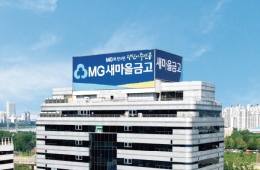
Exterior view of Gaon Cable's US production and sales corporation LSCUS. Gaon Cable.
View original imageAI data centers operate thousands to tens of thousands of GPU (graphics processing unit) servers simultaneously, demanding far higher power density than traditional data centers. The next-generation AI data centers currently under construction by US big tech companies reportedly require from several hundred megawatts (MW) to over one gigawatt (GW) of power per single facility.
As the AI industry grows, securing a stable power supply has become a new competitive edge, rapidly increasing demand for bus ducts, which distribute power within data centers. Market research firm MarketsandMarkets forecasts that the global data center bus duct market will grow from $5.3 billion in 2025 to $9.6 billion in 2032. The expansion of generative AI and the construction of hyperscale data centers are cited as the main growth drivers.
The bus duct market is distinct from the general wire market. While the wire market is centered around power companies, EPCs (engineering, procurement, and construction), and construction companies, the bus duct market's main customers are data center operators, semiconductor companies, electrical design firms, and global equipment manufacturers. In particular, since power supply disruptions in data centers can lead directly to service outages, customers prioritize reliability and supply track record over price.
For this reason, the global market is dominated by major electrical equipment companies such as Siemens, ABB, Schneider Electric, and Eaton. It is considered a market where design capabilities, construction experience, and operational track records matter more than simple manufacturing capacity.
In Korea, LS Cable has pioneered the bus duct business for decades. LS Cable maintains the number one position in the domestic bus duct market, supplying products to key landmarks and industrial facilities both in Korea and overseas, including Seoul's Lotte World Tower, Samsung Electronics' Pyeongtaek Campus, Singapore's Marina Bay Sands, and Dubai's Burj Al Arab.
An industry insider commented, "Bus ducts are not products that can be supplied immediately just because they are certified," adding, "Decades of accumulated design expertise, construction experience, and operational track record are what earn customer trust." The source continued, "The bus duct market is fundamentally different from the traditional wire market in terms of clientele. Especially in the global data center market, once you enter the supply chain, transactions are typically long-term, making it difficult for new companies to quickly build a reference base."
"Performance Surge Expected with Bus Duct Business"

LSCUS is building a local production system and customer network in the US, leveraging LS Cable's accumulated bus duct technology and project execution experience. Industry observers assess that these strengths have enabled the company to secure recent AI data center projects. Whereas Gaon Cable was traditionally seen as a manufacturer focused on power cables, it is now expanding its business scope to become a supplier of power infrastructure for AI data centers.
The scale of change is significant from a performance perspective as well. Last year, Gaon Cable's consolidated sales reached approximately 2.6 trillion won. In contrast, the total value of LSCUS's long-term supply contracts is reported to exceed 5 trillion won. Given the nature of frame agreements, if data center construction continues to expand, additional supply volumes are highly likely.
In terms of profitability, the bus duct business is differentiated from the conventional wire segment. For general-purpose wires, raw material costs account for a large portion of manufacturing costs, often resulting in single-digit operating profit margins. In contrast, since design and engineering capabilities are the core strengths for bus ducts, the industry expects double-digit profitability from this business.
In addition, Gaon Cable has been preparing for the distribution cable business targeting the US market from an early stage. The company has established a business structure capable of supplying both power cables used in transmission and distribution networks, as well as bus ducts for internal power distribution within data centers. In other words, the company can cover everything from the external power grid to the internal distribution system of AI data centers.
Hot Picks Today
 "Expensive, Smelly and Scary"... What's Happened to the "Honeymooners' Paradise" Tourists Have Abandoned?
- Women Who Say "A Husband's Annual Salary of 100 Million Won Is a Given"... Matchmaking CEO: "They Talk About It Like It's Nothing"
- "I Want to Eat Like Koreans..." Foreigners Who Once Opened Ramen Packs Now Keep Gochujang in Their Pantries
- Lee Visits HMM's Busan Headquarters, Encourages Employees: "Satisfaction Must Be High"
- "I'll Give You 53.4 Billion Won to Keep Quiet"... Influencer Reveals Secret Deal; Musk Denies It
An industry official stated, "In the AI era, power infrastructure is emerging as a key competitive factor alongside semiconductors," adding, "Gaon Cable is a representative example of a traditional wire manufacturer transforming itself into a power infrastructure provider for AI data centers."
© The Asia Business Daily. All rights reserved. Unauthorized AI training and use prohibited.