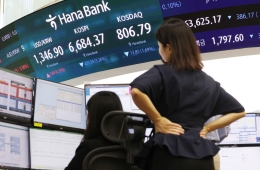
WB Projects Global Economic Growth at 2.5% This Year... Lowest Since COVID-19 Pandemic
Risks Rise with Surging Energy Prices and Spreading Inflation
Prolonged Tightening by Central Banks Worldwide
Brent Crude to Average $94 This Year, Up 36% from 2023
Growth Could Fall to 1.3% If Financial Instability Worsens
AI
The World Bank (WB) has projected the global economic growth rate for this year at 2.5%, predicting it will be the slowest pace since the COVID-19 pandemic. The Bank diagnosed that surging energy prices caused by the Iran war, the resurgence of inflation, and prolonged monetary tightening by central banks around the world are weighing down the global economy.

On June 11 (local time), the World Bank released its “Global Economic Prospects” report, forecasting that this year’s global economic growth will remain at 2.5%. This is 0.4 percentage points lower than last year’s growth rate of 2.9%, marking the lowest rate since the COVID-19 pandemic.
In its report, the World Bank stated, “The conflict in the Middle East has led to a surge in energy prices and heightened inflationary pressures, fueling expectations for more restrictive monetary policy.” The report further explained, “The growth outlook has significantly deteriorated for countries highly dependent on energy imports and those directly affected by the war.”
In fact, the World Bank’s baseline scenario assumes that passage through the Strait of Hormuz will face severe disruptions until July and will only gradually recover thereafter. As a result, it expects the average price of Brent crude this year to reach $94 per barrel, a 36% increase from last year. This is more than 50% higher than the forecast made in January this year. Fertilizer prices are also expected to rise sharply due to higher natural gas prices and ongoing supply chain disruptions.
The World Bank analyzed that rising energy prices are reigniting global inflation. The report pointed out, “Rising commodity prices are once again elevating inflation expectations,” adding that major government bond yields are rising and expectations for monetary easing are diminishing.
Notably, the World Bank warned that if energy supply disruptions worsen beyond expectations and financial market instability occurs simultaneously, this year’s global growth rate could plunge to 1.3%, a level close to a global recession. Conversely, inflation is expected to rise even further.
The report went on to warn that the 2020s risk becoming a “lost decade.” In its preface, the World Bank noted, “Excluding recession years, this year’s global growth rate is the lowest in nearly 20 years,” and cautioned, “By the end of 2026, one-fourth of developing countries and one-third of low-income countries could remain poorer than they were in 2019, before COVID-19.”
However, the World Bank also assessed that in the long term, artificial intelligence (AI) could become a new engine of growth. The report projected that if AI adoption spreads successfully, the global economic growth rate in the 2030s could exceed the average of the 2000s, potentially making it “the most prosperous decade since the 1970s.”
By country, the United States is expected to maintain relatively solid growth at 2.2% this year. The World Bank analyzed that, as a major oil producer, the United States has largely offset the energy price shock through increased fiscal spending and rising investments in AI.
Hot Picks Today
 You Can Receive Monthly Payments Like a Pension Without Selling Your Home... The Local Mutual Growth Housing Pension That Provides 1.69 Million Won Each Month
- "Unimaginable in Korea"...Koreans Surprised by Secondhand Smoke in Japan and China Restaurants
- "Special Skill: Admitting Mistakes"... The Unexpected Edge That Helped Job Seekers Tired of AI Resumes Succeed
- "Canceled After Five Days and Lost 770,000 Won"... Hit by Steep Fees After Pressing the Cancel Button
- "I Thought She Was an Ordinary SKT Employee... The Unexpected Identity of Nongshim's Third-Generation Bride"
In contrast, Europe and Japan, with their high dependence on energy imports, are expected to face relatively greater pressure for growth slowdown. China’s growth rate is projected to slow from 5.0% last year to 4.2% this year.
© The Asia Business Daily. All rights reserved. Unauthorized AI training and use prohibited.


![How Did Tacos Come to Have Two Shells [Delicious Stories]](https://cwcontent.asiae.co.kr/asiaresize/307/2026091410392626963_1789349966.jpg)