Wanju to Begin Construction of Eco-Friendly Fuel Facility in November
Processing 120 Tons of Manure Daily
Expected to Alleviate Odor Issues in the Community
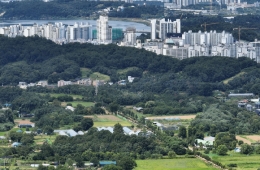
Wanju County in North Jeolla Province is accelerating the establishment of an eco-friendly fuel production facility aimed at processing livestock manure and improving water quality in Saemangeum.
Wanju County announced that it is proceeding with the necessary procedures to begin construction of the eco-friendly fuel production facility in Ungok-ri, Hwasan-myeon, with the goal of breaking ground in November. The project has a budget of 31.8 billion won, and Jeonju Gimje Wanju Livestock Cooperative will lead the implementation, targeting completion and trial operation by June 2029.

This project is especially significant as the validity period for the regulatory sandbox on the solid manure fuel production and sales business—currently promoted by the consortium of North Jeolla Province—has been extended to June 2028. This extension provides a stable foundation for business operations. Wanju County has completed the basic design and is currently proceeding with amendments to the county management plan and detailed design services.
A resident briefing session on the draft environmental impact assessment was completed in April, and the county plans to finish consultations for the environmental impact assessment and secure approval for the implementation plan by October, after which full-scale construction will commence.
Once the facility is completed, it will collect approximately 120 tons of livestock manure per day and produce around 80 tons of solid fuel. This will allow for stable processing of livestock manure concentrated in the Hwasan-myeon area, which is expected to help alleviate the odor issues that have long been a source of inconvenience for local residents.
Recently, local governments across the country have been working to establish circular economy models that utilize livestock manure as an energy resource rather than treating it as mere waste. In particular, regions with a high proportion of livestock farming are seeing expanded projects as this approach reduces manure processing costs and is expected to help lower greenhouse gas emissions.
Wanju County plans to operate a consultative group on a regular basis to keep residents informed of the project’s progress, and will continue to discuss ways to specify village support projects and promote mutual growth with the local community.
Hot Picks Today
 "No Wonder It Soared Today... Morgan Stanley Eyes 3 Million Won Target—Which Stock Is It?"
- "Who Wants to Hire 40 Skilled Kimbap-Making Women?"... A 'Suspicious Ad' Appears Online
- "Why Waste Scorching Subway Heat? New York Launches 1.1 Billion Won 'Innovative Experiment'"
- "If You're So Sure, Try It Yourself": 44-Year-Old Father Admitted to Prestigious University After Daughter's Challenge
- "This Is Not Right, Chairman"...Flood of Criticism over SK hynix's Pursuit of 'Five-Layer Duplicate Listing'
Shin-Young Kang, head of the Environmental Sanitation Division of Wanju County, said, "The extension of the regulatory sandbox period has provided the necessary foundation for advancing the project. We will ensure that construction begins as scheduled in November through thorough planning and licensing procedures, and we will continue to communicate with residents to make this a project that benefits the local community."
© The Asia Business Daily. All rights reserved. Unauthorized AI training and use prohibited.