Debate Intensifies Over Minimum Wage for Contract-Based Workers Like Riders... Headed for a Vote?
5th Plenary Meeting of the Minimum Wage Commission Held
On June 11, the debate between labor and management intensified over whether to apply the minimum wage to contract-based workers such as delivery riders. In particular, the employer side argued that the minimum wage should not be applied to contract-based workers, pointing out that the government's "Survey on the Actual Conditions of Contract-Based Workers" lacked objectivity because it was conducted by a pro-labor research institute. In response, the labor side refuted this claim, stating that the employer side was ignoring the changes of the times and undermining the credibility of the research entity, thereby obscuring the essence of the issue.

At the 5th plenary meeting held on the 11th at the Minimum Wage Commission in the Government Sejong Complex, Ryu Kijeong, Executive Director of the Korea Employers Federation (left), a user committee member, and Ryu Kiseop, Secretary General of the Federation of Korean Trade Unions, a labor committee member, are wearing serious expressions. Photo by Yonhap News Agency
View original imageLabor: "Minimum wage can be applied within the current system... Stop fixating on legal employee status"
The Minimum Wage Commission held its 5th plenary meeting at 3 p.m. at the Government Complex Sejong on this day, continuing discussions on the application of the minimum wage to contract-based workers. Contract-based work is a form of employment in which compensation is determined by performance or volume according to a contract. Typical examples include parcel and delivery drivers, substitute drivers, and private tutors—so-called special employment and platform workers. At the 3rd and 4th plenary meetings, labor committee members from the Korean Confederation of Trade Unions and the Federation of Korean Trade Unions presented their positions regarding the government's special survey on the separate application of the minimum wage to contract-based workers, which was disclosed only to the Minimum Wage Commission. However, due to opposition from the employer side, the discussions failed to reach a conclusion.
The two sides remained at odds during this meeting as well. The labor side asserted that even under the current system, it is possible to apply the minimum wage to contract-based workers, and argued that the Minimum Wage Commission should not be fixated on the criteria of employee status, but rather establish concrete methods of application and calculation standards. Ryu Kisub, Secretary General of the Federation of Korean Trade Unions, explained, "Among contract-based workers, there are cases where legal employee status has been recognized, and occupations such as special employment and platform workers who are covered by employment or industrial accident insurance are in jobs with a very high degree of user and economic dependency." He added, "If we only focus on legal interpretations regarding the expansion of minimum wage application to contract-based workers, we will end up trapped by the limitations of after-the-fact judgments that fail to keep pace with reality."
Imi Sun, Vice President of the Korean Confederation of Trade Unions, also expressed concern, saying, "For the first time in 40 years, the Minister of Employment and Labor has requested a review on whether to make a separate decision on the minimum wage for contract-based workers, and even a government survey has been conducted, but I worry that tripartite discussions between labor, management, and public interest groups are once again reverting to the starting point on the grounds that 'they are not employees under the Labor Standards Act.'" She added, "Even at this moment, workers who live day to day are continuing a tent protest in front of the Ministry of Employment and Labor in Sejong, having given up their livelihoods, and what they are asking for is the guarantee of a minimum wage for a decent life, as stipulated in Article 32 of the Constitution."

On the 9th, at the 4th plenary meeting of the Minimum Wage Commission held at the Government Sejong Complex, Ki-jung Ryu, Executive Director of the Korea Employers Federation (KEF), who is a member of the employers' committee, is speaking. Photo by Yonhap News Agency
View original imageManagement: "Government commissioned a pro-labor research institute... Lost objectivity"
On the other hand, the management side argued that the discussion on the separate application of the minimum wage to contract-based workers faces legal and institutional limitations, insisting that the Commission should transition to a full review of whether to apply the policy differently by industry. Ryu Kijeong, Executive Director of the Korea Employers Federation, stated, "The Minimum Wage Commission is tasked with determining whether separate minimum wage coordination is necessary within the scope of contract-based wage workers. This is explicitly stated in the Minimum Wage Act and in the Ministry of Employment and Labor's request for review."
The management side also questioned the objectivity of the Ministry of Employment and Labor's commissioned research regarding the expansion of minimum wage application to contract-based workers. Ryu emphasized, "The research focused on special employment types continually advocated by labor circles and is far from what public interest committee members originally recommended. There are clear limitations in terms of research entity and data collection methodology." He continued, "On a matter where labor and management have sharply opposing views, a representative pro-labor research institute conducted the study, with the two major labor unions directly collecting the data, so the government's commissioned research has lost objectivity and credibility. In addition to realistic legal application issues, from the perspective of supporting evidence, the employer committee members' position is that a separate application of the minimum wage in advance is not possible."
Hot Picks Today
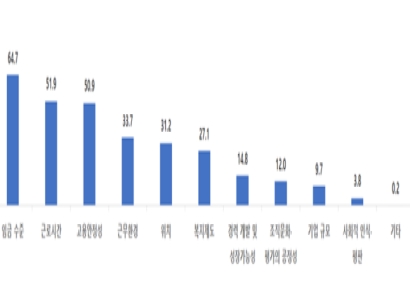 "Please Pay Me at Least 3 Million Won a Month": More Than Half of Young People Today Prioritize "Working Conditions" Over Company Size
- Selling Like Crazy Every Year... 30-Year-Old Hetbahn Takes on a New Challenge: Tastes Better Than "Mom's Home Cooking" [On-Site Report]
- "Americans Would Be Amazed If They Came": Wide-Eyed at a Sight They've Never Seen Before... Foreigners Also Fall for K-Baseball [K-Holic]
- "Hey, Lady, Teach Your Kids to Behave!" ... 300,000 Won in Cash and a Bodily Injury Claim Demanded Over Child's Door Ding
- Beachgoer Finds 'Plastic' That Turns Out to Be Perfume Ingredient Worth More Than Twice as Much as Gold
Although the Minimum Wage Commission is continuing its discussions on whether to apply the minimum wage to contract-based workers, significant differences remain between labor and management over the necessity, target scope, and calculation methods. As the legal review deadline approaches, key issues such as whether to apply the minimum wage differently by industry and the level of next year’s minimum wage increase remain unresolved, so there is a possibility that the issue of applying the minimum wage to contract-based workers will be decided by a vote at the meeting on this day.
© The Asia Business Daily. All rights reserved. Unauthorized AI training and use prohibited.