Seoul to Launch KRW 9.2 Trillion Rail Projects: “No More False Hopes... All Lines to Pass Feasibility Review This Term” (Comprehensive)
Seoul Announces 3rd Urban Rail Network Plan
Government’s Pre-Feasibility Reforms 'Positive'... Higher Approval Prospects
Enhanced Execution and Project Feasibility... 360,000 More Beneficiaries Expected
The Seoul Metropolitan Government plans to launch six urban railway projects, investing a total of 9.2 trillion won. These projects include the Gangbuk Horizontal Line connecting Mokdong Station and Cheongnyangni Station, and the Nangok Line connecting Boramae Park Station and Nanhyang-dong. The initiative aims to support balanced development by connecting transportation-disadvantaged areas in the northern and southwestern parts of Seoul. The city intends to reduce the average subway station access time within the influence area of the new lines from 9.97 minutes to 8.03 minutes.

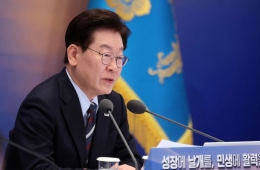
Oh Se-hoon, then candidate for Seoul mayor, announced his urban railway promise at his election campaign office in Daewang Building, Jongno-gu, Seoul, on the 26th of last month. Photo by Yonhap News Agency
View original imageOn June 11, the Seoul Metropolitan Government announced that it had prepared the "3rd Urban Railway Network Construction Plan" and submitted it to the Seoul Metropolitan Council. The six projects included in this plan are: ▲ Gangbuk Horizontal Line (25.79 km, 3.2165 trillion won), ▲ Nangok Line (4.23 km, 555.8 billion won), ▲ Southwest Line (20.48 km, 2.6736 trillion won), ▲ West Line (15.89 km, 2.5005 trillion won), ▲ South Extension of the West Line (1.72 km, 177 billion won), and ▲ North Extension of the Sillim Line (0.39 km, 76.2 billion won).
The Seoul Metropolitan Government explained that it has improved the economic feasibility of the projects to facilitate their passage through the preliminary feasibility study (pre-feasibility study) by reducing the number of stations or adjusting overlapping bus routes with railways. The total length is 68.5 km, with a total project cost of 9.1996 trillion won.
One in ten administrative districts takes more than 15 minutes to reach a station... Six lines selected for higher practicality
Although Seoul’s urban railway environment boasts a high level of infrastructure, some areas remain underserved, requiring more than 10 minutes to reach a subway station. According to big data analysis combining public and private sector data, the average railway access time across 427 administrative districts in Seoul is 10.3 minutes. However, in 18 districts (4.1%) including Buam-dong, it takes 15–20 minutes, and in 23 districts (5.2%) such as Pyeongchang-dong, it takes more than 20 minutes to reach a subway station.
The Seoul government reviewed 250 routes, taking into account projected demand within the area, overlapping sections, technical conditions, and the railway plans of the central government and neighboring local governments. Based on a comprehensive review of economic feasibility and policy considerations, six final lines were selected.
The Gangbuk Horizontal Line, the longest among the third-phase railway projects, will be promoted as a major route traversing the northeast, northwest, and southwest regions by improving the route alignment and thereby enhancing its business viability. Although this line had been considered since the second urban railway network plan, it struggled due to low business feasibility. Despite the city government’s commitment, the project was unable to proceed after the central government’s pre-feasibility study judged that it lacked sufficient economic feasibility (Benefit/Cost ratio). In the third-phase plan, the city improved the business case by reducing the number of stations from 19 to 17 and reflecting 49 future development plans.
The Nangok Line will connect Boramae Park Station to Nanhyang-dong. Seoul improved the business feasibility of this project by reducing the number of stations from six to five and updating development plans such as Sillim 7 District. The pre-feasibility study is currently underway, and the city expects to pass the review in the second half of this year.
The Southwest Line is an expanded version of the existing Mokdong Line plan. The main section will run from Magoknaru Station to Gasan Digital Complex Station, while a branch will connect the Seobu Truck Terminal to Dangsan Station. The endpoints have been extended both north and south compared to the original Mokdong Line, and demand from the Mokdong redevelopment area has been newly included.

For the West Line, the city plans to simultaneously pursue a second private investment announcement and a transition to a public-funded project, ensuring that the project proceeds without interruption. If no private investors participate after the second announcement, the project will be converted to public funding, and the process will begin in the first quarter of next year. The South Extension of the West Line will connect Seoul National University Entrance Station to the front gate of Seoul National University, and the North Extension of the Sillim Line will connect Saetgang Station to Yeouido, improving railway accessibility in currently disconnected areas. Although not included in the third network plan, the introduction of a new light rail line, the East Line, connecting Gangnam and Gangbuk will be considered after assessing the business feasibility based on updated demand, with plans to promote it through a revision to the third-phase network.
At a briefing, Jeangwon Yeo, policy chief of the Seoul Metropolitan Government’s Transportation Bureau, stated, "During the recent local elections, many pointed out that the urban railway network plan amounted to 'false hope' for citizens. The plan was often used as a campaign promise but rarely implemented, which has been a source of deep regret." He added, "Rather than adding new lines, our focus was on ensuring the implementation of projects included in the second-phase railway network plan. Our goal is to have all urban railway lines in the third-phase plan pass the pre-feasibility study during the ninth popularly elected administration’s term."
Improved government pre-feasibility study system... 'Positive' for Seoul railway projects
The Seoul Metropolitan Government believes that the recent improvement in the government’s pre-feasibility study system has increased the likelihood that urban railway projects will pass the review. The pre-feasibility study includes a "regional balanced development index," but because Seoul is generally more developed than other cities and provinces, even its relatively underdeveloped areas have rarely been recognized. However, with this revision, the government has announced it will now recognize relatively underdeveloped areas and regions with lower accessibility within Seoul as well, adding a 5% weight to the regional balanced development index. Yeo explained, "With the inclusion of balanced regional development and public transportation system efficiency in the pre-feasibility study reform plan by the Ministry of Economy and Finance in March, we expect the likelihood of passing the pre-feasibility review for the third-phase network to increase."
In addition, regarding the improvement of the pre-feasibility study, ▲ an additional score will be given for the efficiency of the public transportation system achieved by adjusting overlapping bus routes with railways, and ▲ the value assigned to travel time will be increased by 20%, both of which are expected to have a positive impact on the approval of railway projects.

The Seoul Metropolitan Government expects that upon completion of the third-phase urban railway network, the average access time to subway stations within the new lines’ area of influence will be reduced from 9.97 minutes to 8.03 minutes. The number of people benefiting is expected to increase by 360,000, expanding the total to 7.83 million.
However, considering the feasibility of implementation, the Seoul Metropolitan Government has decided not to pursue the "Express Service on Line 4" and the "Direct Connection on Line 5," which were included in the second-phase plan. The Express Service on Line 4 was deemed technically unfeasible, as at least three sidings are needed for regular trains to wait while express trains pass, but only two possible siding sections were identified on Line 4. Given current technology and safety standards, implementation of the express service was found to be virtually impossible and thus excluded from the plan. The direct connection on Line 5 was also dropped as it became less necessary due to changes in circumstances. While it was meaningful at the time of the second-phase network, subsequent extension projects of Line 3 and Line 9 in the area now mean that transportation can be improved without a direct connection.
Hot Picks Today
 "Please Pay Me at Least 3 Million Won a Month": More Than Half of Young People Today Prioritize "Working Conditions" Over Company Size
- Selling Like Crazy Every Year... 30-Year-Old Hetbahn Takes on a New Challenge: Tastes Better Than "Mom's Home Cooking" [On-Site Report]
- "It's so popular you can't get it": 'Legendary liquor' returns after 11 years, causing a stir... 'Newtro' craze takes over convenience stores [How We Shop Today]
- "Hey, Lady, Teach Your Kids to Behave!" ... 300,000 Won in Cash and a Bodily Injury Claim Demanded Over Child's Door Ding
- Beachgoer Finds 'Plastic' That Turns Out to Be Perfume Ingredient Worth More Than Twice as Much as Gold
The Seoul Metropolitan Government plans to expedite the related administrative procedures, aiming for approval from the Ministry of Land, Infrastructure and Transport in the second half of the year. The city will complete opinion collection from the Seoul Metropolitan Council and public hearings with citizens this month, and then apply for central government approval next month to begin the projects in the second half of this year. Seoul Mayor Oh Se-hoon stated, "We will rapidly and seamlessly expand railway infrastructure and innovate transportation services to enhance citizens’ experience and usher in a new era of transformative transportation in Seoul."
© The Asia Business Daily. All rights reserved. Unauthorized AI training and use prohibited.




![[Market ING] KOSPI Seeks Rebound in Superweek Packed with Corporate Earnings and FOMC](https://cwcontent.asiae.co.kr/asiaresize/307/2026102514484873155_1792907327.jpg)