Household Loans Surge by 9.3 Trillion Won in May Amid 'Leveraged Stock Investments'... Credit Limits for High-Income Earners to Be Reduced
Credit Loans Surge by 3.4 Trillion Won in One Month
Authorities Launch Weekly Inspections... Banks Tighten Loan Controls
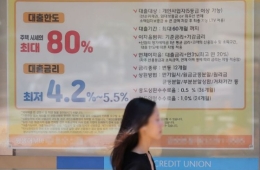
Household loans in South Korea surged sharply last month as rising stock markets fueled an increase in so-called 'debt investment' demand, where investors borrow to invest in stocks. In response, financial authorities have announced plans to conduct weekly inspections of financial institutions and strengthened lending controls for banks, including reducing the credit loan limits for high-income earners.

According to the "May Household Loan Trends" report released by the Financial Services Commission and the Financial Supervisory Service on June 11, household loans across all financial sectors increased by 9.3 trillion won last month compared to the previous month. This is nearly three times the increase seen in April, which was 3.5 trillion won.
The main driver of this growth was the rise in credit loans. While housing mortgage loans increased by 4 trillion won—less than the 5.5 trillion won increase in the previous month—other types of loans jumped by 5.3 trillion won, reversing a trend from a 2 trillion won decline in April to growth in May. In particular, credit loans swung from a 900 billion won decrease in April to a 3.4 trillion won increase in May. This was largely attributed to higher investor demand for stock market funds amid a market upswing.
By sector, bank household loans expanded by 6.9 trillion won, up from a 2.1 trillion won increase the month before. Breaking this down, other types of loans led the increase, moving from a 600 billion won decrease in April to a 3.7 trillion won increase in May. Bank-originated housing mortgage loans rose by 2.1 trillion won, up 700 billion won from the previous month, while policy loans increased by 1.1 trillion won, which was a 300 billion won decrease in the rate of growth.
In the non-bank sector—including insurance companies, credit card companies, and savings banks—household loans increased by 2.3 trillion won, with the pace of growth accelerating from a 1.4 trillion won rise in the previous month.
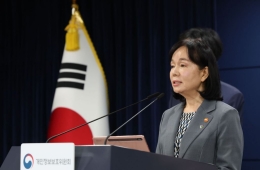
Financial authorities are tightening their control over household debt management. The Financial Services Commission plans to implement an emergency management system, holding weekly inspection meetings for financial institutions that fail to meet household debt control targets and closely monitoring their compliance until the growth trend stabilizes.

Shin Jin-chang, Secretary General of the Financial Services Commission, convened a household debt review meeting on this day and stated, "In May, driven by seasonal demand during Family Month and rising stock markets, the growth in other types of loans—especially overdraft accounts—expanded significantly. With the end of the temporary capital gains tax exemption for multi-homeowners, more properties are coming onto the market, which could boost mortgage loans again. At the same time, volatility in credit loans could continue to rise. Therefore, all financial sectors must proactively strengthen their autonomous management of household lending."
The banking sector is also taking its own measures. Banks will reduce the credit loan limits for high-income earners and encourage early repayment by waiving prepayment penalties on credit loans, among other self-regulatory steps.
Meanwhile, the Financial Supervisory Service's inspections found a total of 1,174 cases of breaches of additional loan agreements in the banking sector during the first quarter of this year. Of these, 1,106 cases involved violations of the ban on purchasing additional homes, making up the majority. There were 56 violations related to the requirement to dispose of existing homes, and 12 breaches of the mandatory move-in requirement.
Hot Picks Today
![[Exclusive] Both SK hynix and Samsung Halted... Crisis Hits Semiconductor Factories](https://cwcontent.asiae.co.kr/asiaresize/93/2026061116271496667_1781162834.png) [Exclusive] Both SK hynix and Samsung Halted... Crisis Hits Semiconductor Factories
[Exclusive] Both SK hynix and Samsung Halted... Crisis Hits Semiconductor Factories
- The Sooner You Start, the Better... "Millennials & Gen Z Should Gradually Move Stock Profits 'Here'" [Retirement Pension Investment Strategy] ⑧
- "I Tried It Because It Was Trending and Lost Weight Fast"...The Soybean Milk Craze Shaking Up the Diet Market
- "This Is Truly Rare"... 4,400 Employees to Become Millionaires Overnight
- "I Am an Addict"… President's Troubled Son Rises as an SNS Star
The Financial Supervisory Service monitors whether borrowers fulfill additional agreements made with banks when taking out household loans. If a breach occurs, the loan is recalled, and the violation is registered with the Korea Credit Information Services, restricting the borrower's ability to obtain housing-related loans from any financial institution for the next three years. The Financial Supervisory Service plans to continuously check for violations in cooperation with financial institutions and to ensure that all follow-up measures are properly implemented.
© The Asia Business Daily(www.asiae.co.kr). All rights reserved.