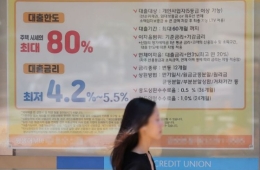
"Stronger Stock Market and Economic Revitalization Ease Funding Concerns... June Apartment Move-in Outlook Index Rises"
Move-in Outlook Index Jumps 10.5 Points in June
Nationwide Apartment Move-in Rate Surges by 15.4 Percentage Points in May
The Apartment Move-in Outlook Index for June showed an increase. This appears to reflect expectations that, as more regions are experiencing sharper rises in housing prices, the financial difficulties of those scheduled to move in could be eased by the strong performance of the domestic stock market and economic revitalization.

A panoramic view of apartment complexes in downtown Seoul as seen from Namsan, Seoul. 2025.06.27 Photo by Dongju Yoon
View original imageAccording to a survey conducted by the Housing Industry Research Institute on the 11th among housing business operators, the nationwide Apartment Move-in Outlook Index for this month stood at 84.6, up 10.5 points. This index predicts whether people who have purchased apartments will be able to pay the remaining balance and move in as scheduled. A value above 100 indicates that more respondents have a positive outlook on the move-in market, while a value below 100 indicates the opposite.
By region, the index rose by 3.3 points to 78.4 in the Seoul metropolitan area, by 5.1 points to 79.3 in metropolitan cities, and by 17.2 points to 68.6 in provincial regions. With a significant nationwide increase, the index has recovered to a level exceeding the previous one-year average of 83.9.
Within the Seoul metropolitan area, Seoul rose by 8.8 points to 102.7, and Incheon increased by 2.3 points to 70.3. On the other hand, Gyeonggi fell by 1.3 points to 72.2. Seoul's return to above the 100 baseline after the March move-in outlook is interpreted as a reflection of expectations that new apartment move-ins will benefit from decreased housing supply and increased available funds due to a revitalized stock market.
Among metropolitan cities, Daejeon climbed by 13.1 points to 82.3, while Sejong jumped by 17.7 points to exactly 100. Daegu rose by 4.6 points to 81.8, Busan by 3.5 points to 72.2, and Ulsan by 0.7 points to 92.3. The Housing Industry Research Institute analyzed, "In Daejeon and Sejong, as new move-in supply has been limited to an average of only 400 households per month over the past year and jeonse prices have continued to rise, the move-in outlook has improved."
In contrast, Gwangju fell by 8 points to 77.7. The move-in outlook declined as the April move-in supply surged to around 3,000 households (compared to the previous three-year monthly average of 550), resulting in a burden to absorb the increased supply and a concurrent decline in housing prices.
For provincial regions, Gyeongnam surged by 34.4 points, Chungbuk by 28.6 points, Gyeongbuk by 25 points, and Jeonbuk by 9.1 points. Chungnam rose by 15 points, Gangwon by 11.1 points, Jeonnam by 9.5 points, and Jeju by 4.8 points, all showing an improved move-in outlook.
However, the Housing Industry Research Institute added, "Recently, with the possibility of a U.S. base rate hike due to rising inflation and the tightening monetary policy stance of major economies such as Japan and the European Union, there is increasing upward pressure on interest rates in Korea as well. There is a possibility that further rises in lending rates could increase the financial burden on actual homebuyers, which could negatively impact the move-in outlook. Therefore, it is necessary to closely monitor financial markets and interest rate trends."
Nationwide Apartment Move-in Rate Soars by 15.4 Percentage Points in May
Last month, the nationwide apartment move-in rate was 71.2%, a sharp increase of 15.4 percentage points from the previous month. By region, the Seoul metropolitan area rose by 2.6 percentage points, the five major metropolitan cities by 12.3 percentage points, and other regions by 22.6 percentage points.

On February 5, an apartment sales notice was posted in front of a real estate agency located within a large apartment complex in downtown Seoul. Photo by Seoul Reporter
View original imageIn the Seoul metropolitan area, Seoul saw a slight decline of 1.2 percentage points to 91%, but continued to maintain a high move-in rate. Incheon and Gyeonggi increased by 4.5 percentage points to 81.5%. The rise in move-in rates is attributed to the expansion of areas experiencing increases in housing prices in the metropolitan area.
Outside the metropolitan area, Gangwon rose by 22.5 percentage points, Daegu, Busan, and the Gyeongsang region by 20.1 percentage points, Gwangju and the Jeolla region by 18.8 percentage points, Daejeon and the Chungcheong region by 17.7 percentage points, and Jeju by 4.5 percentage points.
The move-in rate, which had declined sharply in April due to a large concentration of move-ins in non-metropolitan areas, saw a significant improvement in May. As a result, the gap in move-in rates between the metropolitan area (84.8%) and non-metropolitan areas (68.3%) narrowed by 15.6 percentage points compared to the previous month, indicating a mitigation of regional move-in polarization.
The reasons for non-move-in were as follows: failure to secure balance loans (35.4%), delayed sale of existing homes (29.2%), failure to secure tenants (18.8%), and delayed sale of pre-sale rights (4.2%). Among these, delayed sales of existing homes, which had increased in the previous month, declined by 5.5 percentage points. This is believed to be the result of a policy introduced last month that allowed non-resident single-home owners to sell their existing homes even if tenants remained, thereby alleviating the burden of disposing of owned homes.
Hot Picks Today
![[Exclusive] Both SK hynix and Samsung Halted... Crisis Hits Semiconductor Factories](https://cwcontent.asiae.co.kr/asiaresize/93/2026061116271496667_1781162834.png) [Exclusive] Both SK hynix and Samsung Halted... Crisis Hits Semiconductor Factories
[Exclusive] Both SK hynix and Samsung Halted... Crisis Hits Semiconductor Factories
- The Sooner You Start, the Better... "Millennials & Gen Z Should Gradually Move Stock Profits 'Here'" [Retirement Pension Investment Strategy] ⑧
- "I Tried It Because It Was Trending and Lost Weight Fast"...The Soybean Milk Craze Shaking Up the Diet Market
- American YouTuber Who Insulted Statue of Peace Apologizes and Expresses Remorse at First Appeal Hearing
- "I Am an Addict"… President's Troubled Son Rises as an SNS Star
The Housing Industry Research Institute explained, "On the 28th of last month, the Bank of Korea froze the base rate for the eighth consecutive time (at 2.50% per annum), but suggested a possible rate hike within the year. As a result, housing mortgage loan interest burdens are expected to increase going forward. While economic revitalization and a booming stock market could increase housing demand, the potential increase in interest burden may affect the financing conditions for actual buyers. Therefore, close observation is needed to determine whether the improvement in move-in conditions will be sustained."
© The Asia Business Daily(www.asiae.co.kr). All rights reserved.