Deputy Prime Minister Koo Yuncheol: "Employment Uncertainty Expanding Due to Middle East War... All Ministries to Mobilize Full Resources"
Employment-Related Ministers’ Meeting Held on June 11
Number of Employed Persons Decreases in May for the First Time in 17 Months
As the prolonged Middle East war has led to a decrease in the number of employed persons in May for the first time in 17 months, the government has announced plans to mobilize all ministries’ resources to stabilize vulnerable sectors such as youth employment, manufacturing, and construction.

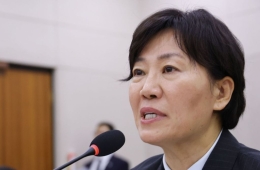
Deputy Prime Minister and Minister of Strategy and Finance Koo Yoon-cheol is presiding over the Employment Relationship Ministers' Meeting held on June 11 at the Government Seoul Building in Jongno-gu, Seoul. Ministry of Strategy and Finance
View original imageOn June 11, Deputy Prime Minister and Minister of Strategy and Finance Koo Yuncheol held the Employment-Related Ministers’ Meeting at the Government Complex Seoul, stating, “The prolonged Middle East war is expanding the uncertainty in employment conditions.” At the meeting, Deputy Prime Minister Koo reviewed the latest employment trends for May and discussed future response measures.
He explained, “As the Middle East war continues, resulting in rising raw material prices and supply disruptions, the number of employed persons in May has turned to a decrease for the first time in 17 months, further increasing uncertainty in the labor market.” He added, “Difficulties for young people are intensifying, and downturns in the manufacturing, construction, and agricultural and fisheries sectors are worsening by industry.”
Deputy Prime Minister Koo urged all ministries to remain vigilant and respond with full force as the uncertainties of the Middle East war persist. He especially emphasized the importance of boosting youth employment and strengthening youth competencies. In May, the number of employed persons aged 15 to 29 decreased by 255,000 compared to the same month last year, marking the largest decline since January 2021 (-314,000), when the impact of the COVID-19 pandemic was at its peak.
Accordingly, Deputy Prime Minister Koo called for the prompt implementation of the “Youth New Deal Action Plan” announced in April and the active identification of additional supplementary measures. He also mentioned that, in the second half of the year, training for over 1,000 young professionals in high-tech industries would be pursued. “Not only the Youth New Deal initiative but also all economic policies, including structural reforms, will be planned and implemented in line with the perspectives and voices of young people,” he stated.
He also urged the seamless implementation of measures to ensure that business difficulties caused by the prolonged Middle East war in industrial sites do not translate into employment instability. Recently, the government eased the requirements for applying for Employment Retention Subsidies and implemented employment stabilization measures in regions with a high concentration of industries at risk through the “Butimium” project. Moving forward, the government plans to quickly designate employment crisis areas and special employment support industries to help overcome employment crises swiftly. In addition, the “Company Support–Job Creation Linked Fiscal Support Plan,” which strengthens fiscal incentives for companies creating jobs, will also be steadily pursued.
Hot Picks Today
 "Please Pay Me at Least 3 Million Won a Month": More Than Half of Young People Today Prioritize "Working Conditions" Over Company Size
- Selling Like Crazy Every Year... 30-Year-Old Hetbahn Takes on a New Challenge: Tastes Better Than "Mom's Home Cooking" [On-Site Report]
- Ran 18 km With 9-Year-Old Tied to Him at the Waist... "Man Banned From Competing for 3 Years"
- "Hey, Lady, Teach Your Kids to Behave!" ... 300,000 Won in Cash and a Bodily Injury Claim Demanded Over Child's Door Ding
- Beachgoer Finds 'Plastic' That Turns Out to Be Perfume Ingredient Worth More Than Twice as Much as Gold
Furthermore, all ministries will work together to proactively respond to rapid industrial transitions such as AX and GX, as well as changes in workforce demand in new industries, and will promptly prepare and implement the “Basic Plan for Employment Stability Amid Industrial Transition,” which supports workers needing job transitions in a timely manner.
© The Asia Business Daily. All rights reserved. Unauthorized AI training and use prohibited.




![[Market ING] KOSPI Seeks Rebound in Superweek Packed with Corporate Earnings and FOMC](https://cwcontent.asiae.co.kr/asiaresize/307/2026102514484873155_1792907327.jpg)