A Look at Overseas Election Management Systems... Accountability and Oversight Must Be Strengthened [NEC Overhaul ③]
South Korea's election management system, which places the National Election Commission (NEC) as an independent deliberative constitutional body, is considered a relatively rare case among major democracies. A review of international practices suggests that reforms are needed for the NEC so that principles of accountability and checks and balances can function effectively.
Accountability and Oversight Structures Are Relatively Clear
In the United Kingdom, the government is responsible for nationwide election legislation and policies, while local Returning Officers are in charge of on-the-ground election work, such as preparing for voting, and ballot counting. The independent central Electoral Commission sets performance standards for local Returning Officers and monitors and releases the status of implementation.
In France, the Ministry of the Interior oversees national elections, government-appointed administrators (Prefets) dispatched to regional governments provide local coordination, and heads of basic local governments are responsible for practical matters. The chain of accountability is relatively clear. In Germany, election supervisors appointed by the federal and state governments are responsible, while election reviews are handled by parliament and the constitutional court.
Han Sanghee, professor at Konkuk University, stated, "If constitutional revision is possible, the NEC should be reorganized as an independent body under the executive branch." Jang Youngsoo, professor at Korea University, added, "If the Board of Audit and Inspection is established as a constitutional institution, as in Germany and France, mutual checks and balances would be possible."

Spotlight on Cases in Canada and Mexico
Although the necessity of constitutional revision is raised, its feasibility is low. For this reason, the cases of Canada and Mexico, which share some similarities with South Korea, are drawing attention. Elections Canada is a single-leader independent agency operated under electoral law. Its chief is elected by parliament. As a single-leader system, the lines of accountability are clear.
Elections Canada exercises broad authority, including the execution of federal elections, management of voter lists, supervision of party registration, and oversight of political funding. However, it is subject to audits and reviews by parliament and the Board of Audit. Additionally, an independent audit committee operates, and there is a separate officer responsible for election law violations. The officer is appointed in consultation with the Director of Public Prosecutions.
In Mexico, a constitutional body similar to the NEC, the National Electoral Institute (INE), exists. The General Council, INE's highest decision-making body, is composed mainly of one chairperson and ten election commissioners, all elected by a two-thirds majority of the lower house of Mexico. There is also a secretary general who handles practical work within the organization. INE is relatively similar to South Korea's NEC.
One key difference from South Korea's NEC is that INE has an "Internal Oversight Body (OIC)" with autonomy. The OIC is responsible not only for budget and accounting but also for audits of the administrative office. The head of the OIC is elected by a two-thirds majority of the lower house. While belonging to INE, the OIC secures a certain degree of organizational independence.
Hot Picks Today
![[Exclusive] Both SK hynix and Samsung Halted... Crisis Hits Semiconductor Factories](https://cwcontent.asiae.co.kr/asiaresize/93/2026061116271496667_1781162834.png) [Exclusive] Both SK hynix and Samsung Halted... Crisis Hits Semiconductor Factories
[Exclusive] Both SK hynix and Samsung Halted... Crisis Hits Semiconductor Factories
- The Sooner You Start, the Better... "Millennials & Gen Z Should Gradually Move Stock Profits 'Here'" [Retirement Pension Investment Strategy] ⑧
- "I Tried It Because It Was Trending and Lost Weight Fast"...The Soybean Milk Craze Shaking Up the Diet Market
- American YouTuber Who Insulted Statue of Peace Apologizes and Expresses Remorse at First Appeal Hearing
- "I Am an Addict"… President's Troubled Son Rises as an SNS Star
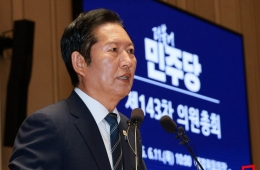
Chae Hyunil, a lawmaker from the Democratic Party of Korea, said, "The NEC was established as a constitutional body to realize the people's right to political participation, but over time it has become a power of its own." He added, "While its independence should be guaranteed, its accountability and checks and balances need to be reinforced."
© The Asia Business Daily(www.asiae.co.kr). All rights reserved.