Korea Attracts 250 Billion Won Investment from European Firms... Expands Digital and Supply Chain Cooperation
Four Companies from Germany, France, the Netherlands, and Sweden Announce $165 Million Investment
Korea and EU Sign Digital Trade Agreement, Launch New Supply Chain Cooperation Framework

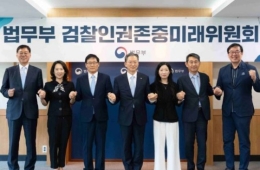
Kim Jungkwan, Minister of Trade, Industry and Energy (center), is taking a commemorative photo with representatives of European advanced companies at the European regional investor roundtable held on the 10th (local time) in Brussels, Belgium. Ministry of Trade, Industry and Energy.
View original imageSouth Korea has attracted a total of $165 million (approximately 250 billion won) in foreign direct investment (FDI) from leading European advanced technology companies. With European firms in the fields of semiconductor and display equipment, advanced materials, and quantum computing selecting Korea as a base for research and development (R&D) and production, cooperation in advanced industries is expected to expand further. The government also broadened the scope of bilateral economic cooperation to include digital and economic security by securing FDI, officially signing the Korea-EU Digital Trade Agreement (DTA), and agreeing to establish new supply chain and critical mineral cooperation frameworks.
The Ministry of Trade, Industry and Energy and the Korea Trade-Investment Promotion Agency (KOTRA) held an investment declaration ceremony and an investor roundtable for the European region in Belgium on the 10th (local time). On the occasion of President Lee Jaemyung’s visit to the European Union (EU), the event saw four companies—Orafol from Germany, Quandela from France, Prodrive Technologies from the Netherlands, and Mycronic from Sweden—announce a combined $165 million in foreign direct investment (FDI).
Orafol will expand the production facilities of a Korean reflective film company it acquired last year. The plan is to combine European technological capabilities with the Korean company’s global sales network to target demand in the Asia-Pacific region. Quandela, a quantum computing company, will expand R&D cooperation with Korean academia, industry, and research institutes, aiming to develop Korea into an R&D and manufacturing hub.
Prodrive Technologies will establish its first Korean subsidiary for its equipment module business in advanced industries such as semiconductors, and it is also considering setting up manufacturing facilities and an R&D center in the future. Mycronic plans to use Korea as an R&D base to further drive technological innovation, leveraging its laser equipment technologies for display and semiconductor photomasks.

The investor roundtable was attended by representatives from European companies and research institutes, who discussed ways to expand investment in the future. The participants shared the view that cooperation between trusted partners such as Korea and Europe is vital, especially amid rising geopolitical tensions, the spread of protectionism, and intensifying competition for technological supremacy.
Kim Jonggwan, Minister of Trade, Industry and Energy, said, "Korea’s competitive advanced industry supply chains and AI ecosystem will offer new opportunities for cooperation to European companies," adding, "We will continue to expand foreign investment incentives and improve the regulatory environment to actively address challenges investors may face."
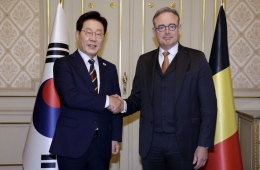
Alongside the investment attraction, Korea and the EU also launched full-fledged cooperation on digital trade. Under the witness of both leaders, Ye Han-koo, Trade Negotiator of Korea, and Maros Sefcovic, EU Executive Vice-President for Trade and Economic Security, officially signed the Korea-EU DTA. This marks Korea’s second bilateral digital trade agreement after Singapore, and the first such agreement signed between Korea and the EU in the digital domain.
The agreement essentially prohibits requirements for data localization and the local installation of computing facilities, thereby reducing market entry costs for Korean companies in Europe. It also establishes an institutional foundation for enhancing the efficiency of digital trade by including provisions for source code protection, recognition of electronic signatures and electronic authentication, and standardization of electronic invoicing and electronic payments. The government anticipates that this will promote the expansion of e-commerce, boost exports of digital content, and support startups in entering the European market.
Hot Picks Today
 "When Should I Sell My $30 Million in Shares?"... SpaceX Employees Face a Happy Dilemma
- Nearly 500 Patients in a Day Bring Medical System to Brink of Collapse... Nigeria Faces Cholera Outbreak Emergency
- "Japan Outraged Over Korea's 'Theft'; New Variety Rights Protection Agency to Launch in August"
- "Is She Really a Mother of a 45-Year-Old? The Secret to Youthful Looks of a 70-Year-Old Woman with 2 Million Followers"
- Travelers Risk Being Stranded... Japan on High Alert Amid Worst-Ever Typhoon Scenario
Additionally, both sides agreed to launch the "Korea-EU Competitiveness Partnership" encompassing cooperation in trade, investment, supply chains, digital, advanced technology, and energy, and to establish a high-level economic dialogue overseeing existing consultative bodies. Through these measures, the two sides intend to strengthen collaboration in supply chains, critical minerals, and economic security, and to build a strategic cooperation system for addressing trade issues.
© The Asia Business Daily(www.asiae.co.kr). All rights reserved.