Park Yongjin Criticizes: "Mandatory Supermarket Closures Only Boosted Coupang, Not Local Businesses"
"Outdated Regulations Based on Standards from a Decade Ago"
"Policies Must Be Revised to Reflect Changes in Distribution and Consumer Benefits"
Park Yongjin, Vice Chairman of the Presidential Regulatory Rationalization Committee, who heads the committee, has called for a comprehensive policy review of the mandatory closure system for large retailers, urging that current consumer trends be reflected in policy decisions.
On June 10, Vice Chairman Park posted on his personal social networking service (SNS) a post titled "Regulating Large Retailers: It Is Results, Not Good Intentions, That Prove Policy Success." In the post, he pointed out that distribution regulations, introduced more than a decade ago, are now out of touch with today's consumer environment and are causing side effects.

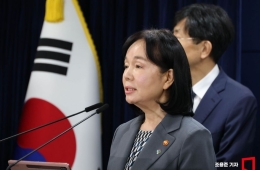
Park Yongjin, Vice Chairman of the Regulatory Rationalization Committee, is speaking at the 1st plenary meeting of the Regulatory Rationalization Committee held on April 15 at the Blue House, presided over by President Lee Jae-myung. Photo by Yonhap News Agency
View original imageHe stated, "For dual-income households, weekends are practically the only time to shop for groceries. If offline supermarkets are closed, consumption does not shift to traditional markets but to online channels." He further emphasized, "What is even more problematic is that while large supermarkets are regulated, there are no regulations whatsoever for early-morning delivery platforms."
This directly addresses criticism from the market that, contrary to the original intention of protecting traditional markets and local businesses, the regulation has only led to the unchecked expansion of major online platforms such as Coupang. In particular, he highlighted the creation of an unfair competitive environment from the beginning, as existing large supermarkets are strictly regulated while early-morning delivery platforms face no restrictions.
Park also presented concrete research data supporting the positive effects of deregulation. Citing analysis by the Korea Development Institute (KDI), he explained, "There was no evidence of declining traditional market sales in regions where mandatory closure days were changed to weekdays. On the contrary, there was a trend of consumption shifting from online to offline, with more people visiting both local commercial districts and traditional markets."
He went on to diagnose that distribution policy remains excessively focused on reconciling the interests of suppliers, to the neglect of actual consumer benefits and voices. As a solution, he suggested moving away from a binary approach of either blindly maintaining or entirely abolishing regulations, and instead proposed 'regulatory rationalization' and 'practical mutual support' that reflect current realities.
Hot Picks Today
![The Sooner You Start, the Better... "Millennials & Gen Z Should Gradually Move Stock Profits 'Here'" [Retirement Pension Investment Strategy] ⑧](https://cwcontent.asiae.co.kr/asiaresize/93/2026060208452984669_1780357529.png) The Sooner You Start, the Better... "Millennials & Gen Z Should Gradually Move Stock Profits 'Here'" [Retirement Pension Investment Strategy] ⑧
The Sooner You Start, the Better... "Millennials & Gen Z Should Gradually Move Stock Profits 'Here'" [Retirement Pension Investment Strategy] ⑧
- Half of People in Their 20s Say "It's an Intrusion on Daily Life, It's Scary"... Heart Sinks the Moment the Phone Rings
- "I Tried It Because It Was Trending and Lost Weight Fast"...The Soybean Milk Craze Shaking Up the Diet Market
- Astronauts Wear Prada: Luxury Brand Joins NASA Lunar Mission with High-Performance Specialized Textiles
- "I Am an Addict"… President's Troubled Son Rises as an SNS Star
Vice Chairman Park stressed, "We need to more actively promote support for traditional market digital transformation, improvements to payment systems, and marketing linked to local products." He emphasized that instead of tying down all offline business through regulation, policy should aim to revitalize entire local commercial districts in line with changing consumer trends.
© The Asia Business Daily(www.asiae.co.kr). All rights reserved.