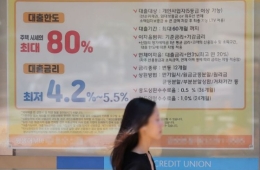
[Inside Chodong] Peeing on Your Feet... Whose Debt Is It For?
Became Owner of an 800 Million Won Home with 80 Million Won
5.5 Billion Won in Debt Hidden Behind 'Tenfold Profit'
The Dark Side of Government-Backed Loan Policies
![[Inside Chodong] Peeing on Your Feet... Whose Debt Is It For?](http://www.asiae.co.kr/news/img_view.htm?img=2026061114280996455_1781155689.jpg)
The government’s annual Housing Survey includes a question about which housing support program is most needed. Among respondents, approximately four out of ten say they need a housing support program, while about six say they do not. Among those who answered that they need support, the most frequently chosen option is loans. Homeowners most often select home purchase loans, while those living in jeonse (long-term deposit lease) most frequently choose programs that support jeonse deposit loans.
Although debt is considered part of one’s assets and borrowing is now seen as a matter of personal capability, why do so many people want loans? It seems to be because the other answer choices on the questionnaire are not particularly appealing. The alternative programs offered include long-term public rental housing, public housing supply, support for home repair or renovation, and housing counseling and information services. Few people are likely to have direct experience with public rental or public housing. Presenting home repair support or housing counseling as housing support programs can feel somewhat awkward.
Today, taking out a bank loan to buy a home or cover a shortfall in a jeonse deposit is considered normal. However, even just one generation ago, this was not the case. Mortgage loans began to take root in Korea’s housing culture after the 1997 financial crisis, and jeonse loans emerged about a decade later, around 2008. After the financial crisis, banks shifted their focus from high-risk corporate loans to more secure household loans backed by property as collateral. For banks, these became a reliable source of profit.
Jeonse loans are even more artificial, as they are provided based on guarantees from public institutions rather than physical collateral. This was only possible because the government created the framework. The scale of policy loans using the Housing and Urban Fund is also significant. When including both direct loans from the fund and indirect loans via interest rate subsidies, it is estimated that policy funds account for more than one-third of all jeonse loans. The interest rate subsidy system, which covers the gap between policy loan rates and commercial bank rates, means that this year alone, the government will need to repay nearly 2 trillion won to banks.
While the rise in home prices—more precisely, land prices—is the result of a complex interplay of various factors, the underlying driver is abundant liquidity, meaning a large amount of money circulating in the market. This is true in other countries as well. On an individual or household level, people use the leverage of loans, within manageable limits, to increase their assets. But from a societal perspective, it is similar to a land-based monetary system, where capital concentrates on the limited resource of real estate. In this process, loans are the most common tool people encounter.
Among the expressions I recently saw on social media, one that stood out likened the government’s housing support policies—which have focused on increasing loans—to “drinking seawater when thirsty” or “peeing on your feet to warm them.” I fully agree. While these measures may have been intended to address urgent crises, the long-term consequences are significant. The story of a young couple, shared by Jo Jeong-heun, chairman of the Citizens’ Coalition for Economic Justice and a practicing appraiser, reveals the true face of our society. This couple, who had 80 million won of their own money and took out a 150 million won loan to buy a 230 million won multi-family home, became owners of a 550 million won, 15-pyeong (approximately 49.6 square meters) union member apartment after a redevelopment project, with the market value reaching 800 million won. Every stage—from relocation expenses to the down payment, interim payments, and later the converted mortgage—was covered by loans. Some might call this a tenfold profit, but the reality is that their debt grew from 150 million won to 550 million won. Can we break this cycle? The answer is not easy.
Hot Picks Today
![The Sooner You Start, the Better... "Millennials & Gen Z Should Gradually Move Stock Profits 'Here'" [Retirement Pension Investment Strategy] ⑧](https://cwcontent.asiae.co.kr/asiaresize/93/2026060208452984669_1780357529.png) The Sooner You Start, the Better... "Millennials & Gen Z Should Gradually Move Stock Profits 'Here'" [Retirement Pension Investment Strategy] ⑧
The Sooner You Start, the Better... "Millennials & Gen Z Should Gradually Move Stock Profits 'Here'" [Retirement Pension Investment Strategy] ⑧
- "This Feels Like an Intrusion Into My Life, It's Scary"... The Moment the Phone Rings, My Heart Sinks
- President Says Jeonse Prices Are Not Surging... Indicators Show 2015 Crisis Levels [Real Estate AtoZ]
- "I Tried It Because It Was Trending and Lost Weight Fast"...The Soybean Milk Craze Shaking Up the Diet Market
- "I Am an Addict"… President's Troubled Son Rises as an SNS Star
Choi Daeyeol, Deputy Editor, Construction and Real Estate Department
© The Asia Business Daily(www.asiae.co.kr). All rights reserved.