Counterintelligence Command Disappears into History After 49 Years
Key Functions to Be Distributed Among Separate Agencies
Counterintelligence and Defense Industry Intelligence to Defense Counterintelligence Headquarters
Security Investigations and Joint Investigation Authority to Ministry of National Defen
The Defense Counterintelligence Command (DCIC) will disappear into history. This comes 49 years after its establishment as the Defense Security Command in 1977.

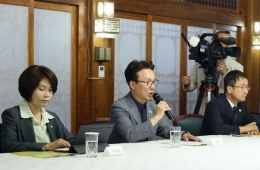
On June 10, Defense Minister Ahn Gyu-baek announced the "Plan for the Dissolution and Functional Restructuring of the Defense Counterintelligence Command" at the Ministry of National Defense in Seoul, stating that its major functions would be distributed among different agencies.
The functions to be transferred include ▲ counterintelligence and defense industry-related intelligence activities ▲ national security investigations ▲ security audits. Counterintelligence and defense industry-related intelligence activities, as well as defense industry and cybersecurity operations, will be entrusted to the newly established "Defense Counterintelligence Headquarters." The functions of national security investigations and joint investigative authority during martial law will be transferred to the Ministry of National Defense's Investigation Headquarters. In addition, a new "Defense Security Support Unit" will be created to handle central security audits and security incident investigations within the military at the corps level and above.
The functions that have been considered the foundation of the DCIC's status as a power institution within the military, such as trend monitoring, personnel intelligence gathering, public opinion collection, and the collection of illegal or corrupt information unrelated to counterintelligence, will be completely abolished. By transferring the existing investigation, counterintelligence, and security functions to various agencies and dissolving the DCIC, the controversial functions like trend monitoring will be eliminated, following the recommendation of the "Civil-Military Special Advisory Committee for Counterintelligence and Security Restructuring" (hereinafter referred to as the Advisory Committee) in January of this year.
The DCIC, which originated as the Defense Security Command in 1977 by integrating the Army, Navy, and Air Force counterintelligence units, has changed its name several times amidst various political controversies. However, this time it will be dissolved.
The DCIC played a central role during the 12·3 Martial Law, dispatching troops to the National Assembly and the National Election Commission and operating arrest squads for politicians. In response, President Lee Jaemyung pledged during his presidential campaign to "reform the military intelligence agencies (DCIC)," and the government has reviewed reform measures, identifying the concentration of power within the DCIC and the lack of democratic oversight as the main problems.
Along with the dissolution of the DCIC, the government also plans to strengthen internal audit functions and democratic oversight by the National Assembly and the Ministry of National Defense for the newly established Defense Counterintelligence Headquarters. A senior external audit official will be appointed as the head of the audit office within the headquarters, and a dedicated organization will be established within the Ministry of National Defense to supervise and oversee counterintelligence, intelligence, and security agencies. Additionally, to ensure external oversight, a "Compliance Audit Committee" composed of civilian experts will be established directly under the Minister of National Defense, and basic guidelines for counterintelligence activities will be developed and regularly reported to the National Assembly.
Furthermore, the government will promote the enactment of a tentatively titled "Act on the Duties of Military Counterintelligence Personnel," which will specify by law the scope of counterintelligence activities and punishment regulations for illegal activities. The Ministry of National Defense also announced plans to break away from the DCIC's closed and authoritarian organizational culture by integrating its personnel management system into a unified military-wide system, thereby enhancing transparency and fairness in personnel management. The ministry aims to complete the creation of the new organizations by the end of next month, following revisions and enactments of relevant military regulations.
Hot Picks Today
!["Don't Use Chinese-Made Products": One U.S. Warning Triggers a 5 Trillion Won Jackpot for Korean Batteries [Weekend Money]](https://cwcontent.asiae.co.kr/asiaresize/93/2025121709393659037_1765931975.jpg) "Don't Use Chinese-Made Products": One U.S. Warning Triggers a 5 Trillion Won Jackpot for Korean Batteries [Weekend Money]
"Don't Use Chinese-Made Products": One U.S. Warning Triggers a 5 Trillion Won Jackpot for Korean Batteries [Weekend Money]
- "Dividend Payouts of 40 Million Won Before Their First Birthday"...'Baby Shareholders' Put Ordinary Workers at a Disadvantage
- 'How Bad Was the Mistreatment'... Boss Tearfully Asks for Understanding and Generosity
- "Even With Airfare and Hotel Costs, It's Cheaper": South Koreans Traveling to Japan for Mounjaro
- "Wasn't It a Huge Trend Among Millennials and Gen Z Just Recently?"... '12 Billion Bottles Inventory Bomb' Enough to Last the World for Three Years
Minister Ahn stated, "This reorganization of the DCIC goes beyond a simple organizational or functional adjustment—it is a historic turning point for building a 'military for the people' by restructuring both the organization and its missions so that our military intelligence agencies can never again intervene in politics."
© The Asia Business Daily. All rights reserved. Unauthorized AI training and use prohibited.