Despite President Lee Targeting Jeonse Loans, Government Remains Cautious on Strength and Speed of Additional Lending Regulations
Financial Services Commission Weighs Level of Additional Jeonse Loan Restrictions
Concerns Over Housing Insecurity for Ordinary Citizens and Real Estate Sentiment from Seoul Mayoral Election Add Pressure
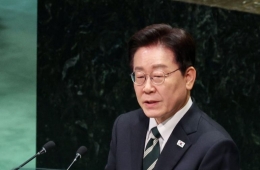
President Lee Jaemyung has identified jeonse loans as a major driver of rising housing prices, drawing attention to the government's upcoming additional lending restrictions. However, while the government is considering strengthening regulations on jeonse loans for non-resident single-home owners, it is taking a cautious stance regarding the extent of these regulations. This cautiousness stems from concerns that failing to precisely target speculative demand could exacerbate housing insecurity for ordinary citizens, and from the real estate sentiment confirmed in the recent June 3 local elections, which is seen as another significant factor.

According to financial authorities on June 10, the Financial Services Commission is broadly reviewing regulatory measures on jeonse loans to stabilize the real estate market. However, rather than rushing to impose additional restrictions, the commission plans to monitor market conditions before deciding on the appropriate level of policy intervention.
Multiple officials from the financial authorities stated, "We are closely monitoring the market situation," and added, "Instead of hastily implementing additional lending regulations, we plan to develop policies by comprehensively considering market trends."
Previously, during a press conference marking his first year in office on June 8, President Lee referred to the jeonse system as "a unique form of private lending found only in Korea," and stated, "Excessive provision of jeonse loans has been a primary cause of rising housing prices." The market has interpreted this as a signal for stricter regulations on jeonse loans.
Potential additional regulations currently anticipated by the market include applying the Debt Service Ratio (DSR) requirement to large-value jeonse loans for people without homes, or further lowering the guarantee ratio on jeonse loans in the Seoul metropolitan area and other regulated regions. The Financial Services Commission had previously considered these measures but postponed them due to concerns over increasing housing insecurity for ordinary citizens and accelerating the shift toward monthly rentals. It is reported that the commission remains cautious about reintroducing these measures.
In contrast, the introduction of jeonse loan restrictions for non-resident single-home owners is essentially a foregone conclusion, as previously announced by the Financial Services Commission. The commission is reportedly leaning toward a "negative list" approach, which targets only specific cases suspected of speculation, rather than a "positive list" approach, which would regulate all non-resident single-home owners with exceptions. For example, this could include cases where a person residing outside the Seoul metropolitan area purchases a home in the region but has never lived in it. In such cases, the scope of regulation is expected to be relatively narrow.
The government is considering options such as restricting the extension of jeonse loan maturities or reducing guarantees for non-resident single-home owners. According to the Financial Services Commission, the total amount of jeonse loans held by non-resident single-home owners in regulated areas of the Seoul metropolitan area is approximately 9.2 trillion won (59,000 cases). However, there are concerns that these regulations may not lead to a meaningful increase in housing supply or effective stabilization of the real estate market.
On the other hand, the political burden is considerable. Since jeonse loans are directly linked to the housing needs of ordinary citizens, failure to precisely target only speculative demand with "pinpoint regulations" could lead to instability in the rental market and public backlash. The government is particularly concerned as real estate sentiment played a significant role in the recent highly contested Seoul mayoral election.
The Financial Services Commission is expected to monitor market conditions and announce additional lending restrictions in conjunction with the Ministry of Economy and Finance's tax reform plan scheduled for release in July.
Hot Picks Today
 "Quit Job to Start Life in Canada, Now Forced to Return Home"… Language School Closure Leaves Korean Students Stranded
- 'Japan in Chaos' as Unprecedented Outbreak Spreads ... "Four Days Is Too Short," Yet Japan Remains Top Travel Pick
- President Lee Unveils 'Inclusive, Stable, Responsible' Blueprints for Korean Peninsula Peaceful Coexistence at UN... Urges Swift Resumption of Dialogue
- "Is That Family's Daughter Unemployed? My Son Is Too" ... Sri Lanka's Youth Unemployment Rate Among Graduates Hits 43%
- "Thought It Was a Student Meal at This Price"... A 2,400-Won Meal at a Five-Star Hotel, What's Going On?
A financial industry official said, "Because jeonse loans are directly tied to the housing needs of ordinary citizens, poorly designed regulations regarding their scope and intensity could result in significant side effects." The official added, "With lending regulations already having been significantly tightened, the focus of future real estate policy is likely to shift more toward tax reforms rather than further financial restrictions."
© The Asia Business Daily. All rights reserved. Unauthorized AI training and use prohibited.