President Lee: "Permanent Introduction and Increase of Rural Basic Income Would Have Greater Impact"
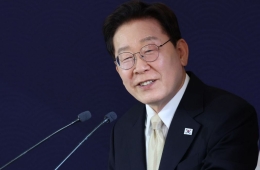
President Lee Jae-myung, who is currently visiting Belgium, has publicly raised the need for the permanent implementation of the Rural Basic Income program and an increase in its payment amount. Citing the case of Okcheon County in North Chungcheong Province, which has seen a rebound in population after being selected for the Rural Basic Income pilot project, he argued that fiscal priorities should be realigned to better address rural depopulation and promote balanced national development.

President Lee Jae-myung and First Lady Kim Hye-kyung, who visited Belgium, are greeting well-wishers aboard Air Force One at Melsbroek Air Base in Brussels on June 9, 2026 (local time). Photo by Yonhap News.
View original imageOn June 10, President Lee shared a news article on X (formerly Twitter) highlighting the population growth trend in Okcheon, North Chungcheong, writing, "Even though the Rural Basic Income was introduced for only two years as a temporary measure, it has shown this much effect. If implemented permanently and the payment amount is increased, the impact would be even greater," adding, "I would also like to hear your opinions." Following the decision to provide Rural Basic Income, Okcheon County saw its population increase by 1,192 in December last year alone, and in January this year, the population recovered to 50,000—a threshold that had been broken in February 2022. Since then, the population has continued to grow by around 100 people each month.
Regarding funding, President Lee stated, "Given that the current budget at the county level usually exceeds 20 million won per person, it ultimately comes down to will and policy determination—in other words, the issue of budget prioritization." He further noted, "Due to the recent revitalization of the stock market, the Rural Special Tax, which must be used for rural areas, has surged to several trillion won."
He went on to say, "If this budget is no longer used for securing infrastructure such as farm roads and bridges, but is instead allocated as a funding source for Rural Basic Income—establishing it as an ongoing program and raising the basic income amount from 150,000 won to a higher level—the benefits would be multifold."
Hot Picks Today
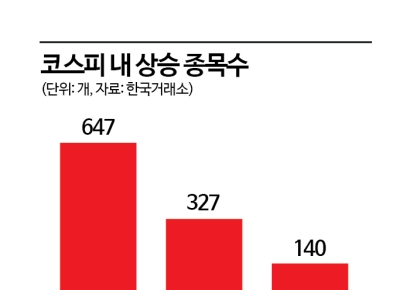 "My Stocks Keep Falling While the KOSPI Soars... The Hidden Truth Behind the Market Rally"
- Hyundai Mobis, Key Supplier for 'Atlas' Parts... Target Price Set at 1.2 Million Won [Stock of the Week]
- [Breaking] Iranian Media: "U.S. Attacks on Iran Subside...Situation Now Calm"
- "Targeting Only Cancer Cells"... Company in the Spotlight at the World's Largest Cancer Conference [Click e-Stock]
- Model Y Tops Sorento and Grandeur: "Korea is Awesome"—Musk Gives Rare 'Shout-Out' as Sales Hit No. 1
The Rural Special Tax is a designated tax aimed at strengthening the competitiveness of rural areas. With this year’s stock market boom and increased trading volume, related tax revenues have risen sharply, prompting the government to revise its Rural Special Tax revenue forecast from the original 8.5 trillion won to 13.6 trillion won. Cumulative Rural Special Tax revenue through April also reached 5.7 trillion won, reflecting a 150% increase compared to the same period last year.
© The Asia Business Daily(www.asiae.co.kr). All rights reserved.

![Festered and Finally Burst... The Bare Face of 'Election Judgment' [Data Pick]](https://cwcontent.asiae.co.kr/asiaresize/307/2026061008354493768_1781048144.png)