Ministry of Justice Moves to Block Juvenile Entry into Adult Crime... Shifts to Independent Rehabilitation-Focused Response System
Nationwide Expansion of the Ansan Pilot Agency Model Aimed at Curbing Recidivism
Establishment of Juvenile Protection Policy Division and Plans for 18 Dedicated Agencies
# At around 2:30 p.m. on the 9th, inside the Ansan Juvenile Protection Specialized Pilot Operation Institution in Ansan, Gyeonggi Province. The bright, academy-like atmosphere, clean interior, and soothing artwork greeted visitors. Among the various facilities, what stood out the most was the mock courtroom, similar to those found in law schools. An official from the Ministry of Justice's Juvenile Crime Prevention Team explained, "This is not a place to learn to argue with strict logic, but rather an experiential facility designed for juveniles to reflect on their actions." The official added, "It is a facility where participants can assume various roles—not only judge, prosecutor, or lawyer, but also victim, family member, and friend—to help them understand others' perspectives and objectively assess their own behavior."
The Ansan Juvenile Classification and Assessment Center, which serves as a detention facility for nearby adult courts, was not much different. The pastel-toned interiors and living rooms equipped with beds and televisions made it hard to distinguish the place from a regular youth training center. The cafeteria menu displayed on the wall, featuring items like 'cheese buldak' and 'okonomiyaki,' was also no different from an ordinary school. Only the occasional sight of window bars and the locks on doors reminded one that this was not, in fact, a school.

At around 2:30 p.m. on the 9th, inside the mock courtroom at the Ansan Juvenile Protection Specialized Pilot Operation Institution in Ansan, Gyeonggi Province. Photo by Taewon Choi
View original imageOn this day in Ansan, the Ministry of Justice held a policy briefing and announced its comprehensive 'K-Juvenile Crime Prevention' strategy. The government's decision to introduce this strategy is driven by the problem of juvenile crimes being committed at increasingly younger ages, as well as the issue of repeat offenses. According to the National Police Agency, the number of cases involving 'juvenile protection disposition'—which stood at 6,493 in 2016—surged to 21,095 last year, an increase of about 3.2 times.
Despite the declining population trend, the number of juvenile cases handled by prosecutors continues to rise. In particular, the proportion of first-time juvenile offenders with no prior criminal experience increased significantly from around 45% in 2015 to about 72% in 2024. The recidivism rate for juveniles under probation remains between 12% and 13%, more than three times higher than the 4% rate among adults, and has become entrenched at this level.
The Ministry of Justice believes the limitations of the current system are clear. Until now, juvenile probation has operated within an adult-oriented system, focusing mainly on sanction and control. This has led to problems such as juveniles under probation learning delinquency from adult offenders or becoming stigmatized.
Furthermore, the dedicated organization responsible for professional management of these cases within the Ministry of Justice is only a temporary team. Each juvenile probation officer is responsible for approximately 56 juveniles, which is far higher than the average of about 32 in major OECD countries, making close supervision difficult.
The Ministry of Justice emphasized that, unlike adults, juveniles are still in the process of growing and have significant potential for change, making it necessary to overhaul the juvenile crime response system. While adults are held strictly accountable and punished for their crimes, the government's role is to help juveniles become healthy members of society through protection and education. The Ministry believes that, rather than simply creating offenders through criminal punishment, preventing recidivism and blocking the path to adult crime through education is a more effective way to build a genuine social safety net.
Accordingly, the Ministry of Justice plans to completely overhaul its juvenile crime response system. First, a 'Juvenile Protection Policy Division' will be newly established to oversee the national juvenile crime response policy. The current Crime Prevention Policy Bureau will be upgraded to a 'headquarters'-level organization, with adult and juvenile policies managed separately and with greater specialization. In 18 regions nationwide, centered on family court jurisdictions, separate 'juvenile-dedicated institutions' like the one in Ansan will be established. Specialized treatment reflecting juveniles' characteristics will be provided, and 120 more dedicated juvenile probation officers will be hired to reduce the caseload to the OECD standard of 32 juveniles per officer.
A community-based joint response system (HUB model) centering on juvenile-dedicated institutions will also be introduced. These institutions will serve as focal points for intervening with at-risk youths, establishing multi-agency cooperation among schools, police, prosecutors, and medical institutions. Scientific monitoring and analysis will also be introduced. Given that 53% of juvenile crimes occur during late-night hours (from 9 p.m. to 6 a.m.), the use of 'smartwatch-type devices' for real-time monitoring of juveniles under nighttime curfew orders will be expanded.
The development of a 'Juvenile Crime Comprehensive Analysis System' is also being pursued as a long-term project. Artificial intelligence (AI) will analyze vast amounts of data and psychological test results to propose customized intervention plans tailored to the risk factors of each juvenile. The 'K-Juvenile Crime Prevention' process, focusing on treatment and rehabilitation, will also be fully implemented. Moving away from control-oriented approaches, the new five-stage process—diagnosis, prescription, intervention/treatment, rehabilitation, and follow-up management—aims to block the transition to adult crime.
Hot Picks Today
!["Just by Parking Money at the Bank? Unusually High Parking Account Rates Lately [Practical Asset Management]"](https://cwcontent.asiae.co.kr/asiaresize/93/2026092308565839400_1790121417.png) "Just by Parking Money at the Bank? Unusually High Parking Account Rates Lately [Practical Asset Management]"
"Just by Parking Money at the Bank? Unusually High Parking Account Rates Lately [Practical Asset Management]"
- Kim Seui’s Apgujeong Apartment Enters Auction Over Unpaid 120 Million Won Legal Fees Amid Kim Soo Hyun Defamation Charges
- "I Worked Hard Throughout Chuseok"...Why Office Workers Are Quitting in Droves Right After the Holidays
- Explosive Response to Japanese User's Photo... 'Seoul Goods' Reimagining City Image Gain Popularity
- 'What Is This Craze?' As Global Demand Soars, Major Producer Suddenly Halts Exports Amid Domestic Shortage
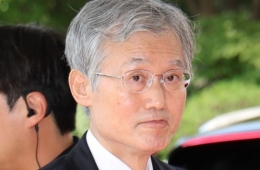
Minister of Justice Jeong Seong-ho stated, "There has been a lack of infrastructure for implementing policies on juvenile crime, despite growing attention to the issue. We will establish a specialized system for effective prevention and pursue the K-Juvenile Crime Prevention Policy to address the complex causes of juvenile delinquency."
© The Asia Business Daily. All rights reserved. Unauthorized AI training and use prohibited.