CEO’s Salary Exceeds Three Years’ Total Dividends... Worldex, a Department Store of Shareholder Neglect
Worldex, a Leading Semiconductor Parts Maker, Ignores Shareholder Returns
Only KRW 3.6 Billion Paid in Dividends Out of KRW 160 Billion Net Profit Over 3 Years
Push for Higher Director Compensation While Blocking Shareholder Participation
V

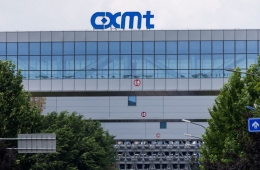
While discussions about amending the Commercial Act and introducing a law to prevent stock price suppression continue, and expectations for the KOSPI 10,000 era are rising, there is a company moving against the current of the times. Over the past three years, its dividend payout ratio—not just the dividend yield—has been stuck at just above 2%, and the total amount of dividends paid is lower than the CEO’s annual salary. The company has also effectively blocked general shareholders from exercising their voting rights by making shareholder meeting attendance difficult. This is the story of Worldex, a key player in semiconductor etching process components.
According to the financial investment industry on June 10, VIP Asset Management announced the previous day that it had increased its stake in Worldex to 15.64%, changing its shareholding purpose from simple investment to general investment. While not directly participating in management, VIP Asset Management is signaling its intent to actively voice opinions on shareholder returns such as dividends and the determination of executive compensation, demanding an enhancement of shareholder value. As a leading value investment management firm in Korea, VIP Asset Management has so far chosen to maintain active communication with its portfolio companies and share the benefits of increased shareholder returns for shared growth. However, this time, VIP Asset Management has decided it can no longer remain patient and will take a firmer stance.
Cash Piled Up in the Treasury... Ignoring Shareholders, Only Executives Get Paid
The backdrop to this is the severe undervaluation of Worldex’s stock. Despite strong business competitiveness and solid financial structure, the company has been criticized for its low dividend payout ratio, excessive executive compensation, and a decision-making structure that reduces shareholder accessibility.
Worldex is a KOSDAQ-listed company that manufactures and sells silicon electrodes and rings for semiconductor etching processes. Holding a global oligopoly in materials and components for semiconductor processes, Worldex has secured a stable sales base with major domestic clients like Samsung Electronics and SK hynix, as well as international customers such as Intel and Kioxia. The company is also expected to benefit from the recent surge in demand for artificial intelligence (AI) infrastructure. Over the past five years, it has shown high profitability even among peers, with an average operating margin of 21.3% and a return on equity (ROE) of 22.7%.
Its financial structure is also sound. In the first quarter of this year, operating cash flow reached 44.8 billion won, a significant increase compared to the same period last year. Short-term financial products and cash equivalents total 230 billion won. Nevertheless, as of the previous day, its market capitalization was only about 420 billion won. Given its cash holdings and profit levels, there are complaints that the stock is not being properly valued.

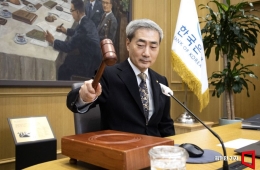
The main reason cited is low shareholder returns. Over the past three years, Worldex’s average dividend payout ratio has been only 2.3%. During this period, the company’s net profit amounted to about 160 billion won, but the total dividends paid to shareholders was just 3.6 billion won. Even more striking is the fact that this dividend amount was less than the total compensation of approximately 4 billion won paid to CEO Bae Jong-sik over the same period. In other words, the compensation given to one CEO exceeded the total amount distributed to all shareholders.
The situation was similar last year. The final dividend for fiscal 2025, which Worldex has decided to pay this year, is 100 won per share, totaling between 1.6 billion and 1.7 billion won. In contrast, the total compensation paid to three registered directors last year was about 2.25 billion won. The sum paid to a few directors is greater than the total dividend distributed to all shareholders.
Despite Shareholder Opposition, Executive Compensation Expansion Attempted Repeatedly
In this situation, the company attempted to expand executive compensation, further provoking shareholder backlash. At this year’s regular general meeting, Worldex put forward a proposal to raise the cap on executive compensation from 7 billion won to 8 billion won. The initial shareholder meeting notice included a so-called “golden parachute” clause—which would grant up to 20 times the average annual salary of the past three years as a special severance payment to directors dismissed before their term due to hostile mergers and acquisitions (M&A), in addition to regular severance pay—and a proposal to raise the compensation cap to 10 billion won.
Following strong opposition from shareholders including VIP Asset Management, the golden parachute clause was removed and the compensation cap was lowered to 8 billion won. However, even the revised proposal failed to pass at the shareholder meeting. According to the Commercial Act, directors with vested interests are restricted from voting on executive compensation proposals. With the largest shareholder’s voting rights restricted, the proposal was rejected with 30.8% in favor and 69.2% against. In other words, the vast majority of general shareholders opposed it.
Worldex has resubmitted the executive compensation proposal at an extraordinary shareholders’ meeting. For the extraordinary meeting scheduled for the 29th, the executive compensation approval proposal has been split into “directors excluding the CEO” and “the CEO.” Some criticize this as “splitting up agenda items” to circumvent the restriction on director shareholders’ voting rights.
The way the shareholders’ meetings are run is also controversial. Unlike the previous regular meeting, Worldex has decided to exclude electronic voting from the upcoming extraordinary meeting. Unless a shareholder delegates voting rights in advance, they must attend the meeting in person at the company’s headquarters in Gumi, North Gyeongsang Province, at 9 a.m. on a Monday to exercise their voting rights. For ordinary shareholders with regular jobs, the time and location make participation difficult. At a time when shareholder communication should be increased, the company has instead raised the barriers to shareholder participation.
Moving Against the Times... VIP Asset Management Takes Action
Recently, in the domestic capital market, discussions on enhancing shareholder value—such as share buybacks and retirements and the duty of loyalty to shareholders—have rapidly spread. There is a growing perception that for undervalued companies to be re-evaluated by the market, not only performance, but also capital allocation policy, shareholder returns, and improvements in governance must be addressed. The government's moves to amend the Commercial Act and promote a law to prevent stock price suppression are in line with this trend.
Worldex has gone directly against this trend. In response, VIP Asset Management, which has changed its investment purpose, plans to take concrete action. First, it has demanded that Worldex buy back and retire at least 20 billion won worth of treasury shares this year, and establish a value-up plan to return more than 40% of net profit annually to shareholders from next year onward. It also argued that executive compensation should be linked to total shareholder return (TSR) and that concrete calculation criteria must be established.
Hot Picks Today
 Despite "Insufficient Balance" Notices, They Board Anyway... Reports of Foreign Fare Evasion Mounting
- "If It Helps My Child's Studies, It's Worth Every Penny"... U.S. Parents Open Their Wallets for $10,000 Tests
- [Exclusive] "We Came for a KRW 140,000 Trip": Following Chinese Tourists in Korea Uncovers a 'Suspicious' Tour
- "I'm paying to stay, and you want me to do the laundry and dishes too?" ... Airbnb bans excessive cleaning demands
- "Baek Jongwon Had Been Quiet, Then Hit It Big"... Waits in the 100s in U.S. Despite KRW 46,000 Pork Belly
Kim Minkook, CEO of VIP Asset Management, emphasized, “As a long-term shareholder of Worldex, I hope the company will be recognized for its corporate value that matches its excellent business competitiveness and financial structure,” adding, “To this end, we will continue to voice our opinions and actively exercise the rights of general shareholders within the scope permitted by relevant laws.”
© The Asia Business Daily. All rights reserved. Unauthorized AI training and use prohibited.