'Fiscal Burden from Rapid Aging'... Discussions Begin on Progressive Support Basic Pension Reform
Ministry of Health and Welfare Holds Expert Forum on Basic Pension Reform Directions
Discussions have begun in earnest to reform the basic pension into a “progressive support system,” where lower-income seniors receive more assistance. Due to rapid population aging, the basic pension paid to the bottom 70% income bracket has skyrocketed from 690.01 billion won in 2014 to 24.3596 trillion won in 2024, significantly increasing the burden on national finances. However, some experts argue that the main purpose of basic pension reform should not be to reduce the number of recipients, especially given the severe issue of elderly poverty.

On the first day of early voting for the 9th nationwide local elections on the 29th, a citizen is placing a completed ballot into the ballot box at the polling station set up at the Buksejong Integrated Administrative Welfare Center in Sejong City. Photo by Yonhap News
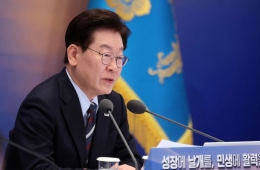
View original imageOn the afternoon of June 9, the Ministry of Health and Welfare held a “Basic Pension Reform Direction Expert Forum” at a conference room in Seoul Station, presided over by First Vice Minister Hyun Suyeop. Currently, the government provides a maximum monthly basic pension of 349,700 won per single household to the bottom 70% of seniors aged 65 and older. However, as the financial burden grows due to rapid aging, and since everyone receives the same amount regardless of income level, these limitations are fueling ongoing reform discussions.
Choi Okgeum, Senior Research Fellow at the National Pension Research Institute's Pension System Research Office, pointed out the shortcomings of the target recipient rate method, stating, “When the basic old-age pension was introduced, setting the target at ‘70% of seniors’ was the result of political negotiations. Given the difference between 70% of seniors then and now, there is no clear policy rationale for maintaining this rate.” In the short term, Choi suggested, “The 70% target recipient rate should be abolished, and the selection criteria should be adjusted based on a certain standard of median income, with consideration given to increasing pension amounts for low-income seniors (differentiated payments).” Furthermore, in the long term, Choi added, “It is necessary to consider a gradual transition to a minimum income guarantee focusing on low-income seniors, taking into account the maturity of the National Pension System and the current state of elderly poverty.”
Lee Wonjin, Research Fellow at the Korea Institute for Health and Social Affairs, noted that as of 2022, South Korea’s elderly poverty rate for those aged 66 and over stood at 39.7%, the highest among the 34 OECD countries, and identified “elderly poverty” as the core issue behind the country’s poor income distribution. Lee emphasized, “The basic pension already has a greater effect on reducing the poverty gap among seniors aged 75 and older than the combination of the National Pension and occupational pensions. The key to reforming the basic pension to alleviate elderly poverty is to increase benefit amounts.”
However, Lee also warned that reducing the number of recipients while increasing benefits could “in part reallocate benefits from seniors near the poverty line to those in extreme poverty, which may actually increase the overall poverty rate. While it is necessary to abolish the target recipient rate to enhance the rationality of the system, the primary purpose of basic pension reform should not be to shrink the recipient base.”
Hot Picks Today
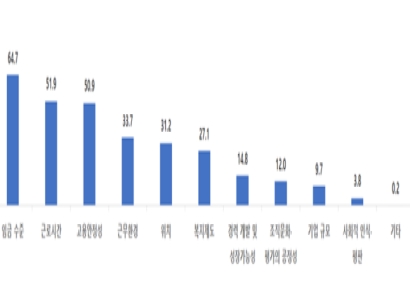 "Please Pay Me at Least 3 Million Won a Month": More Than Half of Young People Today Prioritize "Working Conditions" Over Company Size
- Selling Like Crazy Every Year... 30-Year-Old Hetbahn Takes on a New Challenge: Tastes Better Than "Mom's Home Cooking" [On-Site Report]
- "Americans Would Be Amazed If They Came": Wide-Eyed at a Sight They've Never Seen Before... Foreigners Also Fall for K-Baseball [K-Holic]
- President Lee Narrows Candidates for Next Justice Minister to Former Prosecutors Yang Bunam and Park Gyuntaek
- Beachgoer Finds 'Plastic' That Turns Out to Be Perfume Ingredient Worth More Than Twice as Much as Gold
Additionally, there was an argument that those who receive occupational pensions but still fall below the poverty line should also be eligible for the basic pension. Kim Taewan, Senior Research Fellow at the Korea Institute for Health and Social Affairs, analyzed, “From the perspective of adequacy of public pension benefits, if occupational pension recipients do not surpass the poverty line, providing the basic pension would be appropriate to help reduce elderly poverty and promote income stability.”
© The Asia Business Daily. All rights reserved. Unauthorized AI training and use prohibited.