"If You Hire More Young People, You Get More Subsidies"... Government to Implement Job-Linked Corporate Incentive System
Announcement of the "Corporate Support–Job-Linked Fiscal Support Plan"
Preferential Subsidies and Policy Loan Rates for Companies Making Large-Scale Investments or Relocating to Regional Areas
The government will implement robust measures that directly link corporate employment performance with fiscal support in order to address the issues of "jobless growth" and the polarization of youth and regional employment opportunities. The core of this initiative is a comprehensive shift to a "job-linked incentive" structure, in which the conditions for receiving industrial support subsidies or policy funds will vary depending on how many young people and local talents a company hires.

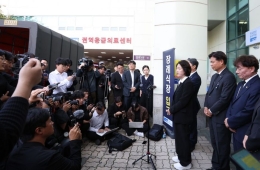
At the '2026 Western Busan Job Fair,' job seekers are filling out participation applications. Photo by Yonhap News.
View original imageOn June 9, the Ministry of Planning and Budget announced the "Corporate Support–Job-Linked Fiscal Support Plan" at a meeting of ministers related to youth policy. This plan has been developed to prevent the decline in youth employment amid the spread of artificial intelligence (AI) and industrial restructuring, and to encourage the creation of quality jobs led by the private sector.
First, the government will significantly strengthen fiscal incentives for companies that create jobs. Going forward, companies that undertake major facility investments, relocate to regional areas, or scale up as small and medium-sized enterprises—among other industrial support projects—will be eligible for increased subsidy rates or preferential policy loan interest rates, depending on their hiring performance.
In particular, companies that excel in hiring young people and local talents will receive extra points or priority when being selected for follow-up support programs. The system is designed so that the better a company's employment performance, the better the support conditions it receives. To ensure the actual employment effects, however, the government will principally adopt an ex-post settlement approach and will implement monitoring mechanisms such as reclaiming incentives in cases of non-compliance.
A "connection" strategy will also be promoted to ensure employment security for workers during industrial transformation and to leverage AI talent. The government will offer a package of job transition training and redeployment support so that existing employees at companies experiencing changes in job roles due to AI adoption do not lose their jobs. In addition, young AI professionals who have completed government-supported training will be matched with small and medium-sized businesses and small merchants, with the government providing coaching activity allowances and wage support. To further strengthen certification infrastructure, a new "AI Plus National Qualification" will be established to verify AI competencies applicable in the field, and the scope of career information in the competency bank will be expanded.
The government plans to specify the methods and scale of support for the tasks included in this plan during the process of preparing the 2027 national budget. In addition, it will comprehensively review the implementation status and employment effects of each project to gradually expand the scope of application. Any necessary system improvements will be promptly pursued within this year through revisions to relevant guidelines.
Hot Picks Today
 "I Ate It Often Because It Tasted Good"... This Eating Habit Linked to 40% Higher Odds of Asymptomatic Cerebrovascular Damage
- "Booked a Cheap Flight, Only to Get Blindsided"... Travelers' Complaints "Explode" Over Extra Fees
- Woman in Her 70s Assaults Sister in Her 80s: “She Had an Affair with My Husband”
- “Dad Just Gave It to Us as a Gift”... Scratched a Lottery Ticket at a Family Gathering and Hit a 1 Billion Won Jackpot
- "We've gone this far to save on lunch"... Where office workers are flocking instead of restaurants
Minister of Planning Park Honggeun stated, "This plan is both an immediate response to improve youth employment conditions and part of a long-term strategy to reshape the future job landscape. We will continue to identify and implement tasks in the employment sector so that quality jobs are created and everyone has the opportunity to work when they want."
© The Asia Business Daily. All rights reserved. Unauthorized AI training and use prohibited.


!["Please, Just Take Them Off" - They Made It All the Way to Bed... Then Fecal Bacteria Struck [Deep Scroll]](https://cwcontent.asiae.co.kr/asiaresize/307/2026101610053063338_1792112730.png)