Government Aims to Lower Teen Suicide Rate to 10-Year-Ago Level by 2030
Teen Suicide Rate per 100,000 Drops from 8 in 2024 to 6.5 by 2030
The government has launched an emergency response plan to prevent suicide among teenagers.
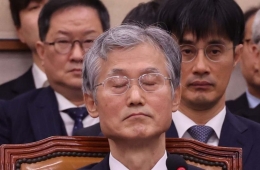
On June 9, Minister of Education Choi Kyojin announced the "Comprehensive Government Initiative for the Prevention of Teen Suicide" in a joint briefing with related ministries at the Government Complex Seoul. This measure has been prepared as part of the nine-sector suicide prevention plan discussed at the 20th Cabinet Meeting last month.
According to the Ministry of Data and Statistics, the number of teenage suicide deaths increased by 45.1% over the past decade, from 273 in 2016 to 396 in 2025.
The Ministry of Education analyzed that suicide among teenagers is largely driven by strong impulsivity and is influenced by a combination of factors such as concerns about career choices, academic stress, conflicts at home and school, exposure to harmful online content, and suicide reports.
In particular, the ministry noted that the rapid increase in online activities such as on social networking services (SNS), while face-to-face interactions decreased during the COVID-19 pandemic, has also impacted adolescent mental health.
An official from the Ministry of Education stated, "While teenagers face difficulties in communicating with others, they are often indiscriminately exposed to suicide-related content, which, combined with impulsivity, can lead to extreme actions. We will address the issue of youth suicide through multifaceted policy efforts."
Even without leading to suicide, the number of teenagers seeking hospital treatment for mental health issues has also surged. According to estimates by the National Health Insurance Service, the number of psychiatric patients aged 0-19 per 10,000 people increased by 57.3%, from 27.4 in 2021 to 43.1 last year.
The government believes that a comprehensive and systematic response across all government departments is necessary to address youth suicide and mental health problems. Accordingly, a total of 15 ministries have identified five step-by-step tasks each and proposed corresponding measures.
First, at the prevention stage, the focus will be on enhancing school-based education to strengthen students' mental well-being. The current cross-curricular social-emotional education program, which is run for six sessions, will be expanded to 17 sessions. In addition, experience- and activity-based physical and arts education will be implemented to foster self-esteem and emotional recovery among adolescents. For parents, information on child-rearing at different growth stages and educational content will be provided. Starting in July, "student mental well-being" will become a mandatory part of the first-class teacher qualification training program, and relevant courses will also become compulsory in teacher training institutions in the future.
To reduce suicide risk factors in the adolescent growth environment, the government will run programs targeting digital overdependence and exposure to self-harm and suicide-inducing information. At the same time, career-linked education in schools and psychological and career counseling programs at youth support centers for out-of-school teenagers will be strengthened. Starting next year, a "School Violence Prevention Week" will be introduced to help build positive relationships.
High-risk youth will be supported through initiatives such as the "Mind CPR (tentative name) education" and the "One-Stop Service for Isolated and Reclusive Youth" at youth support centers for out-of-school teenagers. In addition, a "Youth Life Guardian Regional Safety Net Council (tentative name)" will be established, with suicide prevention officers from local governments overseeing and education offices taking a leading role, to manage cases and establish a rapid response system for high-risk youth.
The government also plans to increase the necessary financial and human resources. The portion of general educational subsidies allocated to "student mental well-being support" within the standard fiscal demand will be gradually expanded to about 1%. The Ministry of Education aims to secure around 200 personnel dedicated to supporting student mental health at education offices. The enactment of the "Act on Promotion of Student Mental Well-Being and Emotional and Behavioral Support," sponsored by Assemblywoman Ko Minjung in March, will provide the basis for establishing specialized agencies.
Furthermore, starting next year, the "Youth Psychological Autopsy Project" will be fully implemented, and digital information left by suicide victims, along with mortality statistics, will be systematically analyzed to reduce the number of "unknown cause" cases.
Other measures include strengthening the management of suicide-prone locations such as bridges and high-rise buildings, providing guidelines on overreliance on artificial intelligence (AI), and running campaigns in cooperation with the private sector.
Hot Picks Today
 "King crab is 3,000 won per 500 grams; just eating it makes the trip worthwhile"... Chinese flock to North Korea on 'fake business trips'
- Residents Cheer KRW 22 Billion in Shared Revenue Despite Pollution Fears... K-Solar Takes on Chinese Products [Energy Odyssey] 12
- "I Ate It Often Because It Tasted Good"... This Eating Habit Linked to 40% Higher Odds of Asymptomatic Cerebrovascular Damage
- "Why on earth come to Korea and do this?" ... Chinese Man in Hanfu Says He'll Promote Chinese Culture at Gyeongbokgung
Minister Choi stated, "We will do our utmost to provide support so that all sectors of society, including communities and media, can work together organically beyond just families and schools. Our goal is to establish a practical foundation for the prevention of youth suicide and recovery."
© The Asia Business Daily. All rights reserved. Unauthorized AI training and use prohibited.


!["Please Take Them Off!" They Made It All the Way to the Bed... Then "80% of Fecal Bacteria" Struck [Deep Scroll]](https://cwcontent.asiae.co.kr/asiaresize/307/2026101610053063338_1792112730.png)