"Perplexity Plans 2028 IPO, Independent of Anthropic and OpenAI"
"Anthropic and OpenAI IPOs Will Succeed"
As AI startups such as Anthropic and OpenAI are targeting an initial public offering (IPO) within this year, Aravind Srinivas, CEO of AI search startup Perplexity, has announced that the company will pursue a listing in 2028 regardless of what its competitors do.
In an interview with CNBC on June 8 (local time), CEO Srinivas said, "Regardless of what those two companies do, we are planning with 2028 as our goal, and that plan has not changed." He reiterated his previous stance that there are no plans to go public before 2028.

On the same day, OpenAI, the developer of ChatGPT, reportedly submitted a confidential draft registration statement to the U.S. Securities and Exchange Commission (SEC), aiming to go public as early as this fall. Last week, Anthropic, the developer of Claude, also confidentially filed for an IPO. In addition, the SpaceX IPO, which is scheduled for this week, is expected to be the largest ever.
CEO Srinivas explained that these IPOs hold significant meaning for the industry as a whole. He stated, "If these listings do not yield strong results, there will certainly be ripple effects. That cannot be denied." He added, "The SpaceX IPO this week will serve as a leading indicator for what kind of results the IPOs of Anthropic and OpenAI might yield."
He went on to say, "It is important for the AI industry that these IPOs succeed and grow," and added, "I actually think they will do well, because the companies' performance is strong."
However, some have raised questions regarding the astronomical valuations of AI companies. CEO Srinivas assessed that "both companies are at the forefront of technology," justifying their current high valuations. He noted, however, that if the pace of innovation slows, it could have a negative impact on their value, but said there is currently no sign of that happening. He stated, "If either of these two companies fails to show model performance improvements for six months, that would be problematic."
Hot Picks Today
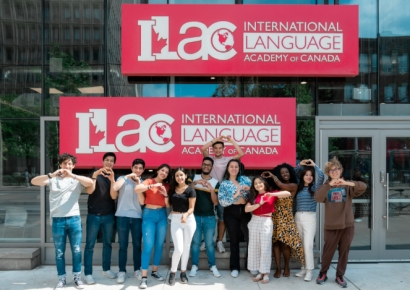 "Quit Job to Start Life in Canada, Now Forced to Return Home"… Language School Closure Leaves Korean Students Stranded
- [Exclusive] Overseas Crypto Exchanges to Be Blocked Immediately If Not Reported to FIU
- 'Japan in Chaos' as Unprecedented Outbreak Spreads ... "Four Days Is Too Short," Yet Japan Remains Top Travel Pick
- "Is That Family's Daughter Unemployed? My Son Is Too" ... Sri Lanka's Youth Unemployment Rate Among Graduates Hits 43%
- "Thought It Was a Student Meal at This Price"... A 2,400-Won Meal at a Five-Star Hotel, What's Going On?
The enormous costs incurred by AI companies are also an issue. Sam Altman, CEO of OpenAI, recently described AI costs as "a very big problem." In particular, there has been criticism of "tokenmaxxing," where employees increase AI usage beyond what is needed in order to meet the company's AI usage targets. However, CEO Srinivas emphasized the strengths of his company's AI, which is based on a variety of models, saying, "People are not simply interested in using a lot of tokens, but want to use the model best suited for a given task." He added, "The future of cutting-edge AI remains very bright. As we have seen in recent months, reckless expenditure will not continue."
© The Asia Business Daily. All rights reserved. Unauthorized AI training and use prohibited.