Changnyeong County Establishes Surveillance System with Multi-Layered Control for Mosquito- and Tick-Borne Diseases
Responding to Climate Change:
Preemptively Blocking Harmful Factors
Changnyeong County in South Gyeongsang Province is establishing a ‘vector-borne disease surveillance system’ to preemptively block harmful factors, in response to increased outdoor activities and climate change leading to the greater activity of disease vectors such as mosquitoes and ticks.
To operate a scientifically data-driven surveillance system, the county has been intensively inspecting the mosquito larval habitats at 327 septic tanks in apartment complexes and other sites within the county for two months, from May to June.
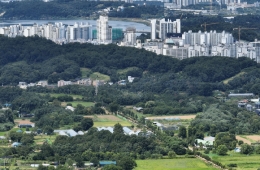
![Changnyeong County Office. [Photo by Changnyeong County]](http://www.asiae.co.kr/news/img_view.htm?img=2026060911094792834_1780970986.jpg)
Additionally, to accurately identify the main breeding environments and outbreak trends of mosquitoes within residential areas, and to use this as core baseline data for customized vector control, Changnyeong County is conducting surveys on the number and density of adult mosquitoes, focusing on densely populated areas such as Changnyeong-eup, Namji-eup, and the Bugok Hot Springs Tourism Special Zone.
Alongside these efforts, the county has designated the period from May to October, when mosquito activity peaks, as an intensive vector control season. During this period, the county is making every effort to control adult mosquitoes by conducting fogging disinfection with vector control vehicles, especially in areas vulnerable to infectious diseases and locations where complaints have been reported.
Furthermore, to reduce the emergence of adult mosquitoes in advance, the county is continuously carrying out mosquito larval control operations throughout the year by applying larvicides to major breeding sites such as septic tanks and drains near residential areas.
By the end of May, the county had distributed disinfection supplies and completed comprehensive checks of vector control equipment in all towns and townships. Starting this month, the county is also providing capacity-building training for autonomous vector control teams in each town and township to ensure that resident-led, community-based prevention measures are implemented.
The county is also conducting parallel prevention activities against tick-borne diseases, which require special attention during outdoor activities. Ongoing education on disease prevention guidelines is being provided for high-risk groups such as farmers, and tick repellents are being distributed to visitors at public health centers and town and township offices, with the aim of expanding preventive effects across the community.
Hot Picks Today
 "No Wonder It Soared Today... Morgan Stanley Eyes 3 Million Won Target—Which Stock Is It?"
- "Who Wants to Hire 40 Skilled Kimbap-Making Women?"... A 'Suspicious Ad' Appears Online
- "Why Waste Scorching Subway Heat? New York Launches 1.1 Billion Won 'Innovative Experiment'"
- "If You're So Sure, Try It Yourself": 44-Year-Old Father Admitted to Prestigious University After Daughter's Challenge
- "This Is Not Right, Chairman"...Flood of Criticism over SK hynix's Pursuit of 'Five-Layer Duplicate Listing'
An official from Changnyeong County stated, “The key to this surveillance system is to accurately identify the habitats of vectors in the region and implement multi-layered, effective control measures accordingly. We will do our utmost to ensure that residents can lead safe and healthy lives, free from infectious diseases, by operating a systematic disease control network in response to climate change and providing continuous preventive education.”
© The Asia Business Daily. All rights reserved. Unauthorized AI training and use prohibited.