"Stock Prices Have Risen Significantly, So Taxes Should Be Paid on Gains"…Tasks Ahead for KOSPI 10,000 [KOSPI 10,000 Era] ④
Challenges Identified by Experts for Upgrading the Korean Stock Market
"Abolish the Transaction Tax and Introduce the Financial Investment Tax"
Incentives Needed... Accelerate Separate Taxation of Dividend Income
① [Interview] "The cheapest AI-related stocks in the world are Samsung Electronics and SK hynix"
② [Interview] "ROE improvement is key to the 10,000-point KOSPI era"
③ "KOSPI 10,000 possible this year" — What domestic brokerage heads say
④ "Tax reform is essential to encourage long-term investment...A renewed debate over the Financial Investment Income Tax is needed"
⑤ Will the KOSPI be included in the MSCI Developed Markets Index? The remaining upgrade tasks for Korea's capital market
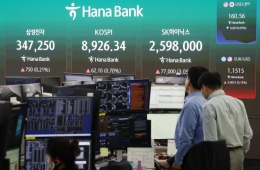
Even as the KOSPI approaches the 10,000-point threshold, criticism persists that the Korean stock market remains dominated by short-term trading. The recent surge has been concentrated in a handful of stocks, further fueling this short-term trading structure. Experts agree that, for the market to achieve a "Korea Premium," tax reform to incentivize long-term investment is essential. They also emphasize the need to revisit the scrapped Financial Investment Income Tax (FIIT).
According to the financial investment industry on June 17, several capital market experts interviewed by The Asia Business Daily stated that the government must raise corporate dividend payout ratios and shareholder return rates, and pursue tax reforms to encourage long-term investment, in order to fundamentally improve the Korean market. Seo Joonsik, professor of economics at Soongsil University, stressed, "The most powerful tool is to use taxes as an incentive."
!["Stock Prices Have Risen Significantly, So Taxes Should Be Paid on Gains"…Tasks Ahead for KOSPI 10,000 [KOSPI 10,000 Era] ④](http://www.asiae.co.kr/news/img_view.htm?img=2026061009563194098_1781052990.png)
"Tax where there is income"...The need to revisit the FIIT
The issue experts are most focused on is whether the Financial Investment Income Tax should be introduced. The FIIT is a system that taxes net profits from financial investments such as stocks, bonds, and funds. Although it was legislated in 2020, its implementation was postponed due to concerns about a market downturn and controversy over increased taxes on retail investors, and was ultimately scrapped in 2024.
Experts argue that, given the significant changes in market conditions since the FIIT was repealed, its reintroduction should be reconsidered. Hong Kiyong, professor emeritus of business administration at Incheon National University, said, "At the time, stock prices were lower than in the US and the capital market was sluggish, so there were fears that introducing the FIIT would drive capital out of the country—that was the reason for its repeal. Now, however, with stock prices having risen significantly, there is no longer any reason to defer it."
!["Stock Prices Have Risen Significantly, So Taxes Should Be Paid on Gains"…Tasks Ahead for KOSPI 10,000 [KOSPI 10,000 Era] ④](http://www.asiae.co.kr/news/img_view.htm?img=2026061011193594397_1781057975.jpg)
The FIIT is also seen as consistent with the principle of "taxation where there is income." Kang Sohyun, policy chief at the Korea Capital Market Institute, stated, "Regardless of the direction of the stock market, the tax should be introduced for the sake of tax equity." Lee Junseo, a professor of business administration at Dongguk University, also supported its introduction, saying, "Looking at global standards, almost all major countries except Taiwan have a system similar to the FIIT."
In particular, proponents of the FIIT argue that shifting from the current securities transaction tax-based system to a profit-based taxation system would reduce short-term trading and encourage long-term investment. Even during the initial push for the FIIT, the prerequisite was a phased reduction and eventual abolition of the transaction tax. Internationally, most countries have established capital gains tax-centered systems rather than transaction taxes. Transaction taxes, which are charged every time stocks are sold regardless of profit, have also been cited as a factor reducing market liquidity.
"Majority of retail investors' tax burden will decrease" vs. "Introduce long-term incentives first, then proceed gradually"
Contrary to concerns raised during the abolition of the FIIT, it is not necessarily the case that the FIIT would inevitably lead to higher taxes for retail investors. With the introduction of "integrated profit and loss calculation" across financial investment products and the ability to carry forward losses, investment losses can be reflected more broadly. Some argue that, if combined with a basic deduction and reduction or abolition of the transaction tax, the tax burden on many individual investors could actually decrease.
Professor Hong said, "In a market where retail investors trade actively as they do now, it is possible that an individual engaging in frequent short-term trades could end up paying more tax than a wealthy investor who realizes a 1 billion won gain just once a year." However, some analysts point out that, given that the Lee Jaemyung administration has cited capital market revitalization as its signature policy in its first year, it would be difficult to introduce a new tax regime that could dampen the market.
Lee Jonghyung, head of research at Kiwoom Securities, stated, "In the current market, where momentum is being maintained by the movement of individual investors' money, a sudden increase in the tax burden could run counter to this trend. It makes sense to discuss the abolition of the transaction tax and the introduction of the FIIT as a package, but only after ensuring the design of sufficient long-term investment incentives, such as deferred taxation benefits." Yang Jihwan, head of research at Daishin Securities, also mentioned the impact on investor sentiment, saying, "Even if the FIIT is implemented, there should be measures to deduct a certain percentage of capital gains based on the holding period."
!["Stock Prices Have Risen Significantly, So Taxes Should Be Paid on Gains"…Tasks Ahead for KOSPI 10,000 [KOSPI 10,000 Era] ④](http://www.asiae.co.kr/news/img_view.htm?img=2026061009430094063_1781052180.jpg)
The key will be the deduction limits, tax rates, and overall tax system at the time of introduction. Professor Hong suggested, "The tax rate should be different for short-term and long-term objectives," and "In the early stages, it may be better to set the deduction limit somewhat higher, between 50 million and 90 million won."
Oh Moonseong, professor of tax accounting at Hanyang Women's University, emphasized the need to further expand the carry-forward period for losses under the FIIT. Professor Oh said, "Previously, the plan was to allow loss carry-forward for up to five years, but at least 10 to 20 years are needed. Theoretically, it should be unlimited, matching the amount of losses incurred," adding, "If taxation is imposed only when there is income, but limited deductions are allowed for losses, there will be strong resistance." He also pointed out that, in order for the taxation of virtual assets scheduled to begin next year to be feasible, the FIIT must first be implemented.
Separate taxation of dividend income and inheritance/gift tax reform are also on the agenda
Additionally, separate taxation of dividend income and the reform of inheritance and gift taxes are cited as major tax reform tasks needed to foster a culture of long-term investment. Professor Lee emphasized, "The push for separate taxation of dividend income has stalled, but this is the most important measure and should be implemented quickly." He also suggested that inheritance and gift tax reform is necessary, proposing "a system that provides incentives to listed companies with a price-to-book ratio (PBR) higher than the industry average."
Related Articles
!["If the AI Cycle Ends, Will KOSPI Plunge?...Why Investors Should Still Stay in Korea [KOSPI 10,000 Era]①"](https://cwcontent.asiae.co.kr/asiaresize/37/2026060415542988116_1780556069.jpg) "If the AI Cycle Ends, Will KOSPI Plunge?...Why Investors Should Still Stay in Korea [KOSPI 10,000 Era]①"
"If the AI Cycle Ends, Will KOSPI Plunge?...Why Investors Should Still Stay in Korea [KOSPI 10,000 Era]①"
- [KOSPI 10,000 Era]② Barings Asia Head: "It's Not Just About the Numbers... Market-Wide ROE Improvement Is Key"
- "KOSPI to Reach 10,000 This Year"…9 Out of 11 Securities Research Heads Are Optimistic [KOSPI 10,000 Era]③
- [KOSPI 10,000 Era] ⑤ Will South Korea Be Included in the MSCI Developed Markets Index... What Are the Remaining Upgrade Tasks for the Korean Stock Market?
Yang, the head of research, stated, "Fundamentally, bold tax incentives are needed for long-term investors, such as tax credits and expanding the limits on Individual Savings Accounts (ISAs). Corporate tax credits can also be considered for companies that strengthen shareholder return policies." Kim Dongwon, head of research at KB Securities, said, "Just as important as institutional measures is for companies to give investors reasons to hold shares for the long term. Stable dividend policies, predictable share buybacks and cancellations, and strengthened communication with shareholders are the keys to broadening the foundation for long-term investment."
© The Asia Business Daily(www.asiae.co.kr). All rights reserved.