"Worked Despite 40°C Fever"... Kindergarten Teacher Who Died from Flu Recognized as Occupational Accident
"I will come to work wearing a mask," despite a fever of 40 degrees Celsius
Occupational accident recognized 115 days after teacher's death
14,437 colleagues and citizens signed petition urging recognition
A private kindergarten teacher in Bucheon, Gyeonggi Province, who continued to go to work for three days despite suffering from the flu and a high fever exceeding 40 degrees Celsius, and subsequently passed away, has finally been recognized as having suffered an occupational accident.

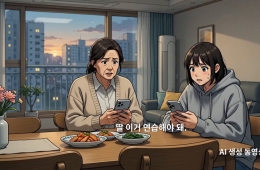
Messages exchanged between a kindergarten teacher from Bucheon, who died suffering from the flu, and an acquaintance while alive. Korea Teachers and Education Workers Union
View original imageAccording to the Korea Teachers and Education Workers Union (KTU) on June 8, the Korea Private School Teachers’ Pension Management Corporation (Teachers’ Pension Corporation) held a salary review committee meeting that day and decided to approve the claim for occupational survivors’ benefits submitted by the family of the deceased teacher, Ms. A, who was in her twenties. In the first meeting held on May 4, the committee had been evenly split on whether the case constituted an occupational accident, and the decision was postponed with a call for further discussion. However, at the latest meeting, with the same committee members, the accident was recognized as work-related.
On January 27 of this year, Ms. A was diagnosed with influenza type B but was unable to take proper leave and continued to work for three days. At the time, she reported to the principal, saying, "I should have taken better care of my health. I am sorry." After her symptoms worsened, Ms. A was admitted to the intensive care unit and ultimately passed away on February 14.
Around the time she fell ill, Ms. A was preparing for a school performance and had to cover for a staff shortage in the cafeteria, resulting in repeated early morning and late-night shifts. She also experienced significant physical strain by moving instruments such as pianos and janggu drums to a building about 100 meters away while managing multiple programs simultaneously. Even after her flu diagnosis, she reportedly expressed her intention to continue coming to work while wearing a mask.
The family submitted data to the corporation showing that, since October of the previous year, 45 individuals—including 43 out of 120 children and 2 teachers—at two nearby kindergartens where Ms. A had worked had contracted the flu. Specifically, during the period from January 26 to 29, when Ms. A was infected, 12 people at these kindergartens tested positive. The family argued that "because so many children and teachers lived together in enclosed spaces, there was an unavoidable risk of group infection."
It was also reported that Ms. A, while experiencing a fever, was concerned about potentially transmitting the illness to children with high fevers under her care. Fellow teachers commented that "due to the atmosphere, people feel uncomfortable taking annual leave."
Previously, a petition with 14,437 signatures from teachers and citizens calling for Ms. A's case to be recognized as an occupational accident was submitted to the corporation. This included 2,324 teachers, accounting for 10% of all private kindergarten teachers.
The decision came 115 days after Ms. A’s passing. The KTU welcomed the decision, stating, "This officially recognizes that the teacher’s death, after being unable to properly rest while suffering from the flu and continuing to work at the educational site, was not a personal health issue but an accident that occurred due to the working environment and the process of performing her duties."
Hot Picks Today
 "No Wonder It Soared Today... Morgan Stanley Eyes 3 Million Won Target—Which Stock Is It?"
- "Who Wants to Hire 40 Skilled Kimbap-Making Women?"... A 'Suspicious Ad' Appears Online
- "Why Waste Scorching Subway Heat? New York Launches 1.1 Billion Won 'Innovative Experiment'"
- "If You're So Sure, Try It Yourself": 44-Year-Old Father Admitted to Prestigious University After Daughter's Challenge
- "This Is Not Right, Chairman"...Flood of Criticism over SK hynix's Pursuit of 'Five-Layer Duplicate Listing'
The KTU urged the government to use this decision as an opportunity to strengthen the public nature of private kindergartens and guarantee teachers’ health rights by establishing fundamental countermeasures. The union further emphasized, "We need to change the reality where teachers cannot rest even when they are ill." Specifically, the KTU demanded: (1) a practical guarantee of sick leave for teachers in the event of infectious diseases, (2) improvement of teacher staffing standards based on the number of classes and the introduction of additional staffing in preparation for infectious diseases, and (3) promoting the incorporation of private kindergartens, along with establishing legal and institutional foundations to strengthen the public aspect of early childhood education.
© The Asia Business Daily. All rights reserved. Unauthorized AI training and use prohibited.