[The Editors' Verdict] AI Competitiveness Recognized by Jensen Huang... Time to Leap Forward with 'AI for All'
![[The Editors' Verdict] AI Competitiveness Recognized by Jensen Huang... Time to Leap Forward with 'AI for All'](http://www.asiae.co.kr/news/img_view.htm?img=2026042110384734116_1776735528.jpg)
"Korea has the foundation to become a powerhouse in artificial intelligence (AI). It is not only a global leader in heavy industry and manufacturing, but also in electronics, software, and AI."
Jensen Huang, CEO of Nvidia, delivered a resonant message at the "Korea AI Ecosystem Reception" held at the Shilla Hotel Guesthouse on June 8, emphasizing that Korea is the ideal partner for the AI era. He held extensive discussions with Korean companies on AI infrastructure and AI factory collaboration, praising Korea as an irreplaceable partner. At a time when there were significant concerns that Korea might become dependent on American big tech companies due to lagging competitiveness in large language models (LLMs), this event provided an opportunity to objectively reaffirm the potential of Korea's AI sector.
Since the inauguration of the Lee Jaemyung administration, domestic AI policy has been pursued at a rapid pace over the past year. Setting the direction to leap from a semiconductor powerhouse to one of the top three AI nations (G3) was timely. Both the public and private sectors have been moving swiftly toward this national goal. The National AI Strategy Committee was launched, and concrete institutional frameworks such as the enactment of the AI Basic Act were established. Companies have devoted themselves to AI transformation (AX) and the expansion of the AI ecosystem.
However, despite these efforts, the AI industry still faces an immediate shortage of funding and talent, which is a regrettable reality. According to the "AI Index" published by Stanford University in April this year, Korea's private AI investment barely exceeded $1.78 billion last year, marking an increase of only about $400 million over the past two years. In contrast, the United States reached $285.9 billion, more than quadrupling in two years, while China, which relies more on government support than the private sector, saw its investment rise from $7.8 billion to $12.4 billion, a 59% increase, highlighting an overwhelming gap with Korea. The gap in private AI investment between Korea and the U.S., which was about 48 times in 2023, has now widened to 160 times.
Of course, it is not reasonable to simply compare absolute investment figures with countries of vastly different economic sizes, but it is also difficult to confidently say that 'sophisticated, tailored support' is being effectively implemented to offset this gap. To maximize efficiency with a limited national budget, bold tax incentives and pump-priming investments are essential to encourage companies to open their wallets. Yet, in practice, support remains concentrated on large companies, and investment has not spread throughout the AI ecosystem.
Furthermore, the chronic problem of a talent shortage persists. Korea's net inflow rate of AI talent per 10,000 people dropped to -0.36 in 2023, down from -0.30 the previous year. Unlike leading countries such as the United States (+0.92) and the United Kingdom (+0.62), Korea is losing more talent than it is gaining. Not only is there an absolute shortage of talent, but even what exists is concentrated in large corporations.
Hot Picks Today
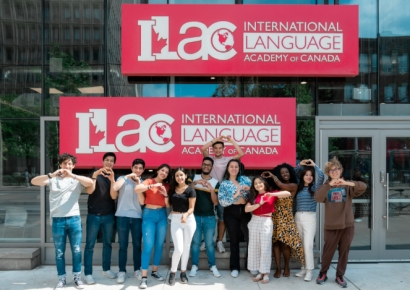 "Quit Job to Start Life in Canada, Now Forced to Return Home"… Language School Closure Leaves Korean Students Stranded
- [Exclusive] "Oh, Oh! Why Is the Seatback Like This?" Hyundai Ioniq 9 Recalled in Korea: 15,000 Units Due to Power Seat Entrapment Risk
- "When Was the Last Time I Went?" With Fewer Visitors, 80% of Japan’s Neighborhood Bathhouses Disappear in 50 Years
- "Typical Italy? This Tour Package Sold 300% More"...Destinations Chosen by Koreans
- Hanwoo Can't Even Dream of This... "Melts in Your Mouth" as Wagyu Hits It Big in U.S. Supermarkets and Fast-Food Chains
To truly become an AI powerhouse, Korea must broaden the base of its AI ecosystem. With Jensen Huang having expressed Nvidia's firm commitment to supporting Korea's AI ecosystem, the government must carefully craft policy to ensure that this opportunity does not become the exclusive domain of a few large corporations. It should no longer be the case that small and medium-sized enterprises or academia are unable to operate high-performance models due to difficulties in securing Nvidia's latest graphics processing units (GPUs). Now is the time to further elevate Korea's AI competitiveness so that numerous SMEs and startups can also freely race along the AI infrastructure highway paved by large corporations, creating an AI ecosystem for all.
© The Asia Business Daily. All rights reserved. Unauthorized AI training and use prohibited.