National Pension Service Resumes Forward Selling to Curb Surging Exchange Rate Beyond 1,550 Won
The National Pension Service has resumed selling foreign exchange forwards, a practice it had effectively halted since the beginning of this year. This move is interpreted as an attempt to hedge against currency fluctuations after the recent surge in the dollar-won exchange rate, which has surpassed the 1,550 won level.
According to the Ministry of Economy and Finance and other sources on June 8, the National Pension Service recently carried out foreign exchange forward selling transactions in the Seoul foreign exchange market. The National Pension Service uses currency hedging to reduce risks arising from exchange rate fluctuations during overseas asset investments. Currency hedging is a strategy that locks in a future exchange rate in advance when investing abroad, thereby lowering the risk of foreign exchange losses. A higher hedging ratio leads to an increased supply of dollars in the market, which helps to ease upward pressure on the exchange rate.

The KOSPI index plunged more than 8% at the market opening on the 8th, falling to around 7,400 points. Exchange rates, KOSPI, and KOSDAQ indices are displayed on the status board in the dealing room at the Hana Bank headquarters in Jung-gu, Seoul. June 8, 2026. Photo by Dongjoo Yoon
View original imageIn particular, selling foreign exchange forwards is a transaction in which the seller agrees to sell dollars to be received in the future at the current exchange rate. This effectively supplies dollars to the market in advance that will be brought in through overseas investments, dispersing dollar demand and serving as a tool to mitigate the depreciation of the won. Until recently, the National Pension Service had primarily relied on foreign exchange swaps with the Bank of Korea, and had effectively suspended forward selling since the beginning of the year.
Previously, in April, the National Pension Service established the "National Pension Service New Framework," which included measures to increase the currency hedging ratio for overseas investments. As a result, the hedging ratio for overseas investments was raised to 15%, a 5 percentage point increase from the previous level.
This forward selling is the first action taken since the implementation of the new framework. An official from the Ministry of Economy and Finance explained, "The forward selling was carried out as part of the expanded currency hedging under the new framework."
On the morning of June 8, the Ministry of Economy and Finance and the Bank of Korea issued a joint statement, saying, "In the recent foreign exchange market, we judge that, in addition to supply and demand factors, some speculative trading in the offshore non-deliverable forward (NDF) market has amplified volatility," adding, "We will never tolerate excessive volatility and one-sided movements that are out of line with fundamentals, and we will respond strongly."
Hot Picks Today
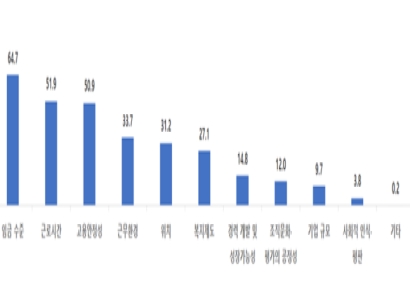 "Please Pay Me at Least 3 Million Won a Month": More Than Half of Young People Today Prioritize "Working Conditions" Over Company Size
- Selling Like Crazy Every Year... 30-Year-Old Hetbahn Takes on a New Challenge: Tastes Better Than "Mom's Home Cooking" [On-Site Report]
- "Americans Would Be Amazed If They Came": Wide-Eyed at a Sight They've Never Seen Before... Foreigners Also Fall for K-Baseball [K-Holic]
- "Hey, Lady, Teach Your Kids to Behave!" ... 300,000 Won in Cash and a Bodily Injury Claim Demanded Over Child's Door Ding
- Beachgoer Finds 'Plastic' That Turns Out to Be Perfume Ingredient Worth More Than Twice as Much as Gold
As authorities verbally intervened and the National Pension Service resumed forward selling, the dollar-won exchange rate closed at 1,535.0 won, down 4.1 won from the previous trading day.
© The Asia Business Daily. All rights reserved. Unauthorized AI training and use prohibited.