"Toxic Synthetic Rice in Food Delivery?"... Chinese Experts Say "It's a Safe Processed Food"
"Rumors Spread About Toxic Rice Used in Food Deliveries"
Experts Warn, "Be Cautious of Illegal Practices Disguising Old Rice as Fresh"
Recently, rumors have been spreading on Chinese social networking services (SNS) that toxic synthetic rice is being used in food deliveries, sparking controversy. In response, experts have emphasized, "Synthetic rice is not cost-effective for food delivery businesses," and stressed, "We should be more wary of illegal acts such as passing off old rice as newly harvested rice."
Xinhua News Agency reported on June 7 that "Rumors about the rice used in food deliveries are spreading on SNS, but it has been confirmed that these claims are not true." This appears to be a response to rumors suggesting that rice used in food deliveries is loaded with chemical additives and toxic substances.

Synthetic Rice, a Processed Food Targeting the Mid- to High-End Market
Synthetic rice (renzao rice, reprocessed rice) in China refers to rice produced by mixing broken rice grains with grain vitamins, minerals, multigrain powder, and konjac powder, then extruding and drying the mixture. Its appearance is known to be identical to regular rice.
Zhu Dazhou, chief scientist at the Institute of Plant Nutrition and Development at China’s Ministry of Agriculture and Rural Affairs, explained, "Synthetic rice contains high-priced sub-ingredients, so its unit cost is relatively high. For example, konjac powder costs 20 yuan per kilogram (about 4,500 won)." He added, "This is different from the low-priced rice sold on e-commerce platforms." The processing of synthetic rice also requires energy consumption and equipment costs. Zhu further explained, "Synthetic rice can be cooked in just a few minutes and tastes good, so it is a processed food targeting the mid- to high-end market," and added, "Synthetic rice is relatively expensive, costing more than 10 yuan per kilogram (about 2,200 won)."

Regarding the fact that synthetic rice does not harden over time, Zhu attributed it to "the physical properties of starch." He said, "When rice undergoes extrusion processing, the internal starch structure changes, increasing its absorption rate. In addition, the inclusion of ingredients like konjac powder helps the rice retain moisture, so the cooked rice does not dry out or become hard and lumpy."
Hot Picks Today
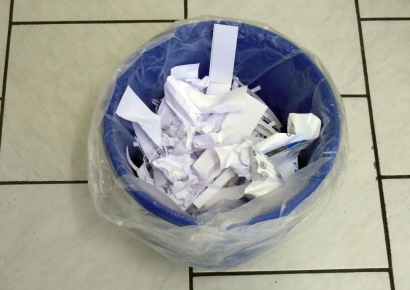 Ballot Box Found in Trash... Peru Holds Runoff Amid 'Ballot Shortage Crisis'
- [Exclusive] "Why Is Only My Stock Not Rising?" The Reason Revealed... Suspicions of 'Stock Price Suppression' Mocking Government Policy [Wealth Succession] Intops②
- "Exactly the Same Early Voting Results in Songdo 1-dong and 2-dong?"... Uproar Over Ballot Counting
- "The Third 'Showing Off the Money' Post: SK hynix Employee Helps Create Orphanage Library"
- "Click! Gotta Post on SNS"... 'Small Luxury' for 20s and 30s Cools Down Amid High Inflation
The Real Problem Is Not 'Synthetic Rice,' but 'Old Rice'
Chinese experts agree that the real issue consumers should be wary of is not synthetic rice, but rather the illegal distribution practices of disguising old rice as newly harvested rice. Some unscrupulous vendors have been known to coat moldy, old rice with wax or add fragrances to deceive customers. Experts warn that in such cases, the risk of exposure to dangerous toxins far exceeds safety standards. They further advise, "If your cooked rice lacks a savory aroma, smells musty, or the surface of the rice grains appears yellowish, you should stop eating it immediately."
© The Asia Business Daily(www.asiae.co.kr). All rights reserved.
!["Money Pit: Unstoppable Price Gouging at Golf Courses [Green Fee Price Shock]"](https://cwcontent.asiae.co.kr/asiaresize/307/2026060809323390802_1780878752.png)

!["Don't Get Excited, Crushes Are Exhausting Too: The 'Crush Recession' Among Gen Z [World is Z Gold]"](https://cwcontent.asiae.co.kr/asiaresize/307/2026060508335888548_1780616038.png)