"Even Exporters Can't Smile": SMEs Hit Hard by Soaring Exchange Rates
30.9% of SMEs Report "Damage from Soaring Exchange Rates"; 70% for Importers
Exporters with High Raw Material Imports See Limited Benefits from Strong Dollar
Experts: "Prepare for Volatility Rather Than Predicting Exchange Rate Peaks"
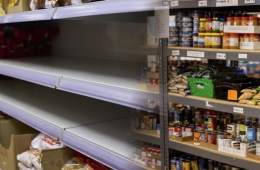
Kwon, who runs a small metal processing company in Gyeonggi Province, has been directly hit by the soaring won-dollar exchange rate. Because he imports raw materials in dollars, the rising exchange rate has increased his purchasing costs by up to 30%. Since it is difficult to raise sales prices in the short term, the increase in exchange rates immediately leads to a reduction in profit margins. He lamented, "If the exchange rate keeps going up, I will have no choice but to be conservative with wage increases or cut back on facility investments."
The damage suffered by small and medium-sized enterprises (SMEs) due to the rapid rise in exchange rates is growing more severe. The impact is spreading not only to SMEs that rely on imports and face the burden of increased costs, but also to export-oriented SMEs. When the share of imported raw materials and intermediate goods is high, even exporting SMEs find it difficult to benefit from a strong dollar. In other words, higher exchange rates no longer automatically translate into increased profits for exporters.
According to the Bank of Korea's Economic Statistics System (ECOS) on June 9, the average closing won-dollar exchange rate for each trading day through June 5 stood at 1,522.4 won. This is the highest level in 28 years and four months since February 1998 (1,626.8 won), during the International Monetary Fund (IMF) foreign exchange crisis. The cash selling rate for dollars at airport currency exchanges exceeded 1,600 won. As of June 6, the dollar cash selling rate at Hana Bank's airport branch was recorded at 1,624.00 won.

Under these circumstances, the management burden for SMEs is increasing rapidly. According to a survey by the Korea Federation of SMEs, 30.9% of companies responded that they had suffered damage due to the recent sharp rise in exchange rates. Among SMEs that only import, the incidence of damage reached 70%. However, 87.9% of SMEs were found not to use any foreign exchange risk management tools to cope with exchange rate fluctuations. This is because it is difficult for them to adopt financial techniques due to limitations in staffing and funding.
Even for export-oriented SMEs, there is a growing perception that a strong dollar is no longer an advantage. While a higher exchange rate usually increases price competitiveness and raises revenues when converted to won, SMEs that import raw and intermediate materials to manufacture products face greater cost burdens, making high exchange rates less favorable. According to a report by the Korea International Trade Association, when the exchange rate rises by 10%, the operating profit margin of 61.8% of exporting companies increases in the short term. However, if the high exchange rate persists and companies are unable to reflect increased production costs in their sales prices, the operating profit margin of 80.1% of exporters deteriorates.
As exchange rate volatility grows to an unpredictable degree, the volume of subscription to foreign exchange fluctuation insurance has also fluctuated. According to Korea Trade Insurance Corporation, the volume of such insurance policies in 2025 was 888.4 billion won, a 39% decrease from the previous year's 1.4592 trillion won, falling below 1 trillion won for the first time in four years. This was because companies postponed hedging, expecting the exchange rate to rise further. On the other hand, as of the end of May this year, the volume of new subscriptions was 534.7 billion won, a 31% increase compared with the same period last year. The Corporation explained that as the won-dollar exchange rate rose to the 1,500 won range, demand for securing export profits grew, leading to increased demand for foreign exchange hedging.

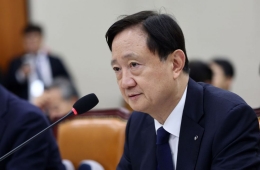
Experts unanimously emphasize the need to prepare for exchange rate volatility that exceeds predictable ranges. Kim Tae-hwang, a professor in the Department of International Trade at Myongji University, said about the recent increase in foreign exchange fluctuation insurance subscriptions, "Rather than judging the peak or bottom of the exchange rate, the expansion reflects concerns over increased volatility, especially volatility that goes beyond what companies can predict." He added, "This year, concerns have intensified compared to last year due to the war in the Middle East." He also said, "As exchange rate volatility increases, variability and uncertainty may also rise during trade contract negotiations, so companies should be especially cautious."
Hot Picks Today
 "Koreans Spend 1 Million Won Each and Come Back"... 'They Said They Were Going for Value for Money,' but Open Their Wallets Wide in Japan
- "Wow, Have Middle-Aged Men Had This All to Themselves?"... Women in Their 20s and 30s Find Comfort in a Standing Drink
- SK hynix to add 60 trillion won in shareholder returns... Kioxia gains to be returned as special dividend
- "They Get a Good Night's Sleep and Earn Twice My Salary... Honestly, I'm So Jealous I Could Die": Civil Servant's Post Targeting Firefighters Sparks Outrage
- "I Have 9 Billion Won, but I Still Can't Quit"... The Unexpected Worry of a Major-Company Employee in His 40s Who Hit It Big with Investments
Yang Joon-seok, a professor of economics at the Catholic University of Korea, stressed that companies must first assess their net foreign exchange exposure by calculating the dollars they are to receive and pay. He said, "At the current exchange rate, it is necessary to test risk assuming at least a 50-won fluctuation up or down," and added, "The government should also determine the level of foreign exchange risk exposure for SMEs and conduct stress tests."
© The Asia Business Daily. All rights reserved. Unauthorized AI training and use prohibited.