"Why Were Follow-Up Management Regulations Omitted?"... Climate Change Impact Assessments in a Policy Blind Spot
Industry Concerns Considered at System's Introduction in 2021
Structural Limitations of Future Outcome Predictions Highlighted
"Implementation Should Be Monitored Through National Assembly Budget Reviews"
The lack of follow-up management for climate change impact assessments has been an anticipated issue since the early days of the system's introduction. Critics point out that the government, in the initial phase of its carbon neutrality policy, focused on establishing an evaluation framework and, considering potential burdens and backlash from industry, postponed the introduction of follow-up management regulations. This has resulted in the current institutional gap.
Regulations Overlooked at the Time of the Carbon Neutrality Framework Act's Introduction
The climate change impact assessment was introduced under the Carbon Neutrality Framework Act, enacted in 2021. Its purpose is to require prior analysis of how large-scale development projects or policies affect greenhouse gas emissions and the climate crisis, and to establish mitigation and adaptation measures. As there was no similar system in Korea at the time, policy capacity was concentrated on building the assessment framework. Although the issue of follow-up management was reportedly discussed during the legislative process, the final bill did not include follow-up management provisions, such as mandatory compliance with consultation outcomes, administrative orders, or fines, as found in the Environmental Impact Assessment Act.
Another reason the government did not establish a separate follow-up management system lies in the characteristics of the projects subject to assessment. While environmental impact assessments manage relatively measurable items, such as pollutant emissions facilities or ecosystem damage, climate change impact assessments are conducted by predicting future greenhouse gas emissions and mitigation effects. Because mitigation plans presented by business operators may be revised later due to technological changes or business conditions, it is believed that the government and National Assembly prioritized an evaluation- and consultation-centered approach over mandatory regulations in the early stages of the system's introduction.
The core issue is that, as the system enters its fifth year of implementation, projects that have undergone assessment are now entering the construction and operational phases in earnest. Previously, most assessed projects remained at the planning or permitting stage, so structural gaps were less apparent. However, as large-scale development projects are now being actively pursued, it has become necessary to verify whether the mitigation plans outlined in the assessments are actually being implemented on the ground.

As Assessed Projects Begin in Earnest, Systemic Flaws Surface
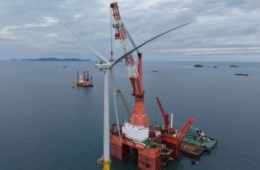
With the Ministry of Government Legislation determining that follow-up management provisions under the Environmental Impact Assessment Act cannot be applied to climate change impact assessments, legal oversight through existing legal frameworks has become virtually impossible. For example, even if a large combined-cycle power plant operator presents a plan to reduce greenhouse gas emissions by 20% during the climate change impact assessment and completes the consultation process, the government currently has no means to enforce this or impose fines if the operator fails to implement the plan during construction or operation. The same applies to renewable energy projects; even if a large-scale solar or wind farm submits and finalizes an adaptation plan for climate vulnerability, there is no basis for sanctions if it is not implemented after construction begins. In reality, this creates a structure where "assessment is mandatory, implementation is optional."
As a result, concerns are growing within the environmental and energy industries that climate change impact assessments could devolve into a mere formality. If there are no mechanisms to verify whether mitigation plans detailed in the assessments are actually being carried out, the value of the assessments themselves is diminished. The subsequent legislative process is also expected to be challenging. If a management system as stringent as that for environmental impact assessments is introduced, this may trigger debates about increased corporate burdens and reduced investment. On the other hand, if the system is limited to reporting obligations or recommendations, questions will likely be raised about its effectiveness.
Hot Picks Today
!["This Is the Only Chance for Ordinary People to Become Wealthy"... Expert Recommends This Investment Method [Retirement Pension Investment Strategy] ⑥](https://cwcontent.asiae.co.kr/asiaresize/93/2026060816040991771_1780902249.jpg) "This Is the Only Chance for Ordinary People to Become Wealthy"... Expert Recommends This Investment Method [Retirement Pension Investment Strategy] ⑥
"This Is the Only Chance for Ordinary People to Become Wealthy"... Expert Recommends This Investment Method [Retirement Pension Investment Strategy] ⑥
- [Breaking] KOSPI Recovers 8,000 Intraday
- "Musk Had Every Reason to Celebrate"... Surprising Korean Record Marked with Taegeukgi
- "Why Spend Tens of Millions?" Surge in Popularity for 5 Million Won 'Cost-Effective' Weddings
- "Two LG Appliances in Every Upscale Taiwanese Foyer"... K-Appliances Captivate the Wealthy
Experts believe that this latest legal interpretation will serve as a turning point for full-fledged discussions on improving the system. Hong Jongho, professor at the Graduate School of Environmental Studies, Seoul National University, stated, "Ultimately, a follow-up management system must be established through legislation," adding, "However, until the system is improved, it is necessary to consider ways to monitor whether mitigation plans are being implemented by utilizing the carbon reduction-oriented budgeting system and the National Assembly's budget review functions."
© The Asia Business Daily(www.asiae.co.kr). All rights reserved.