Amid Concerns Over Excessive Share Price Declines, Alteogen, LegoChem, and ABL Bio Poised for Momentum in the Second Half
Three Bio-Platform Leaders Poised for Rebound in the Second Half of the Year
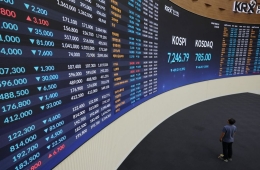
Recently, amid external factors such as global stock market volatility and capital shifting to other sectors, the share prices of pharmaceutical and biotech companies have seen significant declines. In this context, three domestic bio-platform companies— Alteogen, ABL Bio, and LegoChem Biosciences—are drawing attention by emphasizing their intrinsic value. These companies are preparing for a rebound in corporate value through smooth clinical progress in their pipelines, victories in global patent disputes, and ongoing discussions for new technology licensing deals.
According to industry sources on June 8, Alteogen has recently solidified its exclusive position by resolving legal uncertainties surrounding its subcutaneous injection (SC) formulation platform, ALT-B4. The United States Patent and Trademark Office (USPTO) dismissed the initiation of an inter partes review (IPR) for a manufacturing method patent filed by competitor Halozyme. Moreover, Merck, a partner company that co-developed the Keytruda SC formulation, successfully invalidated Halozyme's patent, significantly reducing legal risks. With the granting of a permanent J-code (unique medical billing and reimbursement code) in the United States this April, the prescription process for Keytruda SC has been streamlined, and sales for this year are expected to reach 2 billion dollars (approximately 3.119 trillion won). As a result, Alteogen is projected to receive over 300 billion won in sales milestones from Merck this year. The cumulative sales milestones could reach up to 1 billion dollars (about 1.559 trillion won). Alteogen is currently in the final stages of negotiating additional technology licensing agreements with multiple global pharmaceutical companies.

ABL Bio also states that although its share price has declined in the short term, its fundamental value remains unchanged. The company is conducting research and development in partnership with Sanofi, GSK, Eli Lilly, and others, based on its blood-brain barrier (BBB) shuttle platform "Grabody-B." It plans to pursue further technology transfers through a number of meetings at BIO USA this month. ABL111, based on the bispecific antibody platform "Grabody-T," is targeting entry into Phase 3 clinical trials in the fourth quarter of this year to secure accelerated approval pathways. In the next-generation ADC field, NeoCura Bio is leading Phase 1 clinical trials for candidates such as ABL206, and Phase 1b clinical data for ABL202, which is co-developed with LegoChem Biosciences, will be released in the second half of the year. An ABL Bio representative emphasized, "Changes in the external environment have not damaged our intrinsic value. Efforts to pursue platform technology licensing, clinical trials for immuno-oncology drugs, and research on next-generation ADCs are proceeding more smoothly than ever."
LegoChem Biosciences, despite temporary share price adjustments due to macroeconomic uncertainties, is steadily conducting clinical trials for its antibody-drug conjugate (ADC) pipeline. HER2 ADC (LCB14), which was licensed out to Fochon Pharmaceuticals, is awaiting final results from phase 3 clinical trials in China in the second half of this year. Interim results from a global phase 1b clinical trial for a pipeline licensed to Exxuda will also be presented at a conference in the second half. The ROR1 ADC (LCB71), out-licensed to CStone Pharmaceuticals, achieved a 95.5% complete response (CR) rate in a phase 1b trial in March, with additional cohort results forthcoming. The company’s in-house developed CLDN18.2 ADC will begin dosing the first patient in a global phase 1/2 clinical trial in the third quarter, and newly licensed pipeline projects such as L1CAM ADC, out-licensed to Ono Pharmaceutical, are also entering clinical trials. Regarding the recent share price decline, LegoChem Biosciences stated, "This is due not to fundamental changes, but to macroeconomic uncertainty and sector-wide supply and demand effects. Our core R&D pipeline and business development discussions are progressing smoothly as planned."
Hot Picks Today
!["Despite Complaints About Sweat, She Straps On a 15kg Bag and Pushes Through the Deadly Heatwave [Sociology of Heatwaves] ①"](https://cwcontent.asiae.co.kr/asiaresize/93/2026081215431278523_1786516992.gif) "Despite Complaints About Sweat, She Straps On a 15kg Bag and Pushes Through the Deadly Heatwave [Sociology of Heatwaves] ①"
"Despite Complaints About Sweat, She Straps On a 15kg Bag and Pushes Through the Deadly Heatwave [Sociology of Heatwaves] ①"
- Thought It Was a Patriot’s Calligraphy, But Possibly a Pro-Japanese Collaborator’s? National Museum Issues Apology
- "If You Don't Buy Now, You'll Be Too Late"... Office Workers Rush for Golden Holiday as Flight and Hotel Reservations Heat Up
- Just Assessment and Done?... Linking Culture and Tourism Policy to Budgets
- "Controversy Over Female YouTuber Who Filmed in Mixed-Gender Bath Despite Knowing Filming Was Prohibited"
Despite their global competitiveness, the three bio-platform companies have seen their share prices fall by more than 40% from their highs this year due to capital concentration trends. Hyunseok Kim, a researcher at Hyundai Motor Securities, commented, "Although there have been expectations for technology licensing since the first half of the year, many companies have yet to announce deals, even though several firms presented promising clinical data at conferences in the first half. If technology licensing agreements are signed in the second half, it could trigger a return of capital to the pharmaceutical and biotech sector."
© The Asia Business Daily. All rights reserved. Unauthorized AI training and use prohibited.