Amid Iran-Israel Airstrikes, Trump Says "Agreement Possible by the 10th" (Comprehensive)
Iran Launches First Direct Missile Strike Since Ceasefire
Retaliation for Israel’s Attack on Beirut
Trump: "Very Close to Final Agreement"
Seeks to Prevent Escalation and Shows Willingness to Negotiate
After Iran attacked Israel for the first time since the ceasefire in April, U.S. President Donald Trump expressed optimism for an end to the war. He also personally intervened to mediate between the two countries. However, Iran continued to demand the unfreezing of funds and the collection of strait transit fees.

Trump: "Agreement Possible by the 10th"... Appears Intent on Concluding Before the World Cup
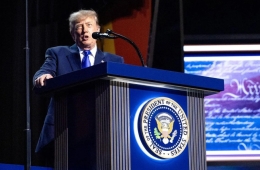
On the 7th (local time), President Trump said in a telephone interview with the Financial Times (FT), "Israeli Prime Minister Benjamin Netanyahu has no choice," adding, "I make the decisions. All decisions are mine." President Trump also stated, "Netanyahu is not the decision-maker."
This is interpreted as a message that he will not tolerate Israel taking independent actions that could affect the ongoing ceasefire negotiations between the U.S. and Iran. He emphasized, "This attack will have no impact on the negotiations," and "the negotiations are continuing."
His comments came immediately after Iran launched several missiles toward Israel. This was Iran's first provocation against Israel since the U.S.-Iran ceasefire took effect in April. Iran attacked Israel in retaliation after Israel supplied southern Dahieh in Beirut, Lebanon. Dahieh is known as a stronghold of the pro-Iranian armed group Hezbollah.

Urging Israel "Do Not Retaliate"
On the same day, President Trump also emphasized the possibility of a negotiated settlement during an interview with Fox News. He said, "We are very close," indicating that an agreement would be reached by the 10th at the latest. President Trump added, "This attack certainly does not help the negotiations, but the missiles have already been launched, so that's enough. Return to the negotiating table and reach an agreement," urging Iran to resume talks.
Previously, in an interview with Axios, he said, "I will call Bibi right now and tell him not to retaliate," adding, "Israel attacked, and Iran attacked. There is no need for another strike." Axios noted that it was highly unusual for President Trump to publicly urge Israel to refrain from a military response.
Some analysts believe that President Trump's push to reach a ceasefire agreement before the 10th is influenced by the North and Central America World Cup schedule. He is reportedly aiming to sign a memorandum of understanding (MOU) with Iran before the World Cup begins on the 11th, focusing on extending the ceasefire and initiating denuclearization negotiations. Of all the matches being held from June 11 to July 19, 75% will take place in stadiums across the United States.
Even Without a Deal, Removal and Disposal of Highly Enriched Uranium (HEU)
However, President Trump also said he is considering the possibility of the agreement failing. In an interview aired on NBC, he addressed the key issue of Iran's handling of HEU in the ceasefire negotiations: "Whether it is destroyed on site or transported elsewhere for disposal, we will remove it and dispose of it."
He stated, "If we cannot reach an agreement (with Iran), we will strike them very hard with military force. Only after that will we move in to recover the highly enriched uranium, and in any case, our security will be assured." He further explained that, in addition to the existing clause prohibiting nuclear weapons development, he is also demanding an explicit ban on the purchase or acquisition of nuclear weapons.
President Trump said, "If the agreement fails, there are two options: either we finish what we have not yet addressed militarily, or we maintain the current blockade." Regarding the maritime blockade against Iran, he claimed it is "a stronger measure than any military attack Iran has experienced so far."
Contrary to President Trump's wishes, Iran announced that it has begun collecting transit fees for the Strait of Hormuz. The semi-official Iranian news agency Fars reported that Iran is charging service fees of between 1.5 million and 2 million dollars (approximately 2.3 billion to 3 billion won) per vessel passing through the strait. The agency quoted Mohsen Zanganeh, a member of the Iranian parliament’s budget committee, as saying, "Iran has officially started implementing its plan to collect service fees from vessels transiting the Strait of Hormuz."
Hot Picks Today
 "Please Pay Me at Least 3 Million Won a Month": More Than Half of Young People Today Prioritize "Working Conditions" Over Company Size
- Selling Like Crazy Every Year... 30-Year-Old Hetbahn Takes on a New Challenge: Tastes Better Than "Mom's Home Cooking" [On-Site Report]
- I Thought Only 'Old Guys' Ate It... Young People Are Hooked on This 'Unusual Food' at Risk of Disappearing? [Delicious Stories]
- "Hey, Lady, Teach Your Kids to Behave!" ... 300,000 Won in Cash and a Bodily Injury Claim Demanded Over Child's Door Ding
- Beachgoer Finds 'Plastic' That Turns Out to Be Perfume Ingredient Worth More Than Twice as Much as Gold
On the 5th, Mohsen Rezaee, military advisor to Iran's new leader Mojtaba Khamenei, stated that the outcome of the ceasefire agreement between the U.S. and Iran hinges on the unfreezing of 24 billion dollars (about 37.4 trillion won) in Iranian assets. In a rare interview with U.S. media outlet CNN, he said, "If President Trump wants to reach an agreement with Iran, the 24 billion dollars is a test of trust. It is a test the U.S. must pass, and if so, the path will open."
© The Asia Business Daily. All rights reserved. Unauthorized AI training and use prohibited.