Vacation Culture Transformed: Korean Office Workers Surpass Japan and Hong Kong in Annual Leave Usage
Analysis of 4,700 Employment Contracts Across 17 Asia-Pacific Countries
Annual Leave Utilization Rate at 53.3%, Second Only to Singapore
Korean office workers have been found to use their annual leave more actively than those in other major Asia-Pacific countries. Contrary to the past perception of Korea as a country where employees rarely use their annual leave, there is now a rapidly growing culture of taking vacations, and a greater emphasis on work-life balance is taking root.
The global payroll and HR management platform Deel recently released the results of an analysis on annual leave usage in 17 Asia-Pacific countries, including Korea. The research was conducted based on approximately 4,700 actual employment contract data from last year in 17 countries, including Korea, Japan, Singapore, Australia, India, and Hong Kong.

The analysis showed that 53.3% of employees in Korea used all of their allotted annual leave, ranking second after Singapore (57.2%). Malaysia (50.8%), Hong Kong (42.9%), and Japan (35.9%) followed. Korea also ranked high in terms of the actual number of annual leave days used. By country, the median number of annual leave days used was highest in Singapore at 19 days, followed by Hong Kong (16.5 days), Malaysia (15.5 days), and Korea in fourth place with 15 days.
In the past, Korea was considered a representative "vacation-poor country." According to a 2014 survey by the global travel platform Expedia, Korean office workers were granted 15 days of paid leave per year but only used 7 days, making Korea the country with the lowest vacation usage in the world at that time.
However, with the recent establishment of the 52-hour workweek, the spread of the work-life balance culture, and changing attitudes among the younger generation, more employees are now actively using their annual leave. In particular, after COVID-19, demand for overseas travel has surged, leading to an increase in cases where employees take long vacations for travel.
In Singapore, even though the median number of annual leave days allotted was 18, the median number of days actually used reached 19, indicating that a culture of freely taking vacations has become established. In contrast, in India, although employees were granted a relatively high number of annual leave days, the actual usage rate was low. India’s median number of annual leave days allotted was 18, but the median number of days used was only 12. The total exhaustion rate was also recorded at 17.2%.
Even within the Asia-Pacific region, there are significant differences between countries in how annual leave is used. In Australia, the proportion of long-term vacations (16 days or more) accounted for 2.9% of all leave, the highest among the countries surveyed, reflecting a strong culture of taking extended breaks.
Hot Picks Today
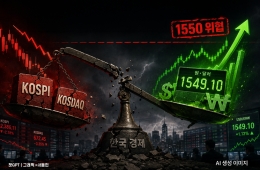
!["Worse Than the Thai Baht?"... Won Hits 1,560: What’s Happening [Exchange Rate Surges Past 1,500]①](https://cwcontent.asiae.co.kr/asiaresize/93/2026032713450493637_1774586703.png) "Worse Than the Thai Baht?"... Won Hits 1,560: What’s Happening [Exchange Rate Surges Past 1,500]①
"Worse Than the Thai Baht?"... Won Hits 1,560: What’s Happening [Exchange Rate Surges Past 1,500]①
- "Are Seoul Hotel Prices for Real?" Surging Inbound Tourists Bring Smiles to This Company [Weekend Money]
- Up to 20x Leverage... What Are the Leveraged Products Featuring Samsung, SK hynix, and Hyundai Motor? [Weekend Money]
- "Hand Over More Money": Former Government Official Couple Exposed for Hiding Hundreds of Millions During Divorce Lawsuit
In contrast, India and Japan showed a high rate of short-term vacations, with the proportion of leave taken in 1-2 day increments at 48.4% and 41.2%, respectively, indicating a pattern of short-duration leave usage.
© The Asia Business Daily(www.asiae.co.kr). All rights reserved.
!["Don't Get Excited, Crushes Are Exhausting Too: Even Unrequited Love Faces a Recession [World is Z Gold]"](https://cwcontent.asiae.co.kr/asiaresize/307/2026060508335888548_1780616038.png)