Exchange Rate Briefly Surpasses 1,560 Won on Strong Dollar... Highest Level in 17 Years Since Financial Crisis
The won-dollar exchange rate soared past the 1,560 won mark during intraday trading, reaching its highest level in 17 years.

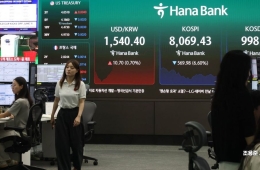
As the KRW/USD exchange rate soars past 1,540 won during the day, an employee monitors the stock market and exchange rates in the dealing room at the Hana Bank headquarters in Jung-gu, Seoul on June 4, 2026. Photo by Yongjun Cho
View original imageAccording to the Seoul foreign exchange market, in overnight trading that closed at 2 a.m. on June 6, the won-dollar rate ended at 1,559.0 won, up by 19.9 won compared to the closing price of the previous day's (June 5) daytime trading at 3:30 p.m.
In particular, just before the close of overnight trading, a surge in buying pushed the rate as high as 1,561.5 won. This is the first time in 17 years and three months that the rate has surpassed the 1,560 won threshold, since March 6, 2009, during the global financial crisis, when the intraday high reached 1,597.0 won.
Earlier, during daytime trading on June 5, the exchange rate jumped to 1,549.1 won at around 10:27 a.m., signaling a shaky start. In the afternoon, it fluctuated fiercely in the 1,530-1,540 won range, ultimately closing at 1,539.1 won for the day.
The turnaround came during the subsequent overnight session. Starting at around 9:30 p.m., immediately following the release of key U.S. employment data, the exchange rate began a sharp upward curve. It quickly broke through the 1,550 won mark and then the 1,560 won mark by the end of trading, heightening volatility.
Foreign exchange market experts analyzed that, amid capital outflows by foreign investors from the domestic stock market and the prolonged Middle East war risk leading to a weaker won, the decisive factor driving the rate higher was the U.S. dollar's strong dominance.
In fact, the U.S. employment report for May, released that evening, showed a surprise outperformance in the labor market, fueling a hawkish outlook that the U.S. Federal Reserve may raise its benchmark interest rate again within the year.
Hot Picks Today
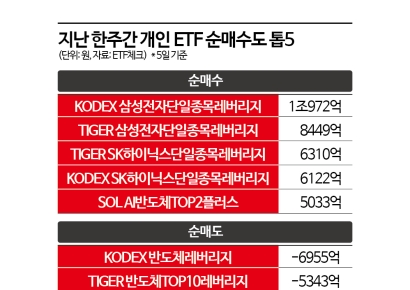 "Let's Double with Samsung and SK hynix": Retail Investors Dump Semiconductor ETFs for Samsung and SK hynix Leverage Products
- "Why Is There No Substitute Holiday for Memorial Day?"... Here's Why
- [Breaking] Iran Fires at Four Oil Tankers for "Unauthorized Passage Attempt" in Hormuz
- 'Dongtan Tops Nationwide in Apartment Price Growth as Gap Investment Hotspot... Semiconductor Belt Also Faces Land Transaction Regulations [Real Estate AtoZ]'
- "Didn't Go All-In on One Partner"... The Secret of Belugas' Diversified Love Life [Experiment Note]
Amid these tightening concerns, the dollar soared in the New York foreign exchange market. The dollar index, which measures the value of the dollar against the currencies of six major countries, climbed above the 100-point level for the first time in two months since April, reinforcing the strong dollar trend.
© The Asia Business Daily(www.asiae.co.kr). All rights reserved.
!["Don't Get Excited, Crushes Are Exhausting Too: Even Unrequited Love Faces a Recession [World is Z Gold]"](https://cwcontent.asiae.co.kr/asiaresize/307/2026060508335888548_1780616038.png)


![[Breaking] President Lee: "Unjust assets of pro-Japanese anti-national collaborators to be investigated and reclaimed"](https://cwcontent.asiae.co.kr/asiaresize/307/2026060610302489855_1780709424.jpg)