Two Former Constitutional Court Research Officers Join Major Law Firms... Concerns Over 'Jaepanso-won Insider Market' Emerge
Hwawoo and Sejong Recruit Former Senior Constitutional Research Officers as Partners
Major Law Firms Compete as Path Opens for Constitutional Appeals Against Finalized Rulings
Since the implementation of the Jaepanso-won (Constitutional Appeal) system, there has been a noticeable trend of former Constitutional Court research officers moving to major law firms. As the path has opened for challenging finalized court rulings at the Constitutional Court, competition among law firms to secure talent with experience in constitutional litigation is accelerating.

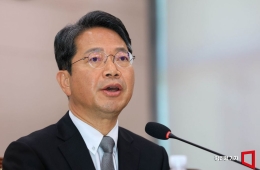
According to the legal community on June 5, Hwawoo recently recruited Ryu Ji-hyun, former Senior Constitutional Research Officer at the Constitutional Court, as a partner attorney. Ryu, a member of the 35th graduating class of the Judicial Research and Training Institute, completed her training in 2006 and served as a judge at Suwon District Court and Seoul Central District Court. She joined the Constitutional Court in 2009 and worked as a constitutional research officer for approximately 17 years until this year. She also served as head of the Institutional Research Team at the Constitutional Court Research Institute and as a senior research officer, overseeing constitutional trial procedures, case review, and institutional research work.
At Hwawoo, Attorney Ryu will be responsible for constitutional appeals, including Jaepanso-won, constitutional complaints, constitutional litigation, and regulatory advisory work. Hwawoo previously established a Jaepanso-won task force (TF) led by former Supreme Court Justice Lee In-bok and has been preparing a response system for related cases.
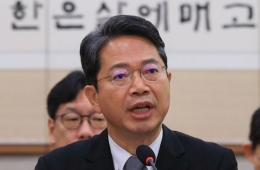
Law firm Sejong also recently recruited attorney Kim Hyun-young, a former Senior Constitutional Research Officer at the Constitutional Court, as a partner. After passing the bar exam in 2003, Kim worked at the legal affairs office of Hanwha Group, then served as a constitutional research officer for about 19 years from 2007. It is understood that she also worked in the dedicated preliminary review division for Jaepanso-won this year.
At Sejong, Attorney Kim will be in charge of constitutional appeals including Jaepanso-won, constitutional complaints, constitutional review of laws, and competence disputes, among other constitutional litigation work. Sejong has strengthened its response to Jaepanso-won cases, centering on its existing constitutional litigation team.
The Jaepanso-won system allows for constitutional complaints regarding finalized court rulings. Before the amendment of the Constitutional Court Act, only cases where basic rights were infringed upon by the exercise or non-exercise of public authority could be brought as constitutional complaints, and 'court rulings' were excluded. However, with the implementation of the amended Constitutional Court Act on March 12 of this year, finalized rulings can now be subject to constitutional complaints under certain conditions.
However, Jaepanso-won is not a procedure to challenge virtually all finalized judgments. The grounds for filing are limited: for example, when a court's ruling violates the intent of a Constitutional Court decision and infringes upon fundamental rights; when fundamental rights are infringed due to the failure to follow due process stipulated by the Constitution and law; or when the violation of the Constitution or law is clear and results in the infringement of fundamental rights. The complaint must be filed within 30 days of the final judgment, and the court's written decision and certificate of finalization must be attached.
Even in the early stages of the system's implementation, the number of cases is rapidly accumulating. During the first week of the new system, from March 12 to 18, 107 constitutional appeal cases were filed at the Constitutional Court. The Court has estimated that the introduction of Jaepanso-won could lead to an additional 10,000 to 15,000 cases per year.
Major law firms also established dedicated response teams before and after the implementation of the system. Bae, Kim & Lee (Taepyungyang) formed a Jaepanso-won task force of about 30 members, centered on attorneys with experience as senior constitutional research officers. Law firms such as Gwangjang and Yulchon have also strengthened their constitutional litigation response systems by frontlining attorneys with experience at the Constitutional Court.
Hot Picks Today
 In the Same Neighborhood, One Apartment Costs 2 Billion Won, Another 450 Million... What's Happening in Gangnam?
- "Will the Semiconductor Industry Be in Trouble?" Stock Prices Have Fallen, but Investments May Increase [Weekend Money]
- "Had Prepared So Much... Then Suddenly Told Not to Appear" Jomin Notified of Cancellation 90 Minutes Before Broadcast
- "Why Don't They Disclose Salaries?"... Half of Job Seekers Give Up Applying
- "Fighter Jet Lost in Blizzard During Korean War Discovered Off Yangyang After 74 Years"
The legal community notes that while the opening of a new market for constitutional litigation is a positive development, there are also concerns. As Jaepanso-won cases increase, the demand for former constitutional research officers with in-depth knowledge of the Court's internal procedures and case review structure is expected to grow.
One legal industry insider commented, "It is only natural that the expertise of former Constitutional Court officials is gaining attention with the implementation of Jaepanso-won, but with the rise in cases, there is also a possibility that this could solidify into a new market for former judicial officers."
© The Asia Business Daily. All rights reserved. Unauthorized AI training and use prohibited.