'Black Friday' Hits Both Stocks and Exchange Rate... Won-Dollar Approaches 1,550 During Trading (Comprehensive)
Intraday High Soars to 1,549.10 Won on June 5
Highest Level Since Financial Crisis (1,561.0 Won on March 10, 2009)
Foreign Investors Sell, KOSPI Plunges 6%... Sell-sidecar Triggered
Key Drivers of Won Weakness Unlikely to Ease Soon... Excha

On June 5, the domestic financial market faced a 'Black Friday.' The won-dollar exchange rate surpassed the 1,540 won mark for the first time since the global financial crisis overnight, and during the morning session, it continued to climb, threatening the 1,550 won level. Concerns over the prolonged Middle East conflict led to continued foreign investor sell-offs of domestic stocks, which further fueled the won's weakness. The KOSPI index plunged more than 6% in early trading due to foreign investors' 20 consecutive trading days of net selling, dropping into the 8,000-point range and triggering a sell-sidecar (temporary suspension of program sell orders). Experts diagnosed that the main factors driving the won's depreciation would be difficult to resolve in the short term.

On the 5th, an employee is monitoring the stock market and exchange rates in the dealing room at the headquarters of Hana Bank in Jung-gu, Seoul.
View original imageAs of 11:01 a.m. on June 5, the won-dollar exchange rate was at 1,548.30 won in the Seoul foreign exchange market. Earlier in the session, the rate surged to 1,549.10 won at around 10:27 a.m. This marks the highest level in about 17 years since March 10, 2009, during the financial crisis, when the intraday rate reached 1,561.0 won.
This sharp rise in the foreign exchange market was foreshadowed by overnight trading (from 3:30 p.m. to 2:00 a.m. the next day). At around 5:06 p.m. the previous day, the intraday high reached 1,540.3 won, breaking the 1,540 won threshold, and the rate closed night trading at 1,532.00 won after a slight pullback. Daytime trading on this day opened below 1,530 won at 1,529.0 won, down 0.7 won from the previous session, but immediately after the market opened, upward pressure from overnight trading pushed the rate back above 1,540 won. As of this day, the exchange rate has remained above the 1,500 won mark for 14 consecutive trading days. This is the longest stretch above 1,500 won since the 49 consecutive trading days from late December 1997 to early March 1998 during the foreign exchange crisis.

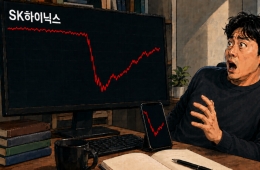
Net selling by foreign investors further fueled the won's depreciation that day. The KOSPI index plunged over 6%, even falling below the 8,100-point mark during intraday trading. This was due to a broad decline in the semiconductor sector in the New York stock market after Broadcom, a U.S. semiconductor company, reported results that fell short of market expectations. As a result, major domestic semiconductor stocks such as Samsung Electronics and SK hynix also plummeted. The KOSPI opened at 8,323.20, down 3.66% from the previous session, and at 9:08:25 a.m., a sell-sidecar was triggered. As of 10:00 a.m., the KOSPI was trading at 8,078.73, down 6.49%. At the same time, the KOSDAQ index was trading at 996.73, down 5.05%. This is the first time in three months, since March 4, that the KOSDAQ has fallen below the 1,000 mark during intraday trading. Samsung Electronics was trading at 326,500 won, down 7.11% from the previous session, while SK hynix was at 2,097,000 won, down 8.75%.
Foreign investors have sustained their net selling streak on the KOSPI for 20 consecutive trading days. From May 7 to June 4, their cumulative net selling reached a total of 66.905 trillion won. This is the 10th longest streak of consecutive net selling on record, and the longest in about six years since the 30-day streak from March 5 to April 16, 2020. On this day as well, by around 10 a.m., foreign investors had a net selling advantage of nearly 1.5 trillion won. The sharp rise in domestic stock prices increased the proportion of Korean assets in portfolios, leading to rebalancing and profit-taking. Market participants noted that, given the still-high proportion of foreign investors in the domestic stock market, foreign selling pressure could persist for the time being. According to the Korea Exchange, as of the previous day, foreigners accounted for 38.2% of the domestic stock market capitalization.

On the 5th, an employee is monitoring the stock market and exchange rates in the dealing room at the Hana Bank headquarters in Jung-gu, Seoul.
View original imageThe continued military clashes between the United States and Iran have also intensified risk-averse sentiments, further weakening the won. As hopes for a ceasefire agreement between the United States and Iran faded, concerns grew in the market that negotiations could be prolonged. Ongoing military engagement between Israel and Lebanon is also increasing uncertainty over the Middle East situation.
Hot Picks Today
 "Average Summer Bonus per Person Tops 1 Million Yen" Japanese Major Corporations Hit All-Time High
- "I Always Made Sure to Eat Naengmyeon..." Food Poisoning Cases Surge by 28%—What's Behind the Increase?
- "Luxury Goods? No Thanks": 50 Million Visitors, But Spending Drops 44%... The Fall of Hong Kong's Shopping Paradise
- “Told to Apply as a New Graduate Without Experience”…Samsung Employees Frustrated as Path to SK hynix Is Blocked
- "At Age 11, I Was a Joy Brigade Candidate... Forced to Undress in Front of Men": Shocking Testimony from North Korean Defector
Market participants expect the won-dollar exchange rate to remain volatile in the 1,500 won range for the time being, with the short-term upper bound anticipated around 1,550 won. Kyuho Choi, an economist at Hanwha Investment & Securities, said, "Foreign investors' net selling of KOSPI stocks continues amid ongoing concerns about the U.S. Federal Reserve's prolonged high interest rates due to inflationary pressures," adding, "None of the key factors driving the won's weakness can be resolved quickly, so the exchange rate is likely to remain at the 1,500 won level for the time being."
© The Asia Business Daily. All rights reserved. Unauthorized AI training and use prohibited.