[Green Fee Price Bomb] Relentless Profiteering Turns Golf Courses into Money-Eating Black Holes
Green Fees, Caddie Fees, and Cart Fees All Increased
Ancillary Costs Such as Food and Beverages Also Rising
"Improvements in Service and Facilities Hard to Notice"
The moment you enter a golf course, the financial burden begins. The green fees, which soared after the COVID-19 pandemic, have shown little sign of coming down, and caddie fees and cart fees have also been raised one after another. At the clubhouse restaurant, a bowl of hangover soup is nearly 30,000 won, and a single side dish at a rest area can easily exceed 50,000 won. Despite the government's repeated calls to stabilize golf course fees, there are concerns that the cost burden has actually increased on the ground. Among golfers, there are even complaints that "we're not going to play golf, but rather to fight against the costs."

Golfers' wallets are becoming increasingly thin due to the excessive profits of domestic golf courses. Photo unrelated to the article.
View original imageAccording to the Ministry of Culture, Sports and Tourism, the Korea Golf Course Management Association, and the Korea Golf Consumer Agency on June 8, there are 527 golf courses operating in Korea this year, including both membership and public courses. The annual number of users is estimated to be between 6 million and 7 million, with 45 million to 50 million rounds played every year. While the domestic golf industry has grown in size during the COVID-19 period, the financial burden on users has also increased.
The biggest complaint among golfers is that the high-cost structure formed during the COVID-19 period has been maintained even after the end of the pandemic. When overseas travel was restricted, demand for domestic golf courses surged, leading to increases in green fees, caddie fees, and cart fees. However, even after demand has slowed, prices have shown little sign of decreasing.
It is estimated that the average green fee at domestic golf courses has risen by 30% to 60% compared to 2019, before the pandemic. Currently, weekday green fees typically range from 150,000 to 250,000 won, and weekend fees from 250,000 to over 400,000 won. Some golf courses doubled their prices during the pandemic and have maintained them ever since.
The increase in caddie fees has also been significant. At public golf courses, the caddie fee per team rose from 81,800 won in 2006 to 146,300 won this year, a 78.9% increase. Out of the 406 golf courses surveyed, 306 are already charging caddie fees of around 150,000 won per team. As a result, the total annual caddie fees paid by golfers are estimated to reach about 1.78 trillion won.
Cart fees are no exception. According to a survey by the Korea Leisure Industry Research Institute, among 254 public golf courses with 18 holes or more, 204 were charging over 100,000 won per team for cart fees. Recently, six-seater limousine carts, priced between 160,000 and 360,000 won, have been spreading rapidly. The number of golf courses offering limousine carts increased from 28 in 2023 to 99 last year.
![[Green Fee Price Bomb] Relentless Profiteering Turns Golf Courses into Money-Eating Black Holes](http://www.asiae.co.kr/news/img_view.htm?img=2026060508090888455_1780614548.jpg)
The problem is that the justification for these price hikes is becoming increasingly weak. Golf courses cite rising labor and operating costs, but users say they have not experienced a corresponding improvement in service quality. The shortage of caddies also persists. Despite various incentives such as free training and accommodation, high turnover rates continue to cause instability in workforce supply.
Additional expenses, such as food and beverages, are also a significant burden. At major domestic golf course clubhouses, hangover soup and ox bone soup are sold for 25,000 to 30,000 won, while kimchi stew and soybean paste stew are around 20,000 won. At rest areas, side dishes like boiled pork, blood sausage, and fish cake soup are priced at 50,000 to 80,000 won. The price of bottled water and beverages is often two to three times higher than market prices.
There is criticism inside and outside the industry that some golf courses are being operated more like high-end restaurants than sporting facilities. This is because golfers are forced to pay high prices, as outside food is restricted and alternative options are scarce.
Jung-Hoon Park, a lawmaker from the People Power Party, pointed out excessive pricing policies at last year's "Ending Unfair Practices at Golf Courses" forum, stating, "There are not a few golf courses with operating margins exceeding 60%, and there have even been cases of charging 140,000 won for a single dish of sweet and sour pork."
![[Green Fee Price Bomb] Relentless Profiteering Turns Golf Courses into Money-Eating Black Holes](http://www.asiae.co.kr/news/img_view.htm?img=2026060508090788454_1780614548.jpg)
Among golfers, there is a growing perception that playing golf in Japan or Southeast Asia is more reasonable than at domestic golf courses. The reason is that, even when including airfare and accommodation, the total cost for a weekend round is not much different from playing in Korea.
Hot Picks Today
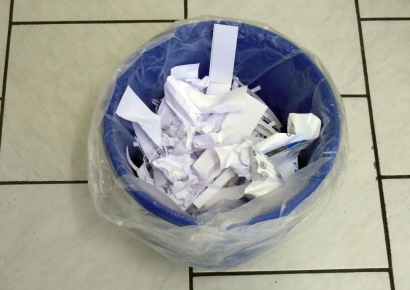 Ballot Box Found in Trash... Peru Holds Runoff Amid 'Ballot Shortage Crisis'
- "Brothers, You've Been Waiting for News?"... Orphanage Library Built Thanks to 'Money Brag' by SK hynix Employee
- Homeplus Posts Over 1 Trillion Won Net Loss in One Year... Receives Disclaimer of Opinion for Second Consecutive Year
- "A Mother's Quick Reflexes Save Child from BRT Bus Rushing onto Sidewalk"
- "Click! Gotta Post on SNS"... 'Small Luxury' for 20s and 30s Cools Down Amid High Inflation
Cheonbeom Seo, head of the Korea Golf Consumer Agency, said, "Usage fees have increased significantly, but it is difficult to perceive any improvement in service quality," adding, "If a price structure and service innovation that consumers can accept are not achieved, the growth foundation of the domestic golf industry may be weakened."
© The Asia Business Daily(www.asiae.co.kr). All rights reserved.



![[Breaking] President Lee Criticizes Election Commission: "No Excuse, Extremely Serious"](https://cwcontent.asiae.co.kr/asiaresize/307/2026060817232560108A.jpg)