"11 Lawmakers Compete With Overlapping Bills to Win Over Farmers and Taxi Drivers... Experts Say 'This Year Is the Golden Time for Reform'"
Extension Bills Proposed for 57% of This Year's 65 Sunset Provisions
Discussions Between Ministry of Finance and Budget Office on Transition From Tax Expenditures to Fiscal Expenditures
Experts: "Now Is the Golden Opportunity for Reform With
An overview of the 98 amendments to the Restriction of Special Taxation Act (Special Taxation Act) submitted to the National Assembly this year reveals a clear pattern of "habitual sunset extensions" and a competition to propose overlapping extension bills for identical provisions, all in the name of tax cuts.
All 11 Lawmakers from Both Parties Mobilize for Farmers' Tax-Free Fuel... Extension Bills Submitted for 57% of 65 Sunset Provisions

The most intense competition over sunset extensions is centered on the special tax provision for indirect tax exemptions on petroleum products used in agriculture, forestry, and fisheries, scheduled to expire at the end of this year (Article 106-2). Since its introduction in 1986, this provision has been extended 13 times in intervals of 2 to 3 years, with annual tax reductions amounting to approximately 1 trillion won. The Korea Institute of Public Finance has previously pointed out that "it is difficult to empirically verify the effectiveness, and issues of illegal distribution have been raised," sparking ongoing debates about its effectiveness. Nevertheless, 11 lawmakers from both the People Power Party (Kim Sungwon, Kim Seungsoo, Park Sunghoon, Um Taeyoung, Lee Manhee, Lim Jongdeuk, Jung Heeyong) and the Democratic Party (Kim Younghwan, Moon Geumjoo, Park Sangwoong, Yoon Junbyung) each independently sponsored sunset extension bills, as if by prior arrangement. This clearly reflects both parties' heightened sensitivity to the interests of rural constituents.
The competition to reduce taxes for the taxi industry, justified as support for small business owners and public transportation, is no different. Regarding the provisions for value-added tax reduction for ordinary taxis (Article 106-7) and individual consumption tax exemption for taxi fuel (Article 111-3), Democratic Party lawmakers Yoon Junbyung and Park Yonggap, along with People Power Party lawmaker Kim Seungsoo, have each submitted sunset extension bills. Observers point out that this is a case of overlapping proposals, motivated by the strong organizational power of the taxi industry and its influence on local public opinion.
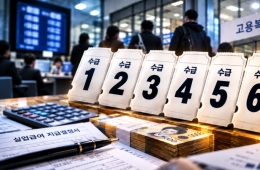
As a result, the National Assembly currently has a backlog of extension bills for as many as 37 out of the 65 special tax provisions set to expire at the end of this year—an overwhelming 57%. On the other hand, there are no bills seeking to abolish long-standing special provisions that are repeatedly extended out of inertia, such as the "credit card income deduction (Article 46)," which was introduced in 1999 to formalize small business owners' income tax bases and has had its sunset extended 11 times due to tax resistance, despite already achieving its original purpose. The scale of tax cuts under this provision alone amounts to approximately 4.6 trillion won per year, yet there have been as many as 56 bills proposed to either make it permanent by deleting the sunset clause or to introduce new deductions.
There are also moves within the National Assembly to revive special tax provisions that the government has only recently managed to abolish. For example, the provision that allowed a 10% VAT refund on beauty and cosmetic procedures for foreign tourists expired last year because the industry was deemed sufficiently competitive. However, Democratic Party lawmaker Cho Gye-won has recently sponsored a bill to resurrect this lapsed provision, directly challenging the government's policy of streamlining tax expenditures.
Deliberations with the Ministry of Finance and the Ministry of Planning on "Shifting to Fiscal Expenditure"... Experts Say "This Year Is the Golden Time for Reform"
Amid a deluge of populist legislation in the National Assembly, the government is quietly preparing for a major overhaul of the system. The Ministry of Finance has reportedly engaged in in-depth discussions with the Ministry of Planning and Budget about absorbing and shifting certain tax expenditure items into the government budget (fiscal expenditure) framework. The aim is to curb habitual tax cuts whose beneficiaries are unclear, and to maximize fiscal efficiency by providing targeted support to vulnerable groups through the budget.
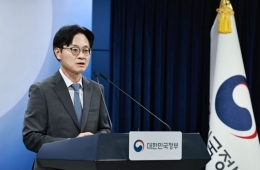
A government official emphasized, "While each special tax provision was introduced for its own reasons, those that are now inefficient or would be more effective as fiscal expenditures must be resolutely reformed. We will reflect the principle of structural adjustment in the tax law amendments for the second half of the year, regardless of future tax revenue conditions or political demands."
Fiscal policy experts are also supporting the government's move toward converting tax expenditures into fiscal expenditures. Tax benefits tend to concentrate on large corporations and high-income households—those who pay the most taxes—worsening income distribution and making it difficult to precisely target vulnerable groups. In contrast, direct fiscal expenditure methods such as treasury subsidies enable clear targeting, thereby maximizing efficiency. In particular, experts note that with local elections over and no major elections until the 2028 general elections, now is the "golden time" to eliminate unnecessary tax exemptions and reductions.
Hot Picks Today
 "From 20s to 60s, Everyone Rushed In"...The 'Top License' Also Obtained by Actors Yoo Yeon-seok and Sung Hoon Revealed
- "The Real Winner Controls the Heat"...LG Electronics Bets 150 Billion Won on New Chiller Plant in Virginia, US
- "Unbelievable Event" in Tokyo Leaves Japan Stunned...Even 'Weather-Related Illnesses' Emerge
- SNU Students Line Up for This Recruitment Fair: "Better Than Large Corporations" [Report]
- "Did It Get Drunk on Electricity?" Police Robot Smashes 20 Flowerpots and Flees the Scene
Woo Sukjin, head of the Performance Assessment Team for Fiscal Projects at the Ministry of Planning and professor in the School of Business Administration and Statistics at Myongji University, said, "Once we enter the general election period the year after next, political parties will inevitably have to cater to voters again, so until then is the golden time to clean up ineffective tax expenditures. It is time for a paradigm shift: collect taxes transparently according to established principles, and support vulnerable groups or industries through fiscal expenditures."
© The Asia Business Daily. All rights reserved. Unauthorized AI training and use prohibited.