'Dongtan Tops Nationwide in Apartment Price Growth as Gap Investment Hotspot... Semiconductor Belt Also Faces Land Transaction Regulations [Real Estate AtoZ]'
Dongtan Sees Explosive Buying After Escaping Regulation
Real Demand and Investment Demand Combine, Leading to Scarcity of Listings
Landmark Apartments Surpass 2 Billion Won for Standard Units
As apartment prices in Dongtan, Hwaseong, Gyeonggi Province have seen the steepest rise nationwide, the area has once again come under consideration for designation as a Land Transaction Permission Zone. After being excluded from the expanded designation last October, speculative buying surged due to the so-called 'balloon effect', and as prices have risen sharply in recent weeks, there is growing speculation that the government may introduce additional regulatory measures.

Apartment complexes near Dongtan Station in Hwaseong, Gyeonggi Province, and the exterior of Lotte Department Store Dongtan. Photo by Choi Seoyoon
View original imageAccording to the weekly apartment price trends released by the Korea Real Estate Board on June 6, apartment prices in Dongtan during the first week of June rose by 0.60% compared to the previous week—the largest increase among all cities, counties, and districts nationwide. The weekly price increase, which stood at 0.20% in the last week of April, has accelerated over the past five weeks.
The 84-square-meter apartment at Dongtan Station Lotte Castle, considered the prime complex right in front of Dongtan Station, was traded at around 1.6 billion won at the end of last year, but a 39th-floor unit was sold for 2.08 billion won on May 7, marking a rise of 480 million won (30%) in just six months.
On May 28, another 18th-floor unit in the same complex was sold for 2 billion won, and there were three transactions exceeding 2 billion won for 84-square-meter units in just one month. The larger 102-square-meter unit changed hands for 2.325 billion won last April, marking the highest transaction price in Dongtan to date.
!['Dongtan Tops Nationwide in Apartment Price Growth as Gap Investment Hotspot... Semiconductor Belt Also Faces Land Transaction Regulations [Real Estate AtoZ]'](http://www.asiae.co.kr/news/img_view.htm?img=2026060521422189751_1780663341.jpg)
The rise in apartment prices in Dongtan is largely attributed to its removal from government regulatory zones last year. In October last year, the government included all of Seoul and 12 areas in Gyeonggi Province under the 10·15 measures as 'adjustment target areas', 'speculative overheating districts', and 'land transaction permission zones'. As a result, Dongtan benefited from the absence of regulation, leading to increased transaction volume.
According to an analysis of actual transaction data from the Ministry of Land, Infrastructure and Transport based on contract dates (excluding canceled contracts), apartment sales in Dongtan District jumped from 578 in September to 1,043 in October and 1,064 in November last year. The daily average number of transactions rose from 19 to 47, a 2.5-fold increase. From January to May this year, there were 4,810 transactions, more than double the 2,040 recorded during the same period last year.
!['Dongtan Tops Nationwide in Apartment Price Growth as Gap Investment Hotspot... Semiconductor Belt Also Faces Land Transaction Regulations [Real Estate AtoZ]'](http://www.asiae.co.kr/news/img_view.htm?img=2026060521253589733_1780662335.png)
The situation has been further fueled by the semiconductor boom, with Samsung Electronics employees receiving multi-million-won bonuses, thereby stimulating both transactions and prices. A representative of a real estate agency near Dongtan Station Shibeom Woonaem Firstville said, "Units measuring 84 square meters, which used to sell for 1.4 to 1.5 billion won, have suddenly jumped to the 1.6 to 1.7 billion won range, bypassing intermediate price points entirely."
Real estate experts unanimously state that, considering the rise in prices and transaction volume due to gap investments by high-income young buyers and the balloon effect, the government is likely to make additional regulatory designations. Park Wongap, Senior Real Estate Expert at KB Kookmin Bank, said, "If the bill expanding authority to designate land transaction zones is enacted, the Ministry of Land will be better positioned to directly monitor overheated areas like Dongtan." Park added, "Recent buying activity in Dongtan and Giheung is largely driven by gap investment demand, and the government's primary goal is to stabilize the market by reducing price volatility. Therefore, it is time for the government to consider additional regulatory designations."
Compared to regions designated as land transaction permission zones, the price increase in Dongtan is significant. Under the 10·15 measures last year, areas such as Suji District in Yongin (1.97% cumulative as of the first week of June last year), Dongan District in Anyang (0.90%), Yeongtong District in Suwon (0.47%), and Uiwang (-0.05%) were designated as such. In contrast, Dongtan's cumulative increase this year stands out at 5.11%. In terms of increase alone, it is similar to Gangnam District (5.61%) and Seocho District (5.13%) in Seoul.
Above all, some analysts suggest that tax policy measures alone are insufficient to curb demand in non-regulated areas. Park noted, "Tax reform plans focus on the elderly and multi-home owners in Gangnam, but Millennials & Gen Z operate independently from their parents. For young buyers purchasing apartments in Dongtan worth over 1 billion won, strengthening the holding tax or reducing the long-term holding deduction hardly matters." This implies that direct regulations such as land transaction zones are more effective in curbing demand.
!['Dongtan Tops Nationwide in Apartment Price Growth as Gap Investment Hotspot... Semiconductor Belt Also Faces Land Transaction Regulations [Real Estate AtoZ]'](http://www.asiae.co.kr/news/img_view.htm?img=2026060521313989736_1780662698.png)
To prevent the balloon effect, there is discussion about designating Dongtan, along with Guri and Giheung in Gyeonggi Province, as land transaction permission zones. Giheung, a nearby area home to semiconductor industry facilities, has also shown strong cumulative growth of 5.52% during the same period. A real estate expert who requested anonymity said, "To block the balloon effect, adjacent areas must also be designated together."
The government has also been monitoring the possibility of speculative demand spreading to non-regulated areas such as Dongtan. A Ministry of Land, Infrastructure and Transport official recently commented on the housing market, saying, "Financial and institutional measures, such as lending restrictions, are in place, so it is difficult to see the market as experiencing broad-based instability as in the past," adding, "We are monitoring not only price volatility but also transaction volume, the pace of increase, and other key indicators."
However, some observers predict that even if Dongtan is designated as a regulated area in the future, prices may not fall easily. A real estate agency representative near Dongtan Station Lotte Castle said, "There is plenty of liquidity in the market, and people who recently profited from stock investments are moving their funds into real estate. Even if investment demand declines due to the land transaction zone designation, homeowners are unlikely to lower asking prices or sell hastily, as they are not in a rush to sell."
Hot Picks Today
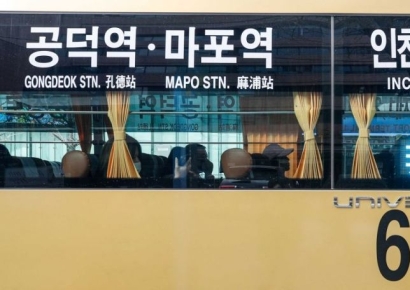 Despite "Insufficient Balance" Notices, They Board Anyway... Reports of Foreign Fare Evasion Mounting
- "If It Helps My Child's Studies, It's Worth Every Penny"... U.S. Parents Open Their Wallets for $10,000 Tests
- [Exclusive] "We Came for a KRW 140,000 Trip": Following Chinese Tourists in Korea Uncovers a 'Suspicious' Tour
- "I'm paying to stay, and you want me to do the laundry and dishes too?" ... Airbnb bans excessive cleaning demands
- "Baek Jongwon Had Been Quiet, Then Hit It Big"... Waits in the 100s in U.S. Despite KRW 46,000 Pork Belly
!['Dongtan Tops Nationwide in Apartment Price Growth as Gap Investment Hotspot... Semiconductor Belt Also Faces Land Transaction Regulations [Real Estate AtoZ]'](http://www.asiae.co.kr/news/img_view.htm?img=2026060512214789175_1780629706.gif)
© The Asia Business Daily. All rights reserved. Unauthorized AI training and use prohibited.