[Good Morning Market] Mixed U.S. Stock Market on Semiconductor Decline... KOSPI Volatility Expected to Rise
S&P 500 and Dow Jones Rise, but Nasdaq Falls
Broadcom and Micron Plunge Weigh on Tech
Oil Prices Ease... Won-Dollar Exchange Rate Surpasses 1,530
KOSPI Faces Higher Volatility, Sector Rotation Expected
![[Good Morning Market] Mixed U.S. Stock Market on Semiconductor Decline... KOSPI Volatility Expected to Rise](http://www.asiae.co.kr/news/img_view.htm?img=2025021302054530239_1739379946.jpg)
The New York stock market, which has reached an all-time high, ended mixed. While expectations for easing Middle East risks played a role, a sharp decline was observed in tech stocks due to concerns over semiconductor stock valuations. There are also forecasts that the KOSPI, which has been rallying for days, will face a period of increased short-term volatility.
On June 4 (local time), the Dow Jones Industrial Average closed up 1.73% at a record high of 51,561.93. The S&P 500 Index also rose 0.41% to 7,584.31. In contrast, the tech-heavy Nasdaq Index closed slightly lower, down 0.09% at 26,830.96.
Market attention was focused on the sharp drop in tech stocks. In particular, Broadcom plunged 12.59% despite a significant surge in second-quarter sales, as results fell short of market expectations. Micron Technology (-7.74%) and SanDisk (-3.92%) also saw sharp declines.
However, some analysts noted that this was not due to deterioration in corporate fundamentals or negative macroeconomic factors. It is interpreted that, following successive record highs, short-term investor expectations have risen and profit-taking sales have increased. Han Ji-young, a researcher at Kiwoom Securities, said, "While the Nasdaq showed weakness, the S&P 500 and Dow Jones both rose in the same context," adding, "Expectations for a ceasefire between the United States and Iran, as well as limited interest rate hikes, have maintained risk appetite across the stock market, leading to sector rotation into industries that had previously underperformed."
International oil prices fell by around 3% amid continuing expectations of a U.S. military restraint and a ceasefire in the Middle East. West Texas Intermediate (WTI) futures closed at $93.04 per barrel, down 3.1% from the previous day. Brent futures also fell 2.8% to $95.03 per barrel.
The yield on the 10-year U.S. Treasury note also edged down to 4.47%. This came as new weekly jobless claims in the U.S. exceeded forecasts, first-quarter productivity was revised downward, and unit labor costs came in below expectations. The decline in international oil prices, which helped ease inflation concerns, was also cited as a factor. However, with uncertainty still lingering, the decline was limited and was mainly seen in short-term bonds.
The won-dollar exchange rate continues to soar. In the New York non-deliverable forward (NDF) market, the one-month dollar-won contract closed at 1,532.90 won. This is 3.85 won higher than the closing price of the spot rate in the Seoul foreign exchange market (1,529.70 won). This trend is expected to put pressure on the domestic stock market.
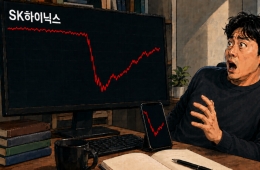
The MSCI Korea Index ETF, which moves similarly to the domestic stock market, at one point plunged as much as 7.70%, but rebounded during the session and closed down 4.22%. The MSCI Emerging Markets Index ETF also fell 1.17%. The Philadelphia Semiconductor Index dropped 2.15% as well.
After an early slump in the session, sector rotation from semiconductors to non-semiconductor sectors is expected to help offset the losses. Stocks related to Nvidia CEO Jensen Huang's visit to Korea are also likely to see volatility depending on expectations for collaboration with Nvidia.
Hot Picks Today
![[Test Drive] The Sealion 7 Transformed by a 2 Million Won Upgrade: "Base Model Buyers Might Feel Shortchanged"](https://cwcontent.asiae.co.kr/asiaresize/93/2026080417033869589_1785830618.jpg) [Test Drive] The Sealion 7 Transformed by a 2 Million Won Upgrade: "Base Model Buyers Might Feel Shortchanged"
[Test Drive] The Sealion 7 Transformed by a 2 Million Won Upgrade: "Base Model Buyers Might Feel Shortchanged"
- 'Single-Stock Leveraged ETF Blow' Crippled KOSDAQ in July... Hopes Rise for a Turnaround in August with 11.38% Surge [Weekend Money]
- Chinese Buyers Retreat from Seoul’s Real Estate Market? Foreign Purchases Plummet by 2,000 [Real Estate AtoZ]
- "If We Don't Get Married, Let's Live Together"... Gen Z Chooses 'Co-Buying Homes with Friends' Over Romantic Partners [Gen Z Around the World]
- Kim Seontae Appears Gaunt After Leaving 'Don Seontae'... 3,000 Thumbs Up for Chungju Mayor's "Come Back" Offer
Suh Sangduk, a researcher at Mirae Asset Securities, explained, "This increased volatility is a structural phenomenon currently observed in major global stock markets, including Korea," adding, "In particular, heightened volatility among leading stocks is likely to weigh on overall market sentiment for the time being, leading to more short-term trading behavior."
© The Asia Business Daily. All rights reserved. Unauthorized AI training and use prohibited.






!["Even a 500 Million Won Jump Is Fine, Self-Residence Buyers Flock to Billion-Won Units"...High Winning Bids Continue for Mid- and Low-Priced Reconstruction Complexes [Real Estate AtoZ]](https://cwcontent.asiae.co.kr/asiaresize/307/2026042709001641074_1777248016.jpg)