Former U.S. Ambassadors to South Korea: "Lee Jae-myung Administration Is Not Anti-American... Fully Understands the Value of the Alliance"
WSJ Column Criticizes Current Administration as "Anti-American, Pro-China"
Former Ambassadors Draw a Clear Line: “We Disagree”
“Closer to Diplomatic Rebalancing than Pro-China”
Former U.S. ambassadors to South Korea have distanced themselves from some perspectives that label the Lee Jae-myung administration as "anti-American" or "pro-China." They noted that President Lee fully understands the importance of the South Korea-U.S. alliance, and assessed that his policy toward China is better described as an attempt at "diplomatic balance" rather than a "pro-China stance."

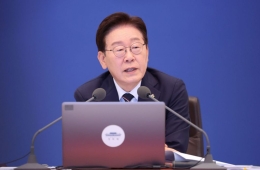
President Lee Jae-myung is speaking at the Chief Presidential Secretary Meeting held at the Blue House on the 4th. Photo by Yonhap News
View original imageOn June 4 (local time), former U.S. Ambassador to South Korea Philip Goldberg said at a seminar hosted by the Korea Economic Institute of America (KEI), "There are claims that President Lee is a radical leftist or a communist, but I did not get that impression." He added, "He is an excellent politician who understands the value of the South Korea-U.S. alliance and the U.S. nuclear umbrella."
Former U.S. Ambassador Kathleen Stephens also noted, "Support for the South Korea-U.S. alliance is expanding across party lines in Korean public opinion." She added, "President Lee is also aware that the majority of Koreans want a strong relationship with the United States." She went on to say, "Opposition to certain policies is different from anti-Americanism," and added, "The very term 'anti-Americanism' is an anachronism in today's Korean politics."
These remarks appear to be a factual rebuttal to a column published on June 1 in the conservative-leaning Wall Street Journal (WSJ), which claimed that the Lee Jae-myung administration is leaning toward China over the United States. The authors of the column are Nicholas Eberstadt, a researcher at the American Enterprise Institute (AEI), a conservative U.S. think tank, and Lawrence Peck, an advisory board member of the U.S. North Korea Freedom Coalition. Since President Lee took office last year, Eberstadt has published several columns expressing similar points of view.
The column criticized President Lee and the ruling party as being unfriendly toward the U.S. alliance. It also raised the controversy over the "Special Prosecutor Bill on Dismissal of Indictments," and claimed that the administration was seeking constitutional amendments for long-term rule. The authors asserted that the Korean government had conducted a search and seizure at the U.S. military base in Osan, launched a criminal investigation into the U.S. company Coupang, and released confidential information about North Korean nuclear facilities.
Regarding policy toward China, former Ambassador Goldberg pointed out, "As it has become difficult for South Korea to maintain the 'security with the U.S., economy with China' stance, if the Yoon Suk-yeol administration was tough on China, the Lee Jae-myung administration is attempting to improve relations with China." However, he evaluated this approach as "closer to rebalancing than to a pro-China policy."
Hot Picks Today
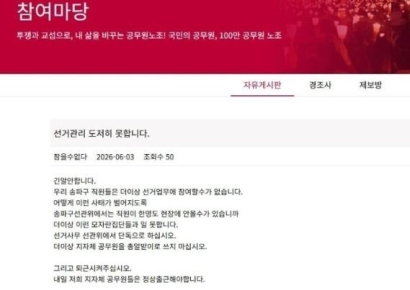 "I Can No Longer Work With Such an Incompetent Group"... Songpa District Official Slams Election Commission
- Foreign Investors Lament Huge Losses in an Instant as Oh Sehoon Overtakes Jeong Wonoh in Seoul Mayoral Election Bets
- KOSPI Surges from 5,000 to Near 9,000... Tripled in One Year, but Not All Reasons to Celebrate [One Year of the Lee Jaemyung Administration]
- "Older Candidate Wins Election as Age Decides Tie with 2,077 Votes Each"
- "I Feel Safer on the Streets Where I Can See Everyone"... Homeless at Seoul Station Exposed to Sexual Offenses and Violence
On the issue of the transfer of wartime operational control, former Ambassador Stephens said, "How change is managed is important. If properly managed, now could be a suitable time to pursue the transfer." However, she emphasized that mutual trust between South Korea and the United States is a prerequisite for a successful transition.
© The Asia Business Daily(www.asiae.co.kr). All rights reserved.