[AI Top 3 Ambitions, Interim Scorecard]②Can the Four Dokpamo Challengers Overcome Originality Controversy and Surge Ahead?
Updates Underway Ahead of August's Second Evaluation
Focused Assessment of LLM Performance and Practical Applicability

Deputy Prime Minister and Minister of Science and ICT Baek Kongun is speaking at the Ministry of Science and ICT press conference held on the 29th at Seoul Central Post Office in Jung-gu, Seoul. Provided by the Ministry of Science and ICT. Photo by Yonhap News.
View original imageWith the Lee Jaemyung administration setting the goal of elevating South Korea into one of the world’s top three artificial intelligence (AI) powerhouses, building an independent K-AI model has emerged as the most critical challenge. As part of this effort, the government’s “Independent AI Foundation Model” (DOKPAMO) project is proceeding in a survival-style competition, drawing intense attention from both the public and industry. With the final selection of two teams ahead, participants are currently focused on upgrading their models’ performance. During the first round of the DOKPAMO project, controversy arose over the originality of candidate models, with some criticized for “copying” Chinese models. In response, the government is now working to clarify its guidelines and adjust evaluation criteria to improve the process.
According to the Ministry of Science and ICT on June 5, the four teams selected in the first round—LG AI Research Institute, SK Telecom, Upstage, and Motif Technologies—will undergo another evaluation in August, after which one team will be eliminated. The final two companies will be selected in February next year. All four elite teams are currently developing next-generation large language models (LLMs), incorporating multimodal and other advanced learning structures to significantly improve both model performance and application range.
For LG AI Research Institute, the plan for the second evaluation is to expand the model’s scale compared to the first K-Exaone and achieve performance capable of competing with the latest global frontier-level open-weight LLMs. In the first evaluation, K-Exaone achieved the top ranking among domestic models and placed seventh among global open-weight models, according to the international performance assessment agency Artificial Analysis. For the second round, the institute aims to reach even more advanced levels of performance.
A representative from LG AI Research Institute stated, “We are working to raise benchmark performance in multiple areas such as knowledge, reasoning, instruction following, and long context. We are also developing capabilities to achieve top-level performance in the increasingly important domains of agentic tool usage and agentic coding.” Once model development is complete, it will be released through Hugging Face, and the institute plans to actively expand practical use cases across various industries by collaborating with consortium partners.
Model Sophistication and Expansion of Industrial Use Cases
SK Telecom is currently developing the successor to “A.X K1,” called “A.X K2.” SKT is collaborating with global AI semiconductor leader Nvidia across training data, infrastructure, and frameworks as it works on the next-generation model. The company’s goal is to boost the performance and application range of its models by incorporating advanced learning structures such as multimodality.
An SKT representative said, “The core keyword for our future direction is ‘multimodal.’ Starting with image data in the second-round evaluation, we plan to sequentially apply multimodality.” The representative emphasized, “From the second half of this year, we will further advance multimodality to handle not only text but also voice and video data. This will enable the model to understand and process a variety of data types, not just text.” In the long term, the company plans to scale up to a trillion-parameter model.

Upstage is currently focusing on raising its standing in global AI performance metrics. Sung-Hoon Kim, CEO of Upstage, recently announced via social networking service (SNS), “The intermediate model developed by the Upstage consortium with support from DOKPAMO has surpassed a score of 40 on the Artificial Analysis Intelligence Index (AAII), a key metric for model performance comparison.” He added, “This intermediate model outperforms the 39 points of Europe’s leading AI company Mistral and the 37 points of Canada’s Cohere.”
Kim stated, “This summer, we aim for an AAII score of over 50, and by the end of this year, we are targeting 60, with the goal of creating a ‘Solar’ LLM recognized globally.” The final model is scheduled to be released at the end of this month. Upstage has also recently secured approval for a direct equity investment of 560 billion won through the National Growth Fund, contributing to the company’s positive momentum. As a startup, Upstage aims to leverage this distinction to pass the second evaluation and be selected as one of the final two teams.
Startup Secures Funding... Differentiation Through Independent Architecture
Motif Technologies, which joined the competition through an additional open call, is also focusing its capabilities on enhancing model performance as the competition enters its final stages. While the three existing elite teams (LG AI Research Institute, SKT, and Upstage) will complete model development by the end of this month, Motif Technologies, as a latecomer startup, plans to finish model development by the end of July and participate in the second evaluation in August.
Motif Technologies recently secured 24 billion won in Series B funding, further strengthening its financial position. With these resources, the company plans to differentiate itself by prioritizing independent architecture. Motif Technologies CEO, Jeonghwan Lim, stated, “We are currently developing a 300B-scale inference LLM, focusing all organizational capabilities on creating a high-performing model. After passing the second evaluation, we plan to further advance to a 310B-scale visual language model (VLM) and a 320B-scale visual language action (VLA) model, step by step.”
Hot Picks Today
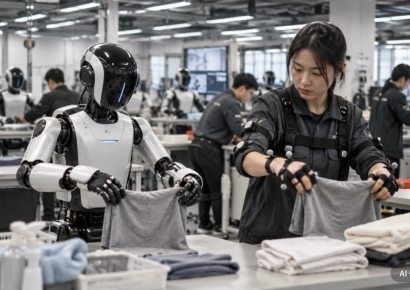 “Washing Dishes and Folding Clothes 200 Times a Day”... China’s “Robot Trainers” Earn Up to 1.2 Million Won a Month
- "Even New York Taxi Drivers Are Talking About the KOSPI; South Korean Market to Top 9,000 Again Within a Year"... 'Wall Street's Stock-Picking Ace' Names His Picks
- “Made 2 Billion Won in One Year in Prison,” PPP Lawmaker Retorts: “If You’re Jealous, Go There Yourself”
- City Bus Driver Who Fell Asleep at the Wheel While 'Drunk' Bought Meth via 'Drop-Off'... Sentenced to 2 Years and 6 Months
- Idol Member Posts Letter Saying "Suspending Activities Due to Pregnancy"... Turns Out She's AI?
The Ministry of Science and ICT plans to closely examine both model performance and practical utility in the second evaluation scheduled for August. After setbacks in the first round, where leading candidates were eliminated due to originality controversies, the government has consulted with the industry in advance to resolve any disputes over evaluation criteria. An industry insider, speaking on condition of anonymity, commented, “A strong benchmark score does not always mean a model is easy to use in practice. For DOKPAMO to become a symbol of ‘AI sovereignty’ beyond just a Korean LLM, it must be widely adopted not only within organizations but also across real-world industrial sites.”
© The Asia Business Daily. All rights reserved. Unauthorized AI training and use prohibited.