Foreign Media Cite Support for Lee as Key to Democratic Party's June 3 Election Landslide... Spotlight on Oh Sehoon
Judgment Against Yoon Worked in Favor of the Ruling Party
Democratic Party Sweeps Nationwide but Loses Seoul Mayoral Race
Oh Sehoon and Han Donghoon Seen as Key Figures in Conservative Rebuilding
Major international media outlets have analyzed that the Democratic Party of Korea's sweeping victory in the June 3 local elections was largely due to the "judgment on former President Yoon Suk-yeol" sentiment and President Lee Jaemyung's high approval ratings for state affairs. At the same time, foreign media evaluated the unexpected victory of Oh Sehoon, mayor of Seoul, in a difficult electoral environment as a message from the public emphasizing 'checks and balances.'
"Judgment on Former President Yoon and President Lee's High Approval Ratings for State Affairs"

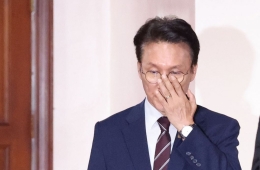
Jeong Cheong-rae, leader of the Democratic Party of Korea and Chief Standing Committee Chairman of the Election Committee, is leaving after holding a press conference at the National Assembly regarding the results of the June 3 local elections on June 4, 2026. Photo by Kim Hyun-min
View original imageOn June 4 (local time), major international outlets such as The New York Times (NYT), the Associated Press (AP), and Bloomberg analyzed the results of South Korea's local elections, highlighting the Democratic Party's nationwide victory and its contrasting defeat in the Seoul mayoral race.
The foreign press first pointed to former President Yoon Suk-yeol's martial law declaration, impeachment, and conviction on insurrection charges as decisive factors affecting the election outcome. NYT reported that the People Power Party rapidly lost its support base after the martial law crisis at the end of 2024, while AP also assessed that the conservative camp has yet to overcome the confusion following former President Yoon's removal from office.
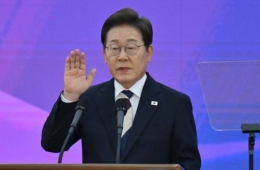
President Lee's high approval ratings were also cited as a key factor behind the Democratic Party's victory. According to AP, President Lee has maintained support above 60%, buoyed by his "pragmatic diplomacy" easing concerns in Korea-U.S. and Korea-Japan relations since taking office and a rising stock market. Bloomberg also analyzed that the Democratic Party achieved an overwhelming victory in major local elections nationwide, capitalizing on President Lee's political momentum.
In practice, the Democratic Party won in 12 out of 16 metropolitan mayoral elections (Busan, Gyeonggi, Incheon, Gangwon, North Chungcheong, South Chungcheong, Daejeon, Sejong, North Jeolla, South Jeolla, Gwangju, Ulsan, and Jeju), while the People Power Party took four regions: Seoul, Daegu, North Gyeongsang, and South Gyeongsang. The Democratic Party not only swept the Seoul metropolitan area (except Seoul itself), Chungcheong, and Honam regions, but also overturned the previous result from four years ago by winning in Busan, a region traditionally strong for conservatives.
"Checks and Balances Firmly Established"

On the 4th, Oh Se-hoon, the mayor of Seoul who won the June 3 local election, is walking toward Seoul City Hall. 2026.06.04 Photo by Dongjoo Yoon
View original imageHowever, the foreign press placed greater significance on the election of Oh Sehoon as mayor of Seoul. Voters clearly expressed a desire to hold the People Power Party accountable following the martial law crisis, yet also opted for checks and balances in Seoul.
NYT emphasized that "Seoul citizens have once again firmly established the fundamental democratic principle of checks and balances," noting that "Seoul has been preserved as the final safeguard of democracy, preventing the Republic of Korea from tilting entirely to one side." NYT particularly highlighted that Mayor Oh received strong support not only from those in their 70s and older, but also from men under 30, according to exit polls. The report also included analysis that dissatisfaction over lack of jobs and soaring housing costs among young men is leading to a stronger conservative orientation within this demographic.
While acknowledging the Democratic Party's overall victory, AP placed particular emphasis on its defeat in the Seoul mayoral race. The outlet reported, "Although the Democratic Party secured a majority in the local elections, losing the critical Seoul mayoral contest has disrupted its plan to grant President Lee stronger political legitimacy." AP noted that the current political landscape was highly favorable for the Democratic Party, quoting experts who said, "A complete victory could only have been claimed if the Democratic Party had also won the Seoul mayoral race."
Hot Picks Today
![[Exclusive] "This Is Why Samsung Stands Out"... Onnuri Gift Certificates Offered Instead of Points](https://cwcontent.asiae.co.kr/asiaresize/93/2026060511022289079_1780624942.jpg) [Exclusive] "This Is Why Samsung Stands Out"... Onnuri Gift Certificates Offered Instead of Points
[Exclusive] "This Is Why Samsung Stands Out"... Onnuri Gift Certificates Offered Instead of Points
- After a Taste, the World Wonders, "Was This Only for Koreans?"... K-Sauces Captivate Global Palates
- Preferring Travel and Hobbies Over Hospitals, Still "Young at Heart"... The New Key Spenders Catching Card Companies' Attention
- "Why Doctors Warn Against Touching This After Applying Hand Cream"
- "What Would Those Ignorant People Know? They Won't Notice If We Don't Give Them Ballots"…Drama Scene Resurfaces Amid Ballot Shortage Crisis
Bloomberg wrote, "President Lee's party achieved an overwhelming victory in major local elections nationwide, increasing pressure on the conservative opposition," but added that "defeat in the Seoul mayoral race revealed the limits of the Democratic Party's political reach." The agency also suggested that with this result, Mayor Oh Sehoon—who managed to retain Seoul—and Han Donghoon, former leader of the People Power Party who won the Busan by-election, could emerge as central figures in the future reconstruction of the conservative bloc.
© The Asia Business Daily(www.asiae.co.kr). All rights reserved.