Why Is Jensen Huang Meeting NC's Kim Taekjin [NC]
Jensen Huang of NVIDIA and Taekjin Kim of NC Scheduled to Meet

With news that Jensen Huang, CEO of NVIDIA, and Taekjin Kim, CEO of NC, are scheduled to meet, market attention is growing regarding potential business collaboration between the two companies.
According to industry sources on June 6, CEO Huang is expected to meet with CEO Kim in Seoul on June 7. Although the specific agenda has not been disclosed, it is anticipated that discussions will focus primarily on collaboration in the gaming and AI sectors.
NC participated in the NVIDIA GeForce Gamer Festival in Seoul last October, during CEO Huang's visit to Korea, showcasing titles such as "Aion 2" and "Cinder City." NC has also maintained cooperative relations with NVIDIA in the gaming field, including participation in NVIDIA's PC gaming events held during Gamescom in Germany.
The market expects that this meeting will explore the potential connection between physical AI and gaming. In a recent report, Shin Young Securities stated, "The core purpose of CEO Huang's visit to Korea is to expand global partnerships for building ecosystems in robotics and physical AI," adding, "In particular, as NVIDIA collaborates with various companies in the fields of physical AI and robotics, the meeting with CEO Kim should be seen as a case suggesting the potential connection between the gaming industry and physical AI."
Jihyun Kim, an analyst at Shin Young Securities, commented, "Gaming is not merely a content industry, but rather an industry that can most efficiently simulate the real world," and explained, "Physical AI ultimately needs to learn behaviors. In order for hardware such as robots to perform specific tasks and interact with humans, they must undergo repeated trial and error in environments similar to reality."
She further noted, "One of the biggest challenges of physical AI is the so-called 'Sim-to-Real Gap,' where robots that perform well in simulation environments may behave unexpectedly when deployed in real-world settings," and added, "Since the real world involves countless variables such as lighting, friction, collisions, terrain, and sensor noise, there are limits to what can be achieved through simple virtual learning alone."
Kim explained, "Ultimately, the core competitiveness of the physical AI industry depends on how efficiently one can build a virtual environment that closely mirrors reality," and noted, "For this reason, big tech companies are focusing on building digital twins and simulation platforms."
She continued, "What matters in this process is not just the implementation of a simple 3D space or graphics, but how precisely similar physical environments can be reproduced," and added, "Given that the gaming industry has long advanced real-time rendering and physics engine technologies, it is highly relevant as infrastructure for physical AI learning."
Hot Picks Today
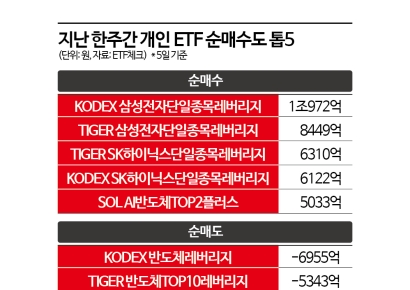 "Let's Double with Samsung and SK hynix": Retail Investors Dump Semiconductor ETFs for Samsung and SK hynix Leverage Products
- "Extremely Undervalued Range" Despite Record-Breaking Results, This Sector Nears New Lows [Weekend Money]
- "Why Is There No Substitute Holiday for Memorial Day?"... Here's Why
- Insurance Industry on High Alert over Medical Innovation... Advanced Risk Assessment Emerges as Key Challenge
- Veteran Says, "If War Breaks Out, Please Send Me to the Front Again"... Lee Responds, "Thank You for Your Dedication"
Kim added, "NC is forming a consortium with Hyundai Rotem to promote R&D in the defense sector for physical AI," and explained, "By building an academic-industrial consortium for the K-Physical AI Alliance, which integrates models, robots, and industrial infrastructure, NC is seeking to expand its business beyond simple game content to include industrial AI and robotics."
© The Asia Business Daily(www.asiae.co.kr). All rights reserved.
!["Don't Get Excited, Crushes Are Exhausting Too: Even Unrequited Love Faces a Recession [World is Z Gold]"](https://cwcontent.asiae.co.kr/asiaresize/307/2026060508335888548_1780616038.png)