Jeong Dongyoung Proposes "Four-Party Talks with South, North, US, and China"... Urges North Korea to Rejoin GTI
Jeong Dongyoung, Minister of Unification, has proposed establishing a Korean Peninsula peace regime through four-party talks involving South Korea, North Korea, the United States, and China. In addition, he urged North Korea to rejoin the Greater Tumen Initiative (GTI) and presented a vision for multilateral cooperation in Northeast Asia by connecting the Arctic sea route with regional railway networks. This is interpreted as an effort to expand opportunities to resume dialogue with North Korea.

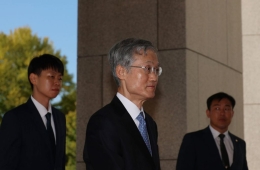
Jeong Dongyoung, Minister of Unification, delivered a special speech at the 11th "Ulaanbaatar Northeast Asia Security Dialogue" on the 4th in Ulaanbaatar, Mongolia. Photo by the Ministry of Unification
View original imageOn June 4, at the 11th "Ulaanbaatar Northeast Asia Security Dialogue" in Ulaanbaatar, Mongolia, Minister Jeong delivered a special speech, stating, "We must end the armistice system and establish a 'peace regime on the Korean Peninsula'," and added, "We can start four-party talks among the Republic of Korea (ROK), the Democratic People's Republic of Korea (DPRK), the United States, and China." He further explained, "This framework should be gradually expanded to eventually include other Northeast Asian countries such as Mongolia, Japan, and Russia."
Explaining the Lee Jaemyung administration's "Korean Peninsula Peaceful Coexistence Policy," Minister Jeong said, "Our top priority is to build trust between the two Koreas and restore peace on the Korean Peninsula." Referring to the "September 19 Joint Statement" of the Six-Party Talks in 2005, he emphasized, "If the three pillars—rebuilding inter-Korean trust, institutionalizing a Korean Peninsula peace regime, and advancing multilateral dialogue in Northeast Asia—move forward together, we can establish a new order of peace across the entire region."
In particular, Minister Jeong presented the GTI as a vision for joint prosperity in Northeast Asia and proposed cooperation on the Arctic sea route and a high-speed rail link between Seoul and Beijing. He stated, "If GTI member states work together, it will be possible to connect regional railway networks such as the Trans-Siberian Railway (TSR), the Trans-China Railway (TCR), the Trans-Mongolian Railway (TMGR), and the Seoul-Beijing high-speed rail with the Arctic sea route," adding, "Through this, we can establish an innovative logistics network across Eurasia."
He then called on North Korea, saying, "To turn these visions into reality, I urge the Democratic People's Republic of Korea (DPRK) to rejoin the GTI as a full member," emphasizing, "North Korea was one of the founding members of the GTI, and the success of this initiative depends on North Korea's return. North Korea stands to benefit the most from renewed participation."
The GTI is a multilateral cooperation body in Northeast Asia aimed at the joint development of the Tumen River basin and surrounding areas, with participation from the governments of South Korea, China, Russia, and Mongolia. It was first launched in 1992 as the Tumen River Area Development Programme (TRADP) with support from the United Nations Development Programme (UNDP). North Korea declared its withdrawal from the GTI in November 2009, citing dissatisfaction with the results and other complaints, after the UN Security Council imposed sanctions following its second nuclear test earlier that year.
Hot Picks Today
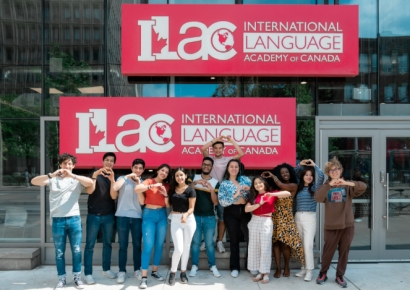 "Quit Job to Start Life in Canada, Now Forced to Return Home"… Language School Closure Leaves Korean Students Stranded
- [Exclusive] "Oh, Oh! Why Is the Seatback Like This?" Hyundai Ioniq 9 Recalled in Korea: 15,000 Units Due to Power Seat Entrapment Risk
- "When Was the Last Time I Went?" With Fewer Visitors, 80% of Japan’s Neighborhood Bathhouses Disappear in 50 Years
- "Typical Italy? This Tour Package Sold 300% More"...Destinations Chosen by Koreans
- Hanwoo Can't Even Dream of This... "Melts in Your Mouth" as Wagyu Hits It Big in U.S. Supermarkets and Fast-Food Chains
Meanwhile, Minister Jeong's participation in this year's Ulaanbaatar Dialogue was at the invitation of the Mongolian government, marking the first-ever visit to Mongolia by a South Korean Minister of Unification.
© The Asia Business Daily. All rights reserved. Unauthorized AI training and use prohibited.