"Only One Basic Council Seat": Lee Junseok Takes Full Responsibility for Reform New Party's Poor Election Results
Securing Only One Basic Council Seat Amid Two-Party Dominance
Lee Junseok Concedes Defeat in Local Elections
Struggles in Local Elections, Central Party Reorganization Announced
Lee Junseok, leader of the Reform New Party, has conceded defeat in the June 3 local elections, stating that "the results did not meet the expectations of the people." The Reform New Party failed to win any metropolitan or basic local government chief races in this election, managing only to secure a single seat in the Hwaseong City Council in Gyeonggi Province, thereby exposing its limitations in the face of the two major parties' dominance.
On June 4, through his Facebook post and remarks at the Central Election Committee's dissolution ceremony, Lee said, "In this local election, the Reform New Party failed to achieve results that met the expectations of the people," adding, "We accept these results with a sense of gravity and humility."

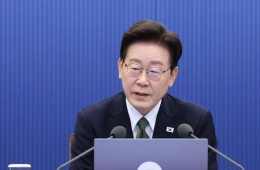
Lee Junseok, leader of the Reform New Party and Chief of the Election Countermeasures Committee, is speaking at the first Central Election Countermeasures Committee meeting for the June 3 local elections held at the National Assembly on the 11th. Photo by Yonhap News.
View original imageThe Reform New Party's performance in this local election fell far short of expectations. The party fielded candidates in seven metropolitan races—Seoul, Gyeonggi, Incheon, Busan, Daegu, Daejeon, and Sejong—but did not win in any of them. Jo Eungcheol, the Gyeonggi governor candidate and a former two-term lawmaker, received a vote share in the 4% range, while Kim Jeongcheol, the Seoul mayoral candidate, and Lee Gibung, the Incheon mayoral candidate, each ended up with around 1% of the vote, putting them far from the winning threshold.
Lee expressed encouragement to the party's candidates who completed the race across the nation, saying, "I am proud of each and every candidate who fought to the end." He further commented, "The honest and upright political conduct shown by our party members, undaunted even in the face of the high walls of the major parties, is the most beautiful asset that the Reform New Party can present to the world." He also stressed that responsibility for the election results lies with the party leadership. Lee stated, "The responsibility for not achieving the results we should have attained rests solely with me, Lee Junseok, and the central party for not providing sufficient support to our candidates," promising, "We will honestly address and improve upon the weaknesses revealed in this election."
This election was regarded as a test for the Reform New Party's regional base and organizational strength, as it was the party's first local election since its founding in 2024. Lee served as the general election committee chairman during the campaign, leading the central election committee and traveling between Busan, Gyeongnam, and the capital region to support candidates. After shifting to the central committee system on May 11, he announced a focus on supporting the Seoul metropolitan area, attempting to broaden the party's support base particularly in Gyeonggi Province and Seoul.
However, the outcome reaffirmed the dominance of the two major parties. Of the 16 metropolitan mayoral and gubernatorial races nationwide, the Democratic Party of Korea secured 12, while the People Power Party won 4, resulting in a landslide victory for the Democratic Party. Minor parties, including the Reform New Party, failed to make any notable gains in the metropolitan races. Notably, the Reform New Party fielded candidates in 22 out of 227 basic local government chief races as part of a 'selection and concentration' strategy, but was unable to secure any wins.

Kim Jeongchul, Reform New Party candidate for Seoul mayor, and Lee Jun-seok, party leader. Photo by Yonhap News
View original imageThe party also exposed its limitations in nationwide organizational strength by not fielding candidates in 9 out of 14 National Assembly by-election districts. The Reform New Party's performance in this local election fell far short of expectations. The party fielded candidates in seven metropolitan races—Seoul, Gyeonggi, Incheon, Busan, Daegu, Daejeon, and Sejong—but failed to win in any of them. Jo Eungcheol, the Gyeonggi governor candidate and a former two-term lawmaker, received a vote share in the 4% range, while Kim Jeongcheol, the Seoul mayoral candidate, and Lee Gibung, the Incheon mayoral candidate, each ended up with around 1% of the vote, putting them far from the winning threshold.
Regarding these results, Lee commented, "If this had been an easy path, there would have been no reason to take on the challenge in the first place," and added, "Since our founding, we have run in nationwide elections every year without rest." He concluded, "In that process, both I and the Reform New Party have experienced valuable successes and painful setbacks," underscoring, "Now is the time to analyze dispassionately and prepare thoroughly for the future."
Hot Picks Today
![[Report] "It's Not 500 Million, It's 700 Million?"... Why Newlyweds Who Sought All-in Loans for Bongcheon-dong Apartments Have Gone Silent](https://cwcontent.asiae.co.kr/asiaresize/93/2026100110075947113_1790816879.jpg) [Report] "It's Not 500 Million, It's 700 Million?"... Why Newlyweds Who Sought All-in Loans for Bongcheon-dong Apartments Have Gone Silent
[Report] "It's Not 500 Million, It's 700 Million?"... Why Newlyweds Who Sought All-in Loans for Bongcheon-dong Apartments Have Gone Silent
- "Only 3 Passengers on a 180-Seat Flight"... The Shocking State of the 'Honeymoon Hotspot'
- [North Korea-Russia New Artery] ① Opening of First Road Bridge... Closer Diplomacy Evades Monitoring and Tracking
- "He Helped With Love, Marriage, and Even a Child": 10-Year Close Friend Turned Out to Be a Chinese Spy... A 27-Year Veteran at the Fed Brought Down by Friendship
- "Part-Time Experience Now Reflected in Starting Salary, Monthly Pay Reaches 4.2 Million Won... 85.6% of Japanese University Students Secure Jobs Before Graduation"
Going forward, the Reform New Party is expected to review issues such as the lack of regional organizational strength, limitations in the candidate support system, and the absence of a distinctive strategy under the two-party system, all of which became apparent in this local election. As Lee has publicly accepted responsibility for the defeat and announced plans for reorganization, internal discussions within the party are expected to focus on leadership accountability and the restructuring of policy lines and organization in preparation for the next nationwide election.
© The Asia Business Daily. All rights reserved. Unauthorized AI training and use prohibited.