AI to Power Bio, Nuclear Fusion, and Secondary Batteries... Ministry of Science and ICT Launches 'Science Technology AI' Development
22.5 Billion Won to Be Invested Through 2029
Specialized AI Models for Six Core Sectors to Be Developed
From Drug Discovery and New Materials to Disaster Prediction and Nuclear Fusion Operation
AI to Serve as a Catalyst for the 'K-Moonshot' Research Innovation
The Ministry of Science and ICT is embarking on the development of artificial intelligence (AI) models specialized in national strategic technology fields such as bio, nuclear fusion, nuclear power, and secondary batteries. The plan is to shift the conventional research and development (R&D) approach—which has traditionally relied on researchers’ experience and trial-and-error—to an AI-based methodology, thereby accelerating scientific discoveries and technological innovation.
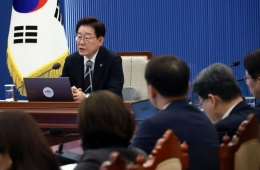
On June 4, the Ministry held a kickoff meeting for the “AI+Science & Technology (S&T) Innovation Technology Development Project,” officially launching a project to drive research innovation in science and technology using AI.

This project is a core initiative within the government’s ongoing AI-based research innovation strategy. Its goal is to develop specialized AI models for national strategic technology sectors, including bio, materials, chemistry, earth science, nuclear fusion, nuclear power, and secondary batteries. The government plans to invest a total of 22.5 billion won from 2026 to 2029.
Selected research projects will bring together experts from each field, as well as AI and data specialists. The projects will also be supported with high-performance computing infrastructure such as GPUs and environments for utilizing research data. The developed AI models and data will eventually be made available through an open platform.
AI Drives Research Innovation from Drug Discovery to Nuclear Fusion
In the bio field, Dr. Dongkwan Shin’s research team at the National Cancer Center will develop an AI that predicts drug responses by integrating data from cell lines, organoids, and animal experiments. This is expected to enhance the efficiency of identifying new drug candidates and conducting preclinical research.
In materials and chemistry, Professor Changyun Son’s research team at Seoul National University will develop an AI model that predicts the properties of next-generation polymers and electronic materials, and designs new materials optimized for target performance.
In earth science, Professor Seunggi Min’s research team at Pohang University of Science and Technology (POSTECH) will build a Korea-specialized AI model using integrated climate and disaster data to strengthen the analysis of complex disasters such as heatwaves, floods, and earthquakes.
In the field of nuclear fusion, Professor Eunmi Choi’s team at Ulsan National Institute of Science and Technology (UNIST) will develop an AI-based digital twin technology to predict plasma states in real time. For nuclear power, Professor Seungjun Lee’s team at UNIST will build an AI platform to automate safety assessments of next-generation reactors, including small modular reactors (SMRs).
In the secondary battery sector, Professor Jeongil Choi’s research team at Yonsei University will develop an AI platform that integrates data on materials, electrodes, and battery cells to predict performance and safety.
The Ministry of Science and ICT expects that the AI models and data developed through this project will become the core foundation for securing a technological gap in national strategic technology fields and for advancing the “K-Moonshot Project.”
Hot Picks Today
 "Bitcoin Could Surge Over 20 Times—Wall Street Heavyweight Delivers Bold Forecast: 'Don't Sell Now'"
- "Don't Go to Japan": Airfares Drop to 75,000 Won...As Revenue Dries Up, China Quietly Lifts Ban on Group Tours to Japan
- "I Can't Buy at These Prices"... Experts Recommend This Instead of Samsung Electronics and SK hynix
- Delayed Air Conditioner Repairs and Accommodation Refund Disputes... Seoul Issues Consumer Damage Advisory
- "Are Koreans Really Like This?" Japanese Reactions Explode... Convenience Store Employee Lays Flat on the Floor, What Happened?
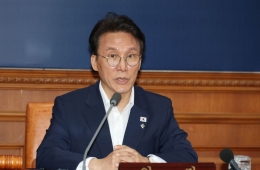
Kyungsook Yoon, Director-General of Basic Research Policy at the Ministry of Science and ICT, stated, “The AI models and data developed in the six core areas will serve as a catalyst for the K-Moonshot Project. We will actively support the full-scale deployment of AI in research to accelerate scientific discoveries and innovation.”
© The Asia Business Daily(www.asiae.co.kr). All rights reserved.