Hanwha Submarine Bid Package Includes Hydrogen Ecosystem... Hyundai Motor "Reviewing" (Comprehensive)
Kang Hoon-sik Makes Private Proposal to Canadian Government
Transferring Hydrogen Ecosystem Technology Across Canada
Synergy with Hanwha’s Local Military Vehicle Production Plan
Hyundai Motor: “Discussions Underway with Public and Private S
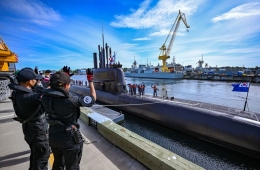
With Hyundai Motor Company joining the Canadian Next Generation Submarine Program (CPSP) bid, led by Hanwha, "Team Korea" has launched a last-minute push. Following a proposal to manufacture key military vehicles using Canadian steel, the Korean government has announced a project to establish a "hydrogen commercial vehicle ecosystem" across Canada, leveraging Hyundai's technological capabilities. With the final bid announcement scheduled for later this month, this package deal goes beyond simple defense exports, aiming to take responsibility for both Canada’s manufacturing sector and the future eco-friendly industry. However, Hyundai Motor Company declined to comment further, stating that discussions are still ongoing.
According to industry sources and major local media outlets on June 4, the Korean government has made a confidential proposal to the Canadian government for "Project Beaver," a plan to build hydrogen infrastructure.

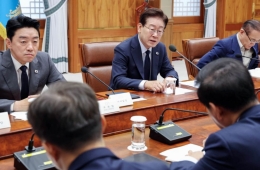
Kang Hoon-sik, Chief of Staff to the President, is speaking at the 'Korea-Canada Energy Resources Supply Chain Forum' on the 2nd (local time). (Photo by Kang Hoon-sik, Chief of Staff to the President's Facebook)
View original imageThe core of this project is to transfer Hyundai Motor Company's hydrogen ecosystem technology to Canada. If Hanwha wins the submarine contract, the plan includes manufacturing hydrogen long-haul trucks locally in Canada starting in 2030 and constructing hydrogen refueling infrastructure at dozens of locations. The investment is estimated at 3.1 billion Canadian dollars, or approximately 4.4 trillion won. From this year until 2030, a hydrogen liquefaction plant will be built in British Columbia (BC), and refueling stations will be built in Alberta and other regions. There is also a high possibility that a hydrogen vehicle manufacturing plant will be built in Ontario.
Kang Hoon-sik, Chief of Staff to the President, who is visiting Canada as Special Presidential Envoy for Strategic Economic Cooperation, explained that presenting hydrogen vehicles instead of an electric vehicle plant is both a practical justification and demonstrates Korea's view of hydrogen vehicles as a growth engine. In an interview with local media, Kang said, "When Prime Minister Mark Carney visited China, he agreed with the Chinese side to import a certain volume of Chinese electric vehicles," and added, "It is difficult to compete with China, which is leading the electric vehicle sector." He continued, "Korean automobile manufacturers are facing pressures similar to those faced by Stellantis," and noted, "Just as the U.S. has persuaded Stellantis that it is more advantageous to come to America, our companies are facing similar pressures."
This hydrogen infrastructure proposal is expected to create strong synergies in the bidding process by complementing Hanwha's earlier plan to locally produce military vehicles. The proposal is an addition to the contract Hanwha signed with the Automotive Parts Manufacturers’ Association (APMA) of Canada to produce military vehicles. Hanwha had previously announced plans to locally manufacture the K9 self-propelled howitzer and Redback armored vehicle in Canada. The initiative is expected to not only bolster Canada's military capabilities but also invigorate the Canadian steel and parts industries. In addition, the government plans to increase imports of Canadian liquefied natural gas (LNG) to 3.4 million tons per year—five times the current amount—and to purchase 9 billion Canadian dollars’ worth (about 10 trillion won) of key minerals from Canada.

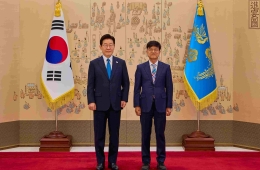
Kang Hoon-sik, Chief Presidential Secretary, is meeting with Melanie Jolly, Minister of Industry, on the 2nd (local time) to thoroughly explain the industrial ripple effects that defense cooperation between the two countries will bring. (Photo by Kang Hoon-sik, Chief Presidential Secretary)
View original imageKang stated that this bid would bring significant benefits to the Canadian economy. He projected that 430,000 jobs would be created in Canada by 2044, with an estimated economic impact of about 96.3 billion Canadian dollars (approximately 106 trillion won). He also emphasized that Hanwha has signed 75 partnerships with local companies to support Canada’s defense industry.
Hot Picks Today
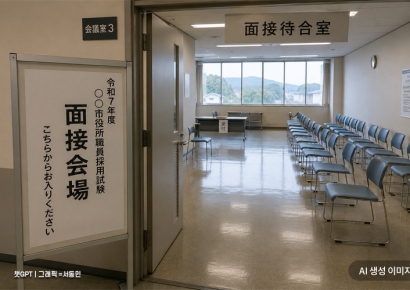 "Who Wants to Be a Public Servant These Days?" Japan on High Alert as Technical Positions See Zero Applicants
- "48% Plunge in a Single Day"—Unbelievable? Samsung Electronics and SK hynix Leverage ETFs Face Calls for Delisting
- "Another 3 Million Won Target"... Why Securities Firms Are Re-Evaluating Samsung Electro-Mechanics [Click e-Stock]
- Thought It Was a Salary, But It's $5,860 Rent... Even a $190,000 Salary Can't Keep Up in This City
- "Can't Even Pay the Freezer Electricity Bill"... Ice Cream Company Sees 99% Plunge in Brand Value
However, Hyundai Motor Company stated that nothing has been finalized regarding this matter. A Hyundai representative said, "We are exploring opportunities in the hydrogen business in Canada, but nothing has been confirmed yet," and added, "We are reviewing and discussing the specific business scope, scale, and locations with both public and private stakeholders."
© The Asia Business Daily. All rights reserved. Unauthorized AI training and use prohibited.