Seoul and Gyeonggi Flip After Four Years... Ruling Party Leads as Opposition Retains Some Strongholds
Seoul: Democratic Party 17, People Power Party 8
Democrats win more seats but fall short of a "landslide"
Chungbuk and Chungnam, the "barometer of public sentiment," show divided results
In the 9th nationwide local elections for heads of basic local governments, the Democratic Party of Korea achieved an overall victory. However, it is notable that the People Power Party managed to defend some positions in the Seoul metropolitan area, including Seoul and Gyeonggi Province, thereby securing a political foothold.

As of 9 a.m. on June 4, according to the National Election Commission, in the Seoul district mayoral races, the Democratic Party won 17 out of 25 districts. The People Power Party secured 8 districts: Jung-gu, Yongsan-gu, Gwangjin-gu, Yangcheon-gu, Dongjak-gu, Seocho-gu, Gangnam-gu, and Gangdong-gu. This is the opposite result compared to four years ago, when the People Power Party held 17 districts and the Democratic Party 8.
In Gyeonggi Province, out of 31 heads of cities, counties, and districts, the Democratic Party won 19, while the People Power Party won 12. Compared to four years ago, when the People Power Party had 22 and the Democratic Party 9, the political landscape has shifted. The Democratic Party secured steady victories in its traditional strongholds such as Suwon, Hwaseong, Goyang, Paju, and Anyang. The People Power Party managed to hold on to its traditional conservative strongholds such as Pocheon, Dongducheon, Yeoncheon, and Gapyeong, as well as some urban areas like Yongin, Uiwang, and Hanam. Among the “special cities” with populations over 1 million (Suwon, Hwaseong, Goyang, Yongin), the Democratic Party won three, while the People Power Party took one. In Seongnam, where President Lee Jaemyung previously served as mayor, People Power Party candidate Shin Sangjin was re-elected.
Although the Democratic Party has secured more basic local government heads in Seoul and Gyeonggi Province, many say the result fell short of the “landslide” victory predicted before the election. Eom Kyungyoung, director of the Zeitgeist Research Institute, analyzed, “Both support for government stability and demands for checks on power erupted simultaneously in the metropolitan area,” adding, “There was also strong conservative mobilization, which led to these results.”
In the so-called “barometer of public sentiment,” the results in Chungcheong Provinces differed. In North Chungcheong, the Democratic Party won 6 out of 11 districts (Cheongju, Jecheon, Okcheon, Jeungpyeong, Jincheon, and Eumseong), while the People Power Party took 5 (Chungju, Boeun, Yeongdong, Goesan, and Danyang). In contrast, in South Chungcheong, the People Power Party secured 10 out of 15 districts (Gongju, Boryeong, Seosan, Nonsan, Gyeryong, and others), while the Democratic Party won 5 (Cheonan, Asan, Dangjin, Geumsan, and Seocheon).
In Jeonnam and Gwangju, areas considered Democratic Party strongholds, the party swept 22 out of 27 seats. Notably, candidates from the Korea Innovation Party were elected in Jangheung and Shinan. In Wando, Gangjin, and Gwangyang, independent candidates won. In North Jeolla, the Democratic Party secured all 14 seats.
In North Gyeongsang, the People Power Party won 18 out of 22 regions, with independents winning in 4. In South Gyeongsang, the People Power Party took 10 out of 18 seats, while the Democratic Party showed strength in Tongyeong, Gimhae, Geoje, and Namhae, and independents performed well in Geochang, Hapcheon, Jinju, and Uiryeong.
Unlike four years ago when a “red wave” swept Gangwon Province, this time a “blue wave” dominated. Of 18 districts, the Democratic Party won 11. The People Power Party managed to retain only 7 out of its previous 14. This is the reverse of four years ago, when the People Power Party held 14 and the Democratic Party 4.
Hot Picks Today
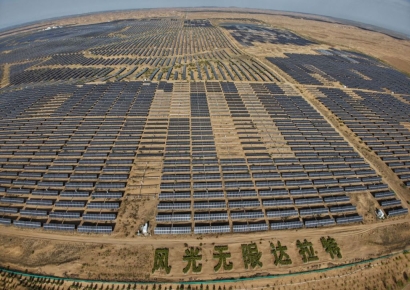 "After Dominating 80% of the Global Market... China’s Solar Industry Hit with 3 Trillion Won Losses"
- Closing Gap with Samsung and SK hynix: "Shares Surge Fivefold on Debut" as China's DRAM Giant CXMT Sweeps Up 14 Trillion Won
- Positive Factors Fail to Lift Market...KOSPI Weakens Despite 1,400 Trillion Won AI Investment Partnerships
- "All But Three Were Caught"... Professor’s Brilliant Tactic Exposes AI-Generated Exam Answers
- "One Sip Has Koreans Lining Up for Four Hours... The Remarkable Turnaround of the 1993-Born Chairman [Interview]"
In Busan, out of 16 districts, the People Power Party won 9 and the Democratic Party 7. The People Power Party was dominant in the original downtown and the Oncheoncheon Belt, while the Democratic Party regained the Nakdong River Belt, spanning Gangseo-gu, Buk-gu, Sasang, and Saha. In “the conservative heartland” Daegu, the People Power Party swept all 9 seats, while in Daejeon, the Democratic Party won all 5 seats. In Ulsan, the Democratic Party took Buk-gu, while the People Power Party won Jung-gu, Nam-gu, Dong-gu, and Ulju County. In Incheon, the Democratic Party won 8 out of 11 seats, with the People Power Party taking 3.
© The Asia Business Daily. All rights reserved. Unauthorized AI training and use prohibited.